Top 7 SEO Reporting Tools for Agencies That Impress Clients
SEO agencies juggle constant updates, client demands, and deadlines that don’t budge. Reports often create the most pressure.
One client asks for keyword gains, another wants revenue context, and another wants a simple explanation of what changed.
Meanwhile, the team pulls data from multiple tools and spends hours fixing numbers instead of analyzing them.
Clients notice when reports feel rushed or hard to follow. They want accurate information that answers their questions.
This guide breaks down how SEO reporting tools help agencies reduce manual work, avoid errors, and present data clients can trust.
TL;DR
These are the best SEO reporting tools for agencies in 2025:
-
Whatagraph
-
Databox
-
Swydo
-
DashThis
-
Ahrefs
-
SE Ranking
What SEO Agencies Need From Their Reporting Tools
Agencies rely on SEO reporting tools that reduce manual tasks and present information clients can understand easily.
Most agencies evaluate reporting tools based on these elements:
-
Data collection: SEO reporting tools gather data from Google Analytics, Google Search Console, Google Ads, and other platforms in one place. This prevents errors that occur when numbers come from multiple dashboards.
-
Automated updates: Automated SEO reporting keeps monthly reporting cycles steady. A platform that refreshes data on its own helps teams focus on SEO analysis instead of fixing outdated charts.
-
Flexible layouts: Each client values different metrics. Local businesses watch local search visibility. E-commerce brands follow keyword performance and organic traffic trends. B2B accounts track search queries. Tools should support customizable SEO reports for each use case.
-
Readable visuals: Reporting features that turn SEO metrics into clear charts help clients understand changes in organic search traffic, keyword tracking, and possible technical SEO issues.
-
Workflow control: Permissions prevent overwritten edits and maintain a predictable reporting process.
These elements create detailed reports that offer actionable insights and help clients evaluate overall SEO performance.
Once agencies know what to look for, they can compare platforms and match those criteria to the tools available today.
7 Best SEO Reporting Tools for Agencies in 2025
Below are the top seven SEO reporting tools agencies use today. Each tool serves slightly different needs, from full-service reporting platforms to technical and niche SEO tools.
1. TapClicks
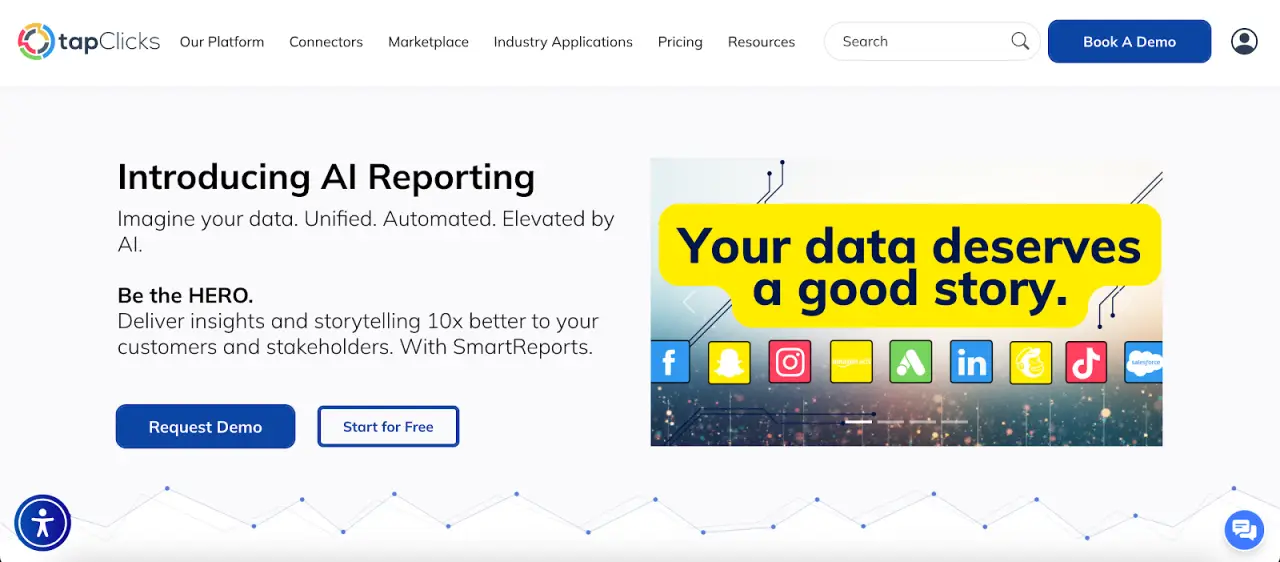
TapClicks centralizes SEO and marketing data in one system. Agencies use it to track performance, manage large client lists, and produce reports without shifting between tools.
Its SEO module, Raven, adds ranking data, competitor insights, and technical checks that help agencies understand why performance shifts over time.
Together, TapClicks and Raven create a complete workflow for SEO reporting, from data collection to final presentation.
Key Features
-
Competitor comparisons and organic visibility metrics
-
Site audits that detect crawl barriers, indexing issues, and page speed problems
-
Scheduled audits with custom frequency and crawl depth
-
SEO Health Score and trend charts for long-term performance
-
Permanent historical data storage
-
Filters for multi-location reporting
-
Integrations and custom connectors for data from many platforms
-
Report templates and white-label SEO reporting
-
Automated reporting in PDF or slide formats
-
Custom metrics and automated calculations
-
AI summaries for ranking, traffic, and competitor shifts
Unified SEO and Marketing Data
TapClicks accepts data from analytics, advertising, CRM, and SEO tools. It also imports data from sources without an API. Every value stays in the system as historical data.
Agencies compare periods, review long-term patterns, and use past results for benchmark analysis.
Raven’s SEO data sits beside performance data from other channels, so agencies see how rankings relate to traffic and conversions.
Raven: Ranking Trends, Competitors, and Technical Checks
Raven monitors keyword positions, SERP features, and competitor rankings across languages, devices, and regions. It also runs site audits that categorize issues into three tiers.
Trend charts and an SEO Health Score track improvements after technical updates. Raven’s checks help agencies connect technical work with ranking outcomes.
Dashboards, Report Studio, and Quick Reports
TapReports converts SEO data into dashboards, PDFs, and slide decks. Report Studio works like a presentation editor with live data.
Teams build layouts with widgets, charts, text, and branding, or use report templates for faster setup. Quick Reports handle short updates when clients need a summary.
Templates, Automation, and Calculations
TapClicks uses templates to streamline reporting across many clients. A single template can serve an entire group of accounts, and updates flow through all dashboards tied to that template.
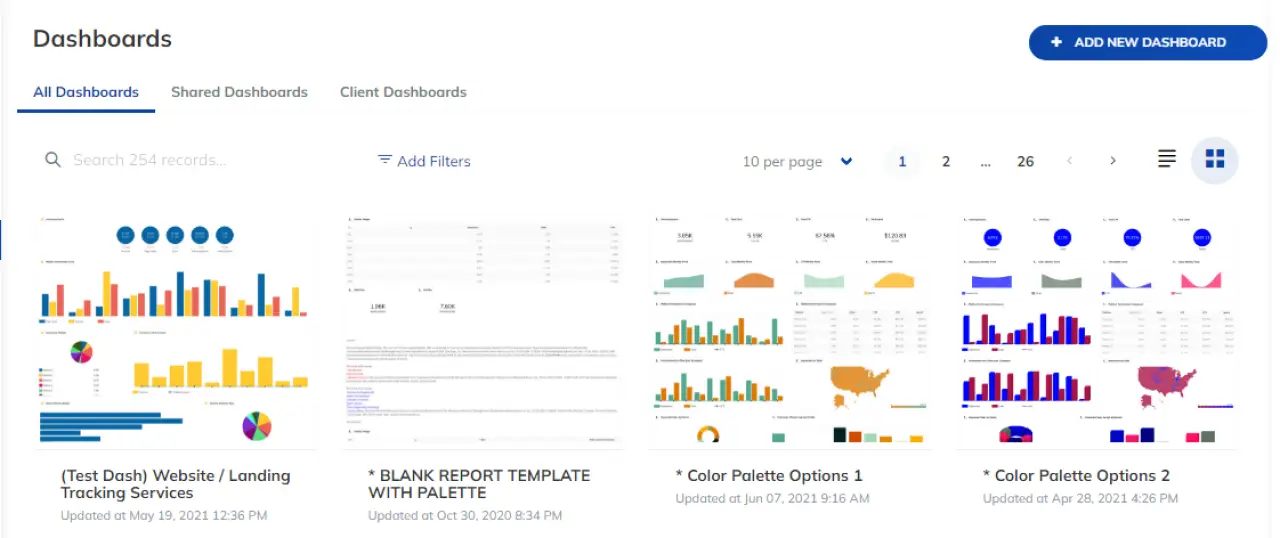
Agencies define custom metrics once, and TapClicks applies them automatically. The system also schedules recurring reports on a daily, weekly, or monthly cycle.
Agencies with large client lists can bulk upload reporting schedules. AI Insights Agents scan widgets and write short notes that explain ranking or traffic movements.
Why Agencies Rely on TapClicks
TapClicks combines rank tracking, site audits, competitor visibility, and cross-channel analytics in one system.
With everything in one place, agencies handle many clients with less manual work and deliver consistent, data-driven reports.
Book a demo to see how TapClicks reduces reporting work across all your clients!
2. Whatagraph
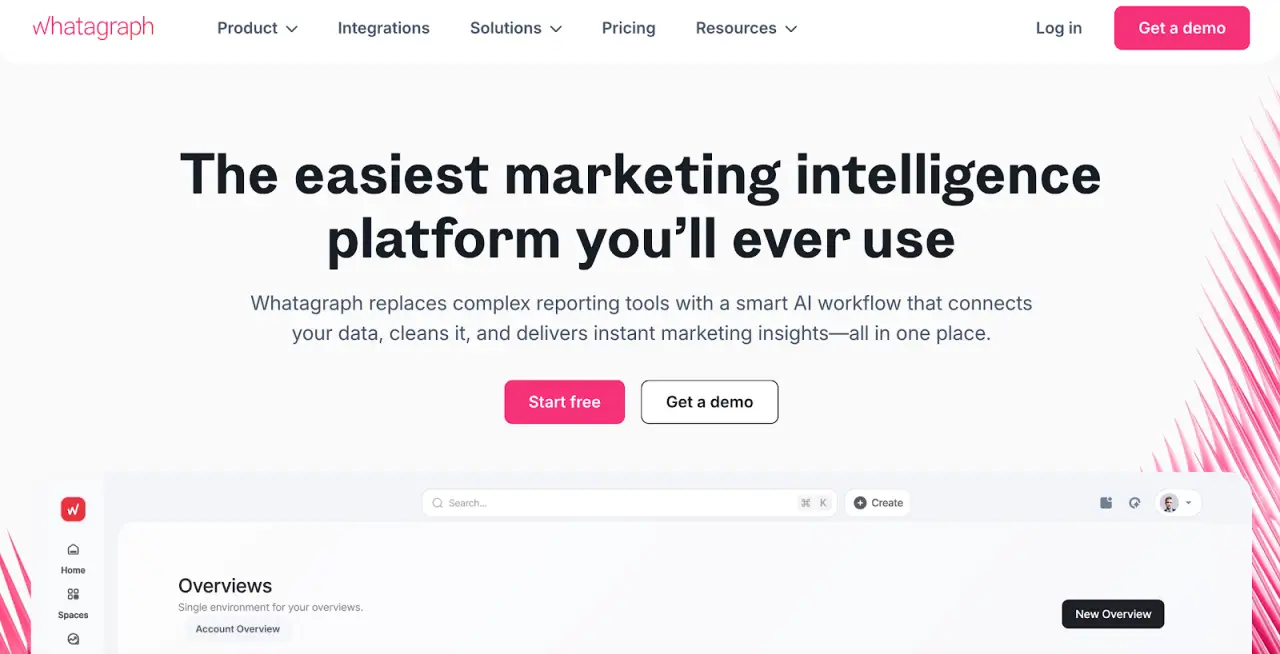
Image source: whatagraph.com
Whatagraph helps marketing agencies collect SEO data and marketing metrics from multiple platforms in one SEO reporting dashboard.
It refreshes data often, so teams work with up-to-date data instead of manual exports.
Agencies use it to review SEO performance, track keyword rank trends, and automate client reporting.
The platform also combines results from multiple marketing channels, which helps agencies connect SEO efforts with other activities.
Key Features
-
Native integrations with 55+ marketing and SEO platforms
-
Cross-channel dashboards with unified dimensions
-
Keyword rank tracking, traffic insights, and backlink monitoring from connected SEO tools
-
Custom metrics, tags, and dimensions for specific reporting needs
-
Automated report delivery through email, PDFs, spreadsheets, or live links
-
White-label templates and customizable reports
-
AI summaries and conversational data queries
-
Client and account-level tagging for organized review
-
Localization for currencies and labels
Strengths and Limitations
Whatagraph's templates, data visualization tools, and customizable reports reduce the time teams spend on client reporting.
AI summaries shorten monthly reviews and help explain SEO performance with less manual editing.
However, some limits affect daily work. Simultaneous edits can disrupt widgets, and a few ad platforms still lack integration.
Custom URLs aren’t available, and historical data retention is shorter than systems built for long-term storage.
3. Databox
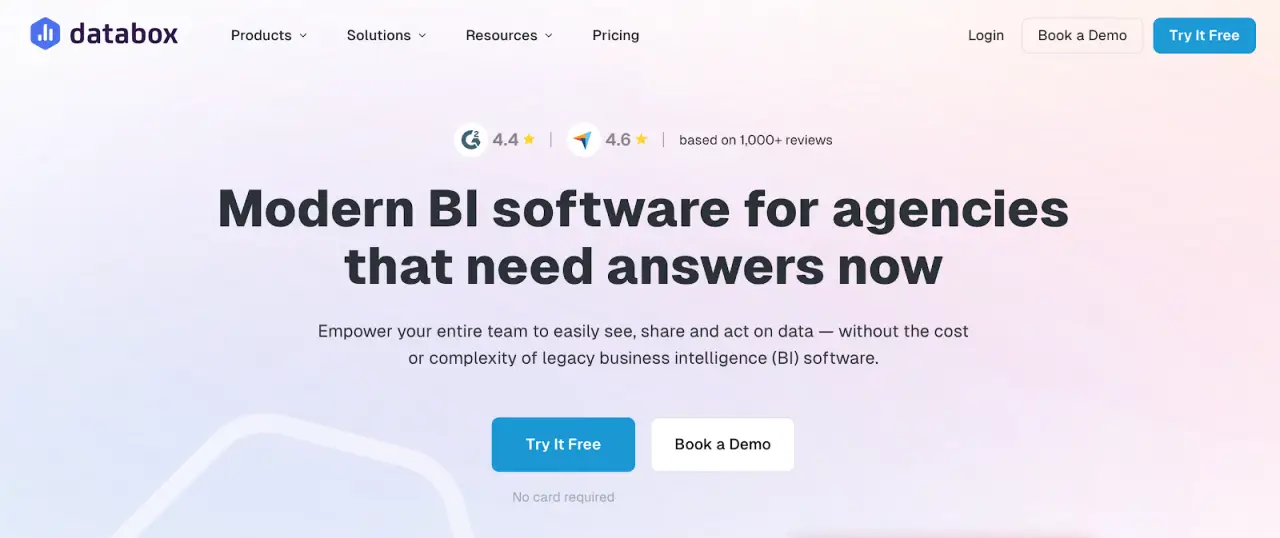
Image source: databox.com
Databox is an SEO reporting software tool that helps agencies track SEO performance from multiple sources in one dashboard.
It updates data in real time, so teams monitor search engine optimization efforts without switching tools.
Agencies use it to review keyword rank trends, study traffic patterns, and create custom SEO reports for clients.
Databox is useful for teams that want a visual layout for tracking search engine rankings and reviewing SEO campaigns.
Key Features
-
100+ native integrations for SEO and marketing platforms
-
Dashboards that track keyword rank across multiple search engines
-
Traffic metrics that show page-level performance
-
Goal tracking that compares targets with current results
-
Calculated metrics for custom KPIs tied to SEO strategy
-
Custom Metric Builder for detailed analysis
-
Automated report delivery with scheduling options
-
Notes and automated insights that summarize trends
-
Live presentation mode for team or client reviews
-
Options to customize SEO reports with branded elements
Strengths and Limitations
Databox helps agencies monitor SEO campaigns through creative data visualizations.
SEO professionals use it to track keyword rank, review traffic shifts, and study performance across channels.
However, chart and text customization are limited, and some industries may require integrations that Databox doesn’t offer.
Complex metric creation may feel inconsistent, which can affect teams that handle detailed competitor analysis or website audits.
4. Swydo
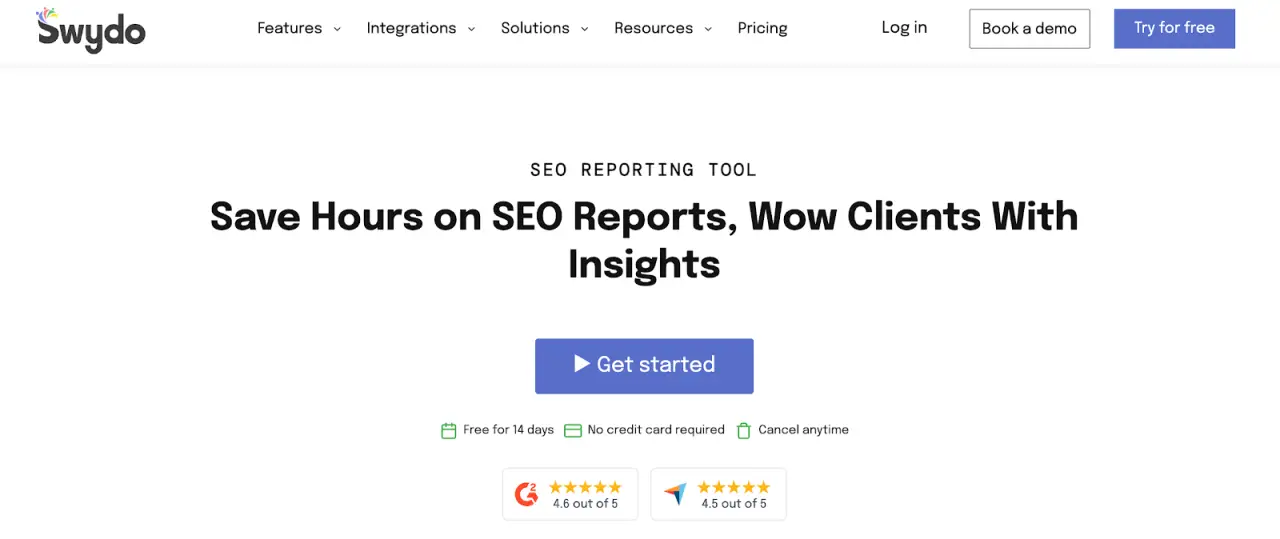
Image source: swydo.com
Swydo helps marketing agencies collect data from several platforms and present it in reports or dashboards.
It connects to tools such as Google Analytics, Google Ads, Facebook Ads, and other marketing sources.
Agencies use it to review SEO campaigns alongside paid media activity and to create reports for multiple clients without rebuilding layouts.
Its focus on templates and standardized structures helps teams maintain consistency in their reporting.
Key Features
-
Integrations with over 30 analytics and marketing platforms
-
Templates for Google Analytics 4, pay-per-click (PPC), SEO, and social reports
-
Drag-and-drop widgets for quick layout changes
-
Custom widgets for KPIs that aren’t included by default
-
Dynamic templates that update every linked report
-
White-label options for logos, colors, and cover pages
-
Scheduled report delivery as PDFs or online dashboards
-
KPI tracking with optional alerts
-
Combined data sources for single-metric views
Strengths and Limitations
Swydo helps agencies produce reports in a consistent format. Its templates, widgets, and white-label tools reduce setup time and help teams create reports in just a few clicks.
Agencies can track SEO metrics such as keyword research and domain authority when those values come from connected tools.
Even so, agencies may want more flexibility when they try to combine different campaign types into a single report.
Integrations for less common platforms may be missing. Some widgets limit how much teams can adjust complex layouts, and the mobile interface responds more slowly than expected.
5. DashThis
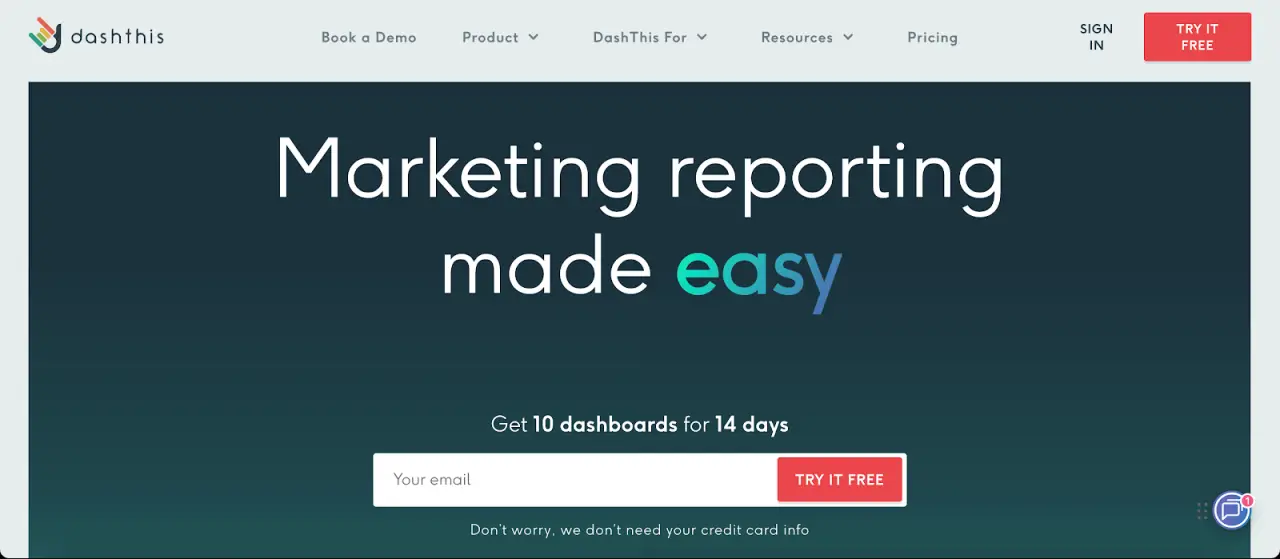
Image source: dashthis.com
DashThis is a reporting tool that helps marketing agencies track SEO performance and marketing metrics in one place.
It connects to Google Analytics, Google Search Console, Moz, Ahrefs, SEMrush, and other platforms. This connection centralizes keyword trends, backlink analysis, and organic traffic metrics in one dashboard.
Its template-driven structure helps teams maintain consistency when they create reports for multiple clients.
Key Features
-
Integrations with more than 30 SEO and marketing platforms
-
Dashboards that display keyword trends, backlink metrics, and organic performance
-
Templates for SEO, PPC, social, and analytics reports
-
Drag-and-drop widgets with customizable metrics
-
White-label branding with logos, colors, and custom domains
-
Automated report delivery via email, PDF export, or shared links
-
CSV import for custom metrics
-
Automatic updates when connected platforms refresh
-
Dashboard cloning for repeat client setups
Strengths and Limitations
DashThis helps agencies keep SEO reporting organized across many clients. Templates and widgets cut setup time, and scheduled delivery keeps each reporting cycle on track.
Rank tracker integrations from tools like Google Search Console and Semrush make it easy to review backlink metrics and organic traffic.
Still, users report limits that affect more detailed work. Layout controls are narrow when a report needs deeper customization.
Chart interactions are basic, and some dashboards pause when API limits are reached. Mobile use is cramped, and text-based widgets often need extra scrolling to read comfortably.
6. Ahrefs
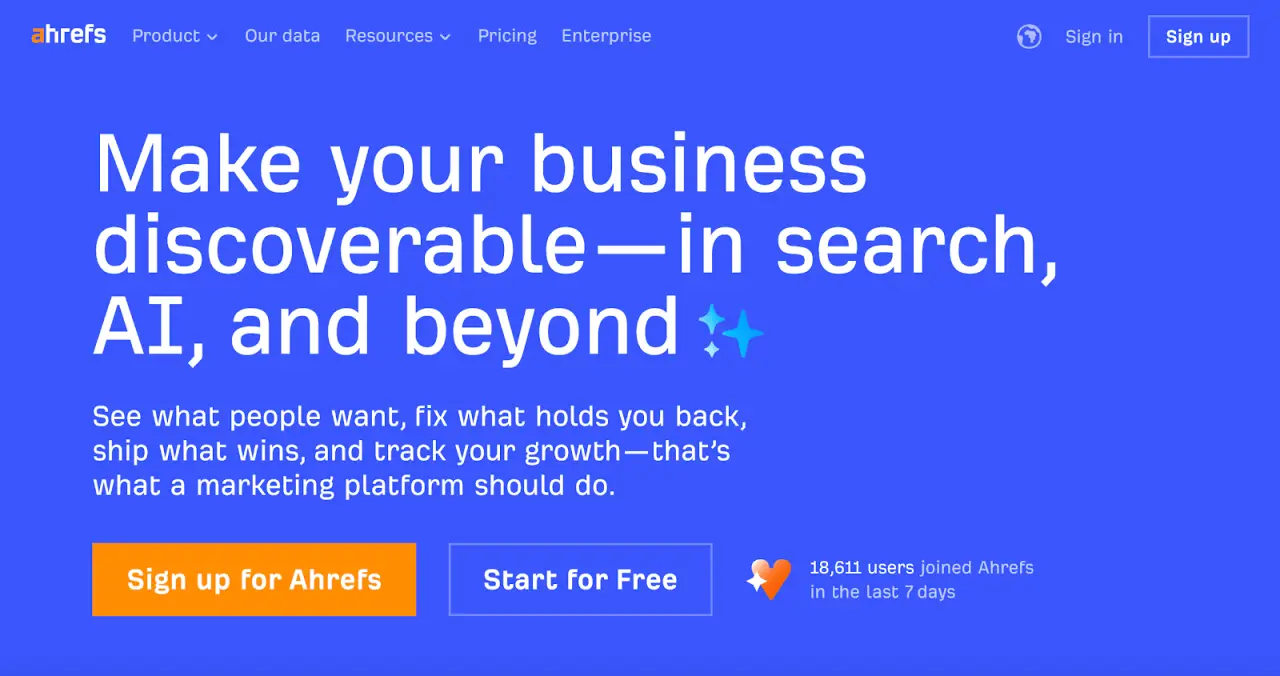
Image source: ahrefs.com
Ahrefs is an SEO platform that helps marketing agencies analyze keywords, backlinks, and site performance across client accounts.
Its data depth supports marketing teams that rely on detailed research to improve their SEO services.
Agencies use Ahrefs to review keyword performance, study backlink profiles, check traffic estimates, and compare results with competitors. These insights help shape each client’s SEO strategy.
Key Features
-
Keyword tracking across regions and URLs
-
Backlink analysis with detailed profiles and link opportunities
-
Competitive maps that highlight changes in organic visibility
-
Reports for local rankings, brand monitoring, and monthly SEO progress
-
Tools that identify content gaps and weaker pages
-
Filters that surface high-value backlink prospects
-
Daily updates for keyword, traffic, and backlink data
-
Visual dashboards for indexability, speed, and duplicate content
-
AI-assisted suggestions for technical fixes
Strengths and Limitations
Ahrefs helps teams understand why rankings rise or drop and where clients have room to grow. Reports share findings with internal teams or clients, which helps everyone stay aligned on SEO progress.
Despite that, users report that some reports take time to load, which can slow down quick check-ins. Historical backlink data sometimes needs verification in other tools.
Keyword and backlink updates may not appear right away, which makes fast monitoring harder.
The interface can also be complicated for newcomers who aren't used to technical SEO or larger data sets.
7. SE Ranking
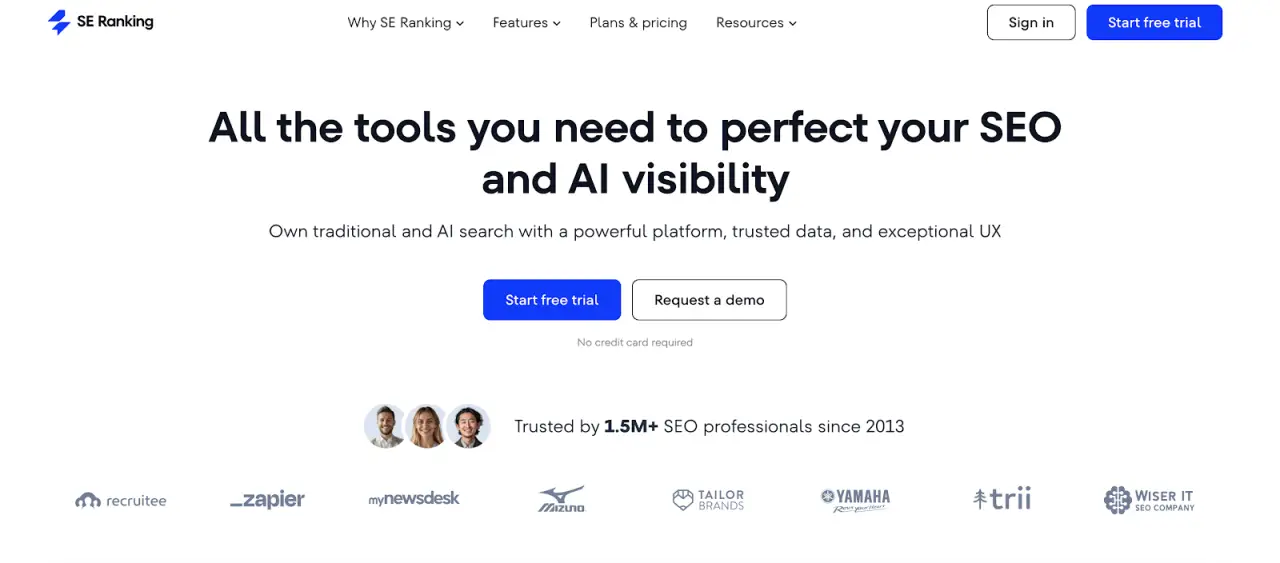
Image source: seranking.com
SE Ranking is an SEO platform that helps agencies track keywords, audit sites, and review competitor activity in one system.
It supports teams that manage many clients and need consistent workflows for rankings, technical checks, and performance updates.
Agencies use it to study keyword trends, review backlink profiles, diagnose technical issues, and share reports that follow SEO reporting best practices.
Key Features
-
Daily keyword tracking with AI snippet monitoring
-
Competitive research for organic and paid keywords
-
Backlink checks that review link quality and anchor use
-
Website audits with adjustable crawl settings
-
Local and map tracking for regional results
-
Dashboards that highlight client metrics
-
White-label SEO reports with scheduled delivery
-
Options to schedule automated SEO reports
-
Guest links for read-only client access
-
Google Business Profile post-scheduling for local activity
Strengths and Limitations
SE Ranking helps agencies track rankings, diagnose technical problems, and compare clients with their competitors.
Its reporting tools reduce manual work, and white-label features help teams present findings in a format that matches their brand.
Permission controls support collaboration while keeping sensitive data restricted.
At the same time, users note a few limits. The backlink database is smaller than what some larger tools provide. Reports may take longer to generate during busy periods.
API integrations can require extra configuration. Keyword suggestion tools also need improvement when teams handle large lists.
Replace Manual Reporting Tasks With TapClicks Automation
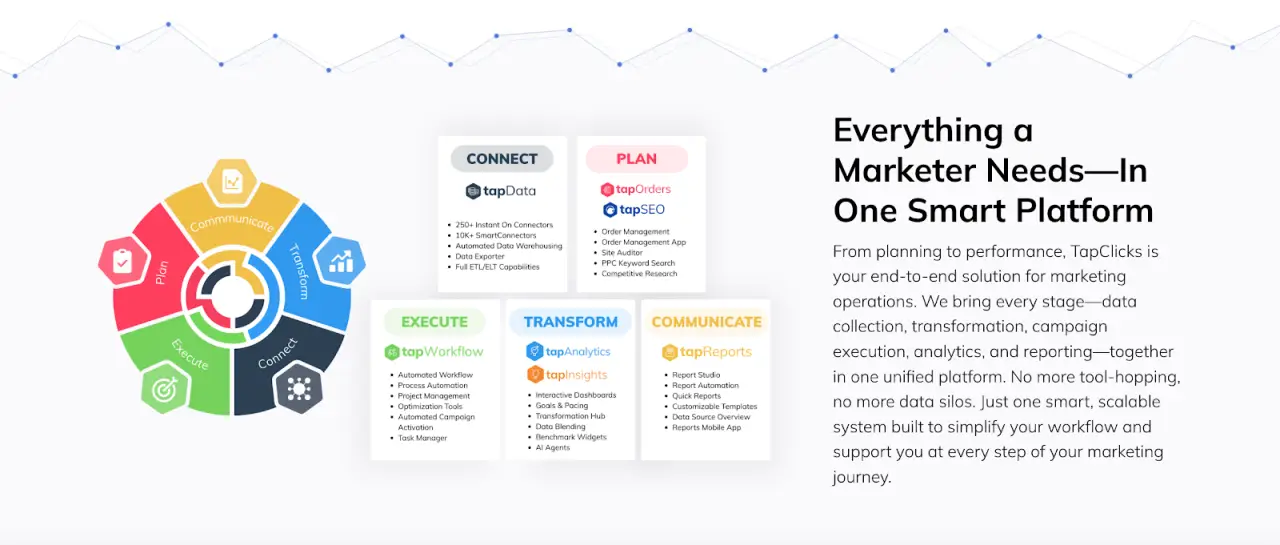
SEO agencies manage rankings, audits, client updates, and tight reporting cycles. Reports act as the main link between daily SEO work and a client’s understanding of progress.
A dependable system helps teams present accurate data, highlight trends, and explain results without rebuilding dashboards each month.
The tools in this list each cover part of that workflow, from keyword research to technical checks to competitive insight.
TapClicks brings those functions into one environment. The platform organizes SEO and marketing data in a single workspace, which helps agencies compare trends without switching tools.
Agencies rank it among the best SEO reporting software for long-term reporting operations.
One agency that saw this firsthand is V Digital Services. Their team needed an all-in-one dashboard for display, CTV, audio, email, and other channels.
After moving to TapClicks, they shifted all client reporting into one dashboard and cut account setup time by 23%. Their team now has a simpler way to review performance and share updates with clients.
FAQs About SEO Reporting Tools for Agencies
What is SEO reporting?
SEO reporting tracks how a site performs in search and presents that information in a format clients can understand. It highlights keyword trends, traffic patterns, technical issues, and conversions.
Agencies use these reports to explain progress and outline the next steps in an SEO plan.
What is the most effective tool for SEO?
Different tools focus on different parts of SEO, so most agencies use a mix rather than one all-purpose option.
TapClicks contributes to that mix through its Raven module, which tracks rankings, site performance, and competitor activity in one workspace.
What are the four pillars of SEO?
SEO work often centers on technical fixes, content quality, link authority, and search intent. Technical SEO keeps a site crawlable and indexable.
Content and on-page improvements help pages rank for the right queries. Off-page signals, such as backlinks, strengthen visibility and reinforce long-term growth.