Top 5 Cloud-Based Data Analytics Tools in 2026
You’ve probably noticed how marketing data piles up. Ad results, website metrics, and campaign reports all demand attention at the same time.
That pressure doesn’t ease up. It’s why the best cloud-based data analytics tools have moved to the top of the list for marketing teams. These platforms handle data processing in the cloud and cut down on manual reporting work.
This guide reviews the top cloud-based data analytics tools available today and highlights what makes each one worth serious consideration.
TL;DR
These are the five best cloud-based data analytics tools for marketers:
-
Cometly
-
HubSpot
-
Salesforce Marketing Cloud Intelligence
-
Mixpanel
Why Marketers Invest in the Best Cloud-Based Data Analytics Tools
Cloud-based data analytics tools help marketing teams answer performance questions faster. When data comes from many data sources, reviewing results takes time and coordination.
Cloud analytics tools handle data ingestion, storage, and integration in the cloud, which keeps reports updated.
Connecting multiple datasets supports ongoing data analysis without constant reliance on data engineers or data scientists. Marketing teams can query data, review visual reports, and track changes in channel performance, conversion trends, and audience behavior during active campaigns.
It’s no wonder Research and Markets projects the cloud analytics sector to reach $74.60 billion in 2026. The category now emphasizes automation, predictive analytics, and machine learning algorithms that reveal performance changes earlier in the reporting cycle.
The 5 Best Cloud-Based Data Analytics Platforms for Marketers
Below are the top five cloud-based data analytics tools marketing teams commonly consider.
1. TapClicks
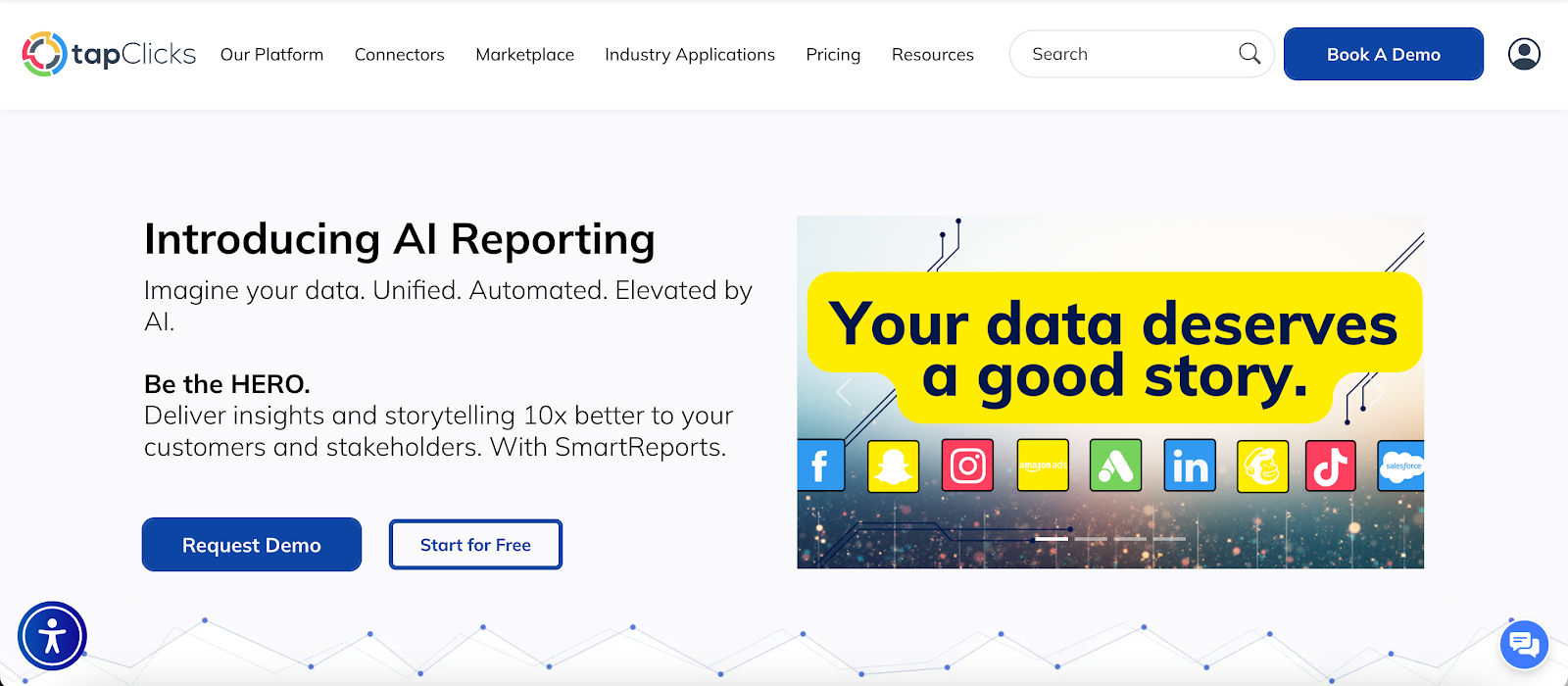
TapClicks is a cloud analytics platform that helps marketers review performance using one consistent dataset.
It replaces fragmented reporting setups with a single analytics environment that reflects how campaigns, channels, and clients are evaluated.
Through TapData, paid media platforms, search engine optimization (SEO) tools, social networks, web analytics, offline files, and custom sources feed into the same analytics layer.
This keeps spend, engagement, conversions, and outcomes comparable throughout dashboards, reports, and exports.
How TapClicks Supports Cloud-Based Data Analytics
TapClicks organizes incoming marketing data into channel-based views that match how marketers evaluate performance.
TapClicks Channels group metrics into paid search, social, display, email, SEO, and web, making channel-level analysis and comparison easier.
Pre-defined Channels expose standard metrics immediately. Custom Channels combine multiple sources to examine attribution, channel overlap, and client-level results.
This helps marketers understand where results originate and how performance differs between campaigns or channels.
Data Lookups extend analysis by joining datasets on shared fields like campaign ID or account ID. Media activity links directly with conversion or revenue data, creating a complete performance picture in one view.
The Transformation Hub applies naming rules, metric alignment, segmentation logic, and calculations before reports run. This keeps comparisons accurate between clients, time periods, and accounts.
Key Features
-
TapData for collecting and organizing marketing data in the cloud
-
250+ instant-on connectors for major marketing platforms
-
6,000+ Smart Connector data sources covering online, offline, and custom systems
-
Pre-defined and Custom Channels for multi-channel performance analysis
-
Data Lookups that join spend, engagement, and conversion datasets
-
Transformation Hub for metric alignment and reusable reporting logic
-
Creative data visualizations with drill-downs to asset-level detail
-
Data Source Overview for monitoring data completeness and accuracy
-
Error alerts that flag ingestion or export problems
Using TapClicks Data Exporter in Cloud Analytics Workflows
TapClicks Data Exporter extends analysis beyond dashboards. Marketing groups deliver selected datasets to cloud data warehouses, finance systems, or analytics environments without rebuilding reports.
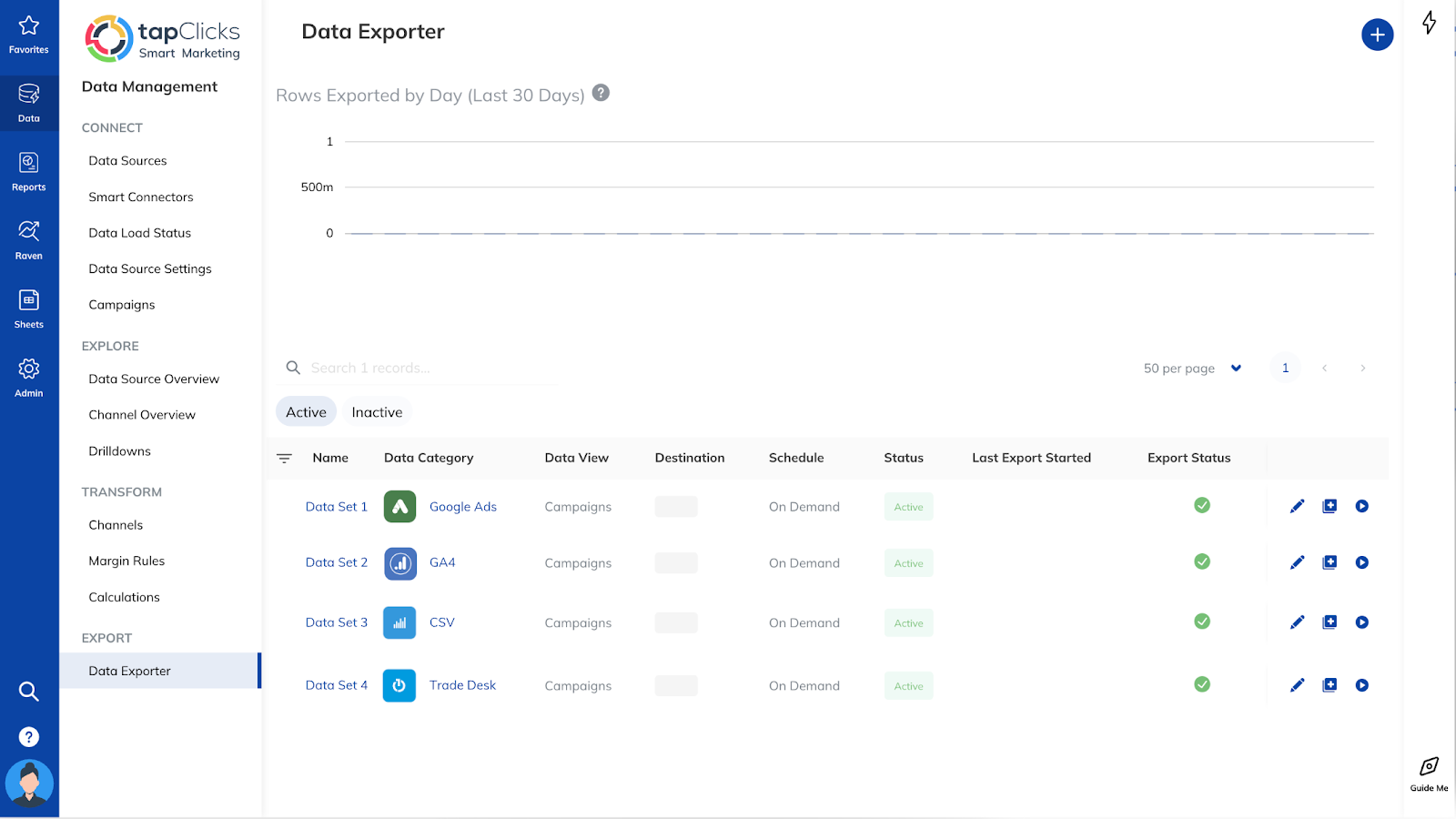
Filters, rolling date windows, and schedules keep the exported data current as performance updates. Data arrives as files or is written directly into destination tables.
Alerts flag failed deliveries and help maintain dependable access between systems.
Why TapClicks Works for Marketing Analytics
TapClicks combines data collection, preparation, analysis, and reporting in one cloud platform focused on marketing performance.
Channels, Lookups, and the Transformation Hub help marketers connect activity to outcomes and answer performance questions as campaigns and accounts expand.
2. Cometly
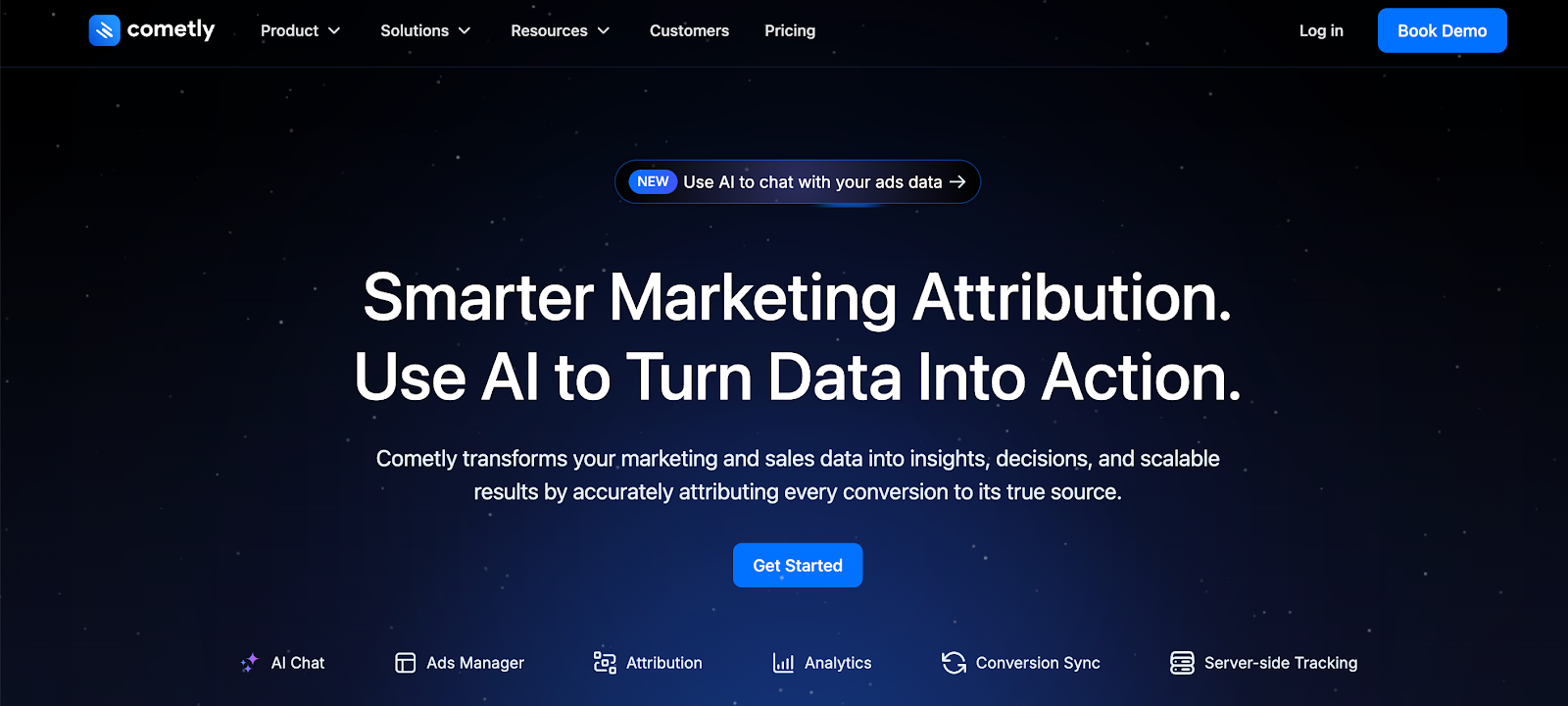
Image source: cometly.com
Cometly is a cloud-based analytics platform centered on attribution and revenue reporting.
It connects data from paid ads, organic traffic, outbound efforts, affiliates, and custom sources to show how marketing activity leads to pipeline and revenue.
Analytics dashboards track the full customer journey from first interaction through conversion.
This gives marketing teams and data analysts a shared view of which channels, campaigns, and creatives contribute to favorable outcomes.
Attribution models and conversion windows adjust to longer sales cycles and multi-touch buying paths common in business-to-business (B2B) marketing.
Reporting focuses on spend, conversions, and lifetime value, helping teams evaluate performance based on revenue results.
Performance can be reviewed by time period, campaign, ad, URL, or location, making it easier to understand which efforts contribute to valuable insights.
Key Features
-
End-to-end attribution from first interaction through closed deal
-
Custom dashboards organized by campaign, channel, or funnel stage
-
Paid, organic, outbound, affiliate, and custom source reporting
-
Flexible attribution models and conversion windows
-
Conversion-level reporting that links ads and touchpoints to revenue
3. HubSpot

Image source: hubspot.com
HubSpot provides cloud-based marketing analytics connected directly to customer relationship management (CRM) data. This link helps marketers see how campaigns, content, and website activity relate to leads and revenue.
Reporting pulls from marketing, sales, and service interactions. Performance reviews reflect the full customer journey instead of isolated touchpoints.
Analytics focus on conversion paths and engagement trends. Marketers can follow how contacts move from first interaction through deal closure, making it easier to understand which efforts contribute to the pipeline and revenue.
Dashboards and reports are available out of the box. Business users can review performance without constant help from analysts.
HubSpot also connects with data warehouses. Marketing teams can combine CRM data with external data sets for broader reporting.
Key Features
-
CRM-connected reporting for leads, deals, and revenue
-
Campaign, content, and website analytics tied to contact activity
-
Multi-touch attribution that maps marketing touchpoints to closed deals
-
Drag-and-drop dashboards with shareable reports
-
Direct connections to Snowflake, BigQuery, and Amazon S3
4. Salesforce Marketing Cloud Intelligence
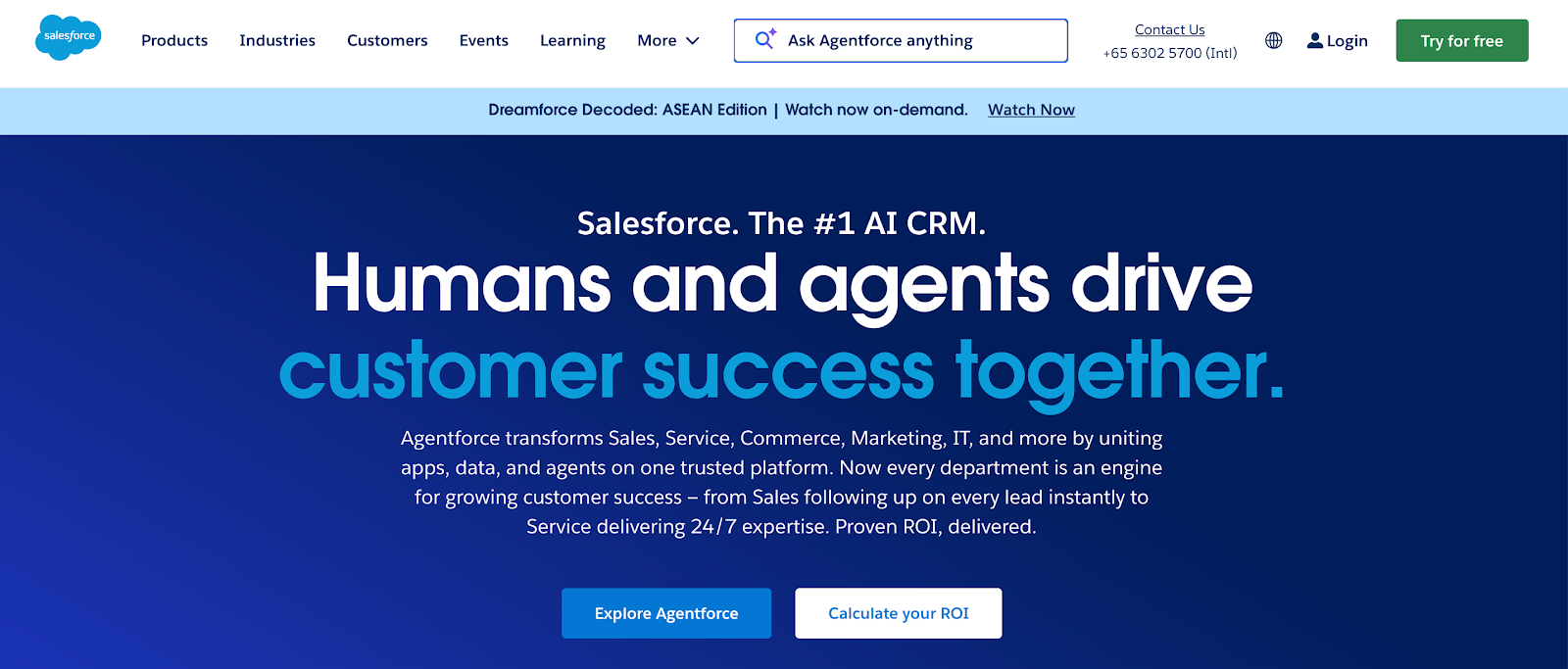
Image source: salesforce.com
Salesforce Marketing Cloud Intelligence is commonly used to analyze cross-channel marketing performance and media spend.
It connects advertising, CRM, commerce, and database sources through automated data integration, creating consistent reporting for campaigns, channels, and budgets.
Marketing data is organized into standardized data models, which makes it easier to explore data from large datasets. Cloud reporting updates on a schedule, so performance reviews reflect active campaigns rather than delayed summaries.
AI-powered analytics highlight cost inefficiencies, performance outliers, and optimization opportunities while campaigns run.
This helps marketing teams adjust media plans, pacing, and creative based on actionable insights instead of post-campaign analysis.
Dashboards support both high-level and detailed views, making insights accessible to non-technical users while still meeting data analyst needs.
Key Features
-
Native and AI-assisted connectors for advertising, CRM, commerce, and database sources
-
Standardized marketing data models for consistent cross-channel analysis
-
Automated cloud reporting with scheduled updates
-
AI-driven insights for spend efficiency and performance optimization
-
Data export to Tableau, Snowflake, BigQuery, and PostgreSQL
5. Mixpanel
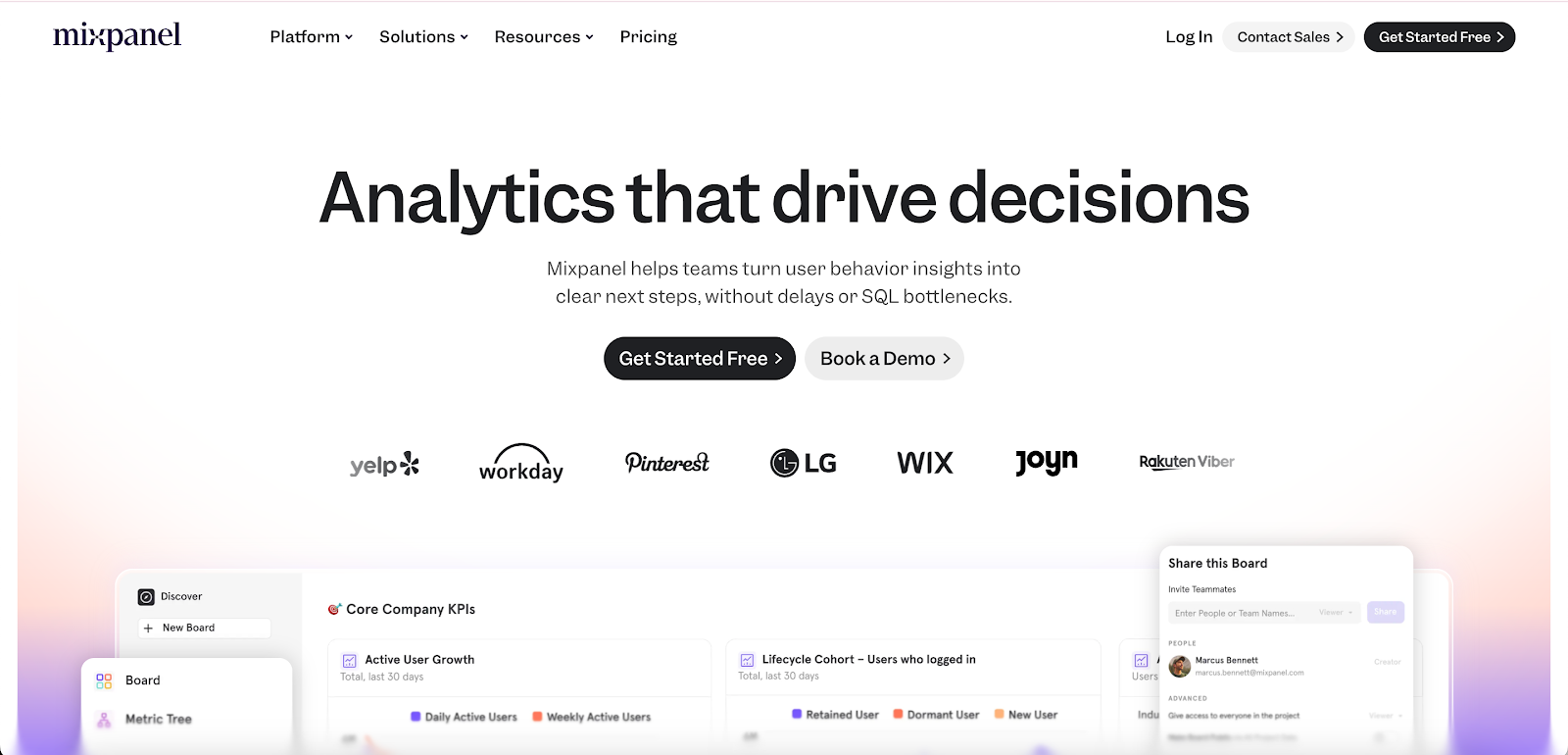
Image source: mixpanel.com
Mixpanel connects marketing activity with user behavior and revenue outcomes. It analyzes how marketing campaigns influence signups, feature usage, purchases, and retention.
Marketing teams use Mixpanel to identify patterns in funnels and journeys through event-level analysis of real user actions.
Campaign inputs from paid and organic channels are evaluated alongside behavioral data, adding deeper context to which messages and touchpoints contribute to conversion.
Reporting centers on behavior-driven business data. Funnels reveal where prospects drop off, cohorts highlight retention trends, and journey analysis shows common paths that lead to revenue.
Multi-touch attribution distributes credit among interactions throughout the customer lifecycle.
Dashboards are updated with real-time insights and remain accessible to data teams and business users.
Key Features
-
Event-based analytics that track user actions beyond pageviews
-
Funnel, cohort, and journey analysis for behavioral trends
-
Multi-touch attribution linked with revenue outcomes
-
Real-time dashboards for shared data access
-
Reporting that connects campaigns with user behavior and retention
How These Cloud-Based Data Analytics Tools Compare in Real Marketing Workflows
The differences between leading cloud-based data analytics tools become clearer once they’re part of everyday marketing workflows.
Some platforms emphasize data management and reporting reliability. These data analysis tools control how campaign data enters the system, where data storage takes place, and how updates appear in dashboards.
Marketing teams use them to keep recurring reports accurate, maintain consistent data sources, and share results through embedded analytics that fit established reporting routines.
Other platforms focus more on analysis and interpretation. They assume marketing data already exists in connected systems and help teams visualize data, explore performance trends, and test analytic models.
Marketers rely on these tools to review website traffic, examine user behavior, and generate insights through dashboards and interactive reports.
Advanced features such as AI summaries, alerts, or forecasting vary by platform.
Some tools emphasize self-service analysis for quick answers. Others support deeper exploration for teams looking to gain deep insights without heavy setup.
Why TapClicks Is the Best Cloud-Based Data Analytics Tool for Marketers
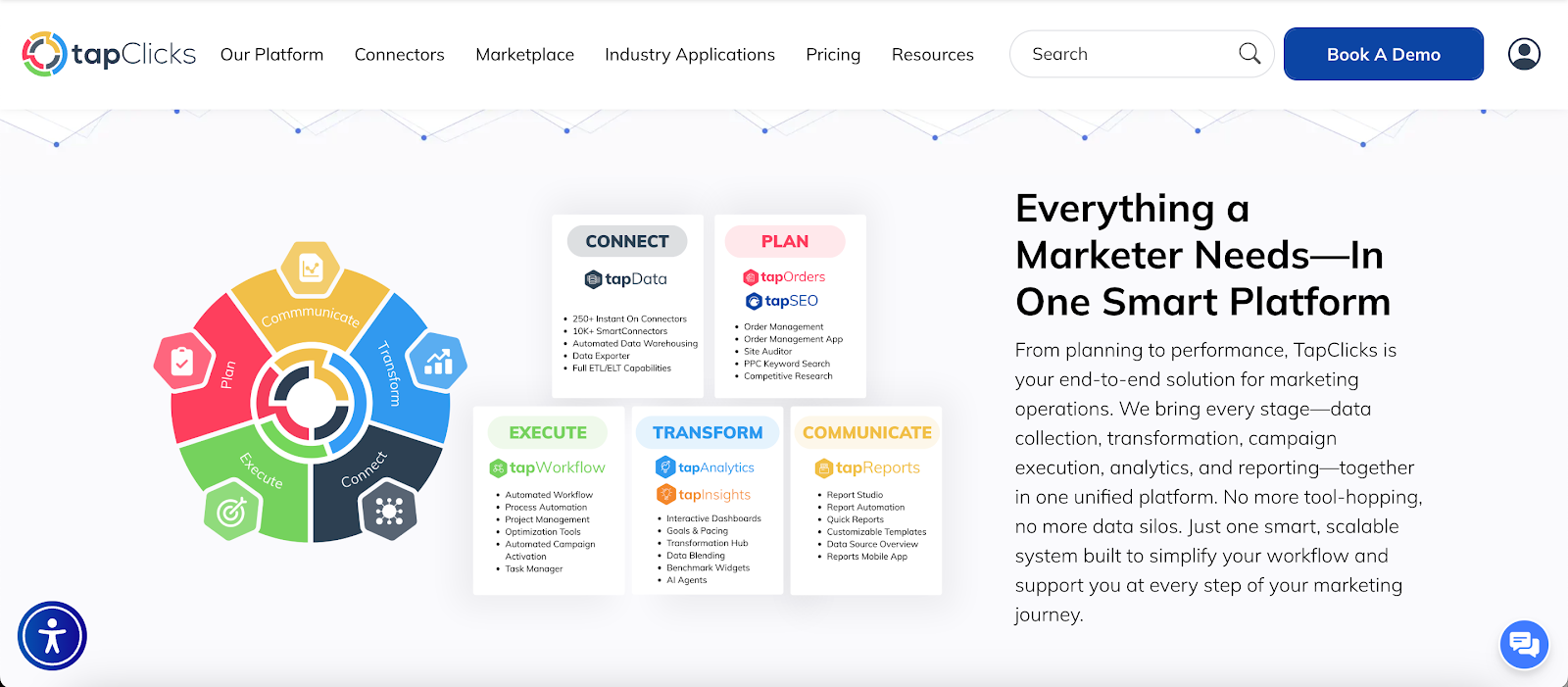
TapClicks reflects how marketing teams actually operate. Campaign performance, channel metrics, and client outcomes follow the platforms and programs marketers manage every day.
TapData brings marketing data into a single cloud environment where it remains available for reporting and analysis without duplicating systems.
Raw data stays traceable as it moves through reporting workflows, helping maintain reporting accuracy and data security.
Automation manages report scheduling, exports, and updates, shortening the time between performance changes and clear answers. Access to real-time data helps marketing leaders gain insights and adjust strategy without waiting for handoffs.
Advanced analytics and AI features highlight trends, anomalies, and performance shifts while remaining usable for everyday users.
Multi-channel reporting stays consistent as accounts expand, with outputs reaching dashboards, data lakes, and connected tools through seamless integration.
FAQs About Cloud-Based Data Analytics Tools
What is cloud-based data analytics?
Cloud-based data analytics uses cloud platforms to collect, process, and analyze data instead of relying on local servers.
These systems store data in cloud storage and make analysis available through dashboards, reports, or embedded views.
What are cloud data analytics platforms?
Cloud data analytics platforms are software tools that run in the public cloud and handle data collection, analysis, and reporting.
They connect to marketing platforms, databases, and files, then transform that information into usable views for decision-making.
What are the four types of data analytics tools?
The four types of data analytics tools are descriptive, diagnostic, predictive, and prescriptive.
Descriptive tools explain what happened, while diagnostic tools examine why it happened.
Predictive tools estimate what may happen next, and prescriptive tools recommend actions that lead to meaningful insights and data-driven decisions.