SEO Reporting 101: How to Explain SEO Results Clearly
You can execute an SEO strategy well and still struggle to explain the results. Many SEO reports overwhelm readers with exports, dashboards, and charts, but leave the interpretation unfinished.
When a report presents an SEO score without clear takeaways, stakeholders have to interpret performance on their own. That makes it harder to understand progress, see value, or feel confident in the strategy.
Effective SEO reporting connects actions to outcomes and makes the next steps obvious. This guide will show how to build SEO reports that communicate results to clients, executives, and internal teams.
TL;DR
-
SEO reporting explains how a website performs in search and why results change.
-
An SEO report connects SEO actions to measurable outcomes and next steps.
-
SEO reporting starts with clear goals, relevant metrics, and time-based comparisons.
-
Effective SEO reports focus on clarity and adjust detail based on the audience.
-
TapClicks automates SEO reporting and keeps reports consistent over time.
What to Decide Before You Create an SEO Report
Before you open a blank slide deck or a dashboarding tool like Google Data Studio, you need to align on three decisions. Without these, your report will lack context.
First, decide who the report is for. An SEO report should have a target audience.
That choice affects how much detail belongs in the report, how technical the language should be, and which sections deserve the most attention.
Next, decide which SEO metrics to include in your report. A report focused on lead growth should highlight organic search traffic, conversions, and the pages that drive them.
A visibility-focused report should center on impressions, search rankings, and presence in search results. Ecommerce reports should connect organic revenue to product and category performance.
Finally, decide what you’re comparing against. Monthly data shows recent changes, while annual data explains seasonality and longer-term trends.
With that context in place, SEO reporting explains website performance instead of listing isolated numbers.
What to Include in an SEO Report
Once the setup is done, you can create the SEO report. Each section should answer a specific question about website performance.
Whether you're building a PDF, a slide deck, or a live dashboard, your SEO report should follow this narrative flow.
Executive Summary
The executive summary sits at the top for a reason. Many stakeholders won’t read past it.
This section should cover what changed since the last report, such as organic traffic growth, changes in search engine visibility, or shifts in conversions.
It should also mention major actions that influenced results, like fixing technical issues or publishing new content.
Organic Traffic and Landing Page Performance
This section explains traffic from unpaid search results.
Pull organic search traffic data from Google Analytics and show how it changed over time. Then look at landing pages.
Pages that gained traffic often reflect successful on-page optimization or content updates. Pages that lost traffic can point to broken links, indexing problems, or mismatched search intent.
Landing pages show where organic search efforts pay off and where they stall.
Keyword Rankings and Search Visibility
Focus on keywords tied to important web pages instead of listing everything you track.
Show how those terms moved in SEO rankings and whether impressions increased in search engine results. Pair ranking changes with search volume so readers understand the opportunity behind each term.
Google Search Console works well here since it shows both visibility and position over time.
Conversions and Outcomes From Organic Search
Traffic alone doesn’t explain value. This section shows what organic visitors do after they arrive.
Use Google Analytics to connect organic traffic to conversions such as form submissions, purchases, or other tracked actions.
Highlight which landing pages contribute most to those outcomes and how organic search compares to other digital marketing channels.
When conversion tracking isn’t available, explain proxy signals such as visits to pricing pages or high-intent content.
Content Performance and On-Page SEO
This section explains how content supports search engine optimization.
Highlight pages that gained rankings, traffic, or conversions after updates. Also note pages that stalled.
These often need better keyword targeting, improved internal links, or clearer on-page SEO.
Tying content performance back to the content strategy helps digital marketers decide what to update, expand, or remove.
Backlink Profile and Off-Page SEO
Backlinks still influence rankings and website authority. This section should answer practical questions:
-
How many backlinks were earned?
-
Which domains are linked to the site?
-
Do those links point to important pages?
Comparing your backlink profile to competitors helps explain why some pages struggle to rank even when the content matches search intent.
Technical SEO and Site Health
Technical SEO explains whether search engines can crawl, index, and understand the site.
Include issues that affect performance, such as broken links, indexing errors, site speed problems, or Core Web Vitals scores.
You don’t need to list every issue from an SEO audit. Focus on the technical problems that affect rankings or traffic.
If fixes went live during the reporting period, explain what changed and how it affected site health.
What to Do Next
Every SEO report should end with a direction tied to the findings above.
This might include fixing technical issues, improving internal links, updating specific web pages, expanding link building, or running new keyword research.
Each recommendation should connect back to a data point already covered in the report.
That’s what turns SEO reporting into something people refer back to instead of a document they skim once and forget.
How to Adjust SEO Reports for Different Stakeholders
Different stakeholders look for different signals when they review SEO performance. Here’s how to adjust the same SEO report for each audience.
-
Executives: They care about outcomes. Start with the executive summary and highlight changes in organic traffic, conversions, and search visibility tied to major ranking factors. Keep the view high-level and explain what influenced the results.
-
Marketing managers: Marketers need context. Show how specific SEO campaigns perform, which landing pages drive results, and how keyword rankings change for priority topics. Visualize key metrics so trends are easy to spot across multiple data sources.
-
Small business owners: They want proof that SEO leads to inquiries. Focus on leads, bookings, or local visibility from organic search. Use a simple SEO report template and include technical details only when they explain a visible change.
-
Internal SEO teams: SEO professionals need in-depth SEO data. Include backlink gap analysis, domain authority movement, competitor analysis, and technical findings that influence rankings.
The layout stays consistent, while the level of detail changes based on who’s reading the report.
SEO Reporting Best Practices for Data Visualization
There are types of data visualization that improve how an SEO report presents data. SEO reporting best practices focus on clarity.
When charts do their job, readers can see changes in SEO efforts without opening Google Sheets. When they don’t, even accurate data becomes difficult to interpret.
Each visual should answer one question.
Line charts work best for showing changes in organic traffic, local SEO visibility, or conversions over time. Bar charts make it easier to compare landing pages, keyword groups, or campaign results.
These formats help identify trends faster than dense tables.
Time range matters just as much as chart type. Weekly or monthly views reveal patterns tied to content updates, on-page changes, or technical fixes.
They also prevent reports from overreacting to short-term movement that doesn’t reflect actual progress.
Visuals should also explain why the numbers changed. Short labels or brief notes can point to causes such as a page update, a site issue, or a campaign launch.
That context helps SEO specialists understand what influenced the results without scanning every metric in the report.
How to Deliver SEO Reports That Keep Readers Engaged
At this point, the SEO report is already complete. What matters next is how it reaches people and whether they actually review it.
Consistency comes first. Reports should arrive on a predictable schedule so stakeholders don’t have to request updates. Regular delivery also makes SEO performance easier to follow from one period to the next.
Format comes next. Some readers prefer a PDF they can skim in a few minutes. Others want an SEO reporting dashboard they can check between meetings.
Many SEO reporting tools support both, which makes it easier to match delivery to how the report gets used.
Context matters more than volume. A short explanation that highlights why numbers changed helps readers understand the SEO analysis without scanning every chart or metric.
You can't do all of those manually. You need an automated SEO reporting tool that does the work for you.
It keeps delivery consistent and turns reporting into something people actually pay attention to.
Keep SEO Reports Accurate and On Schedule With TapClicks
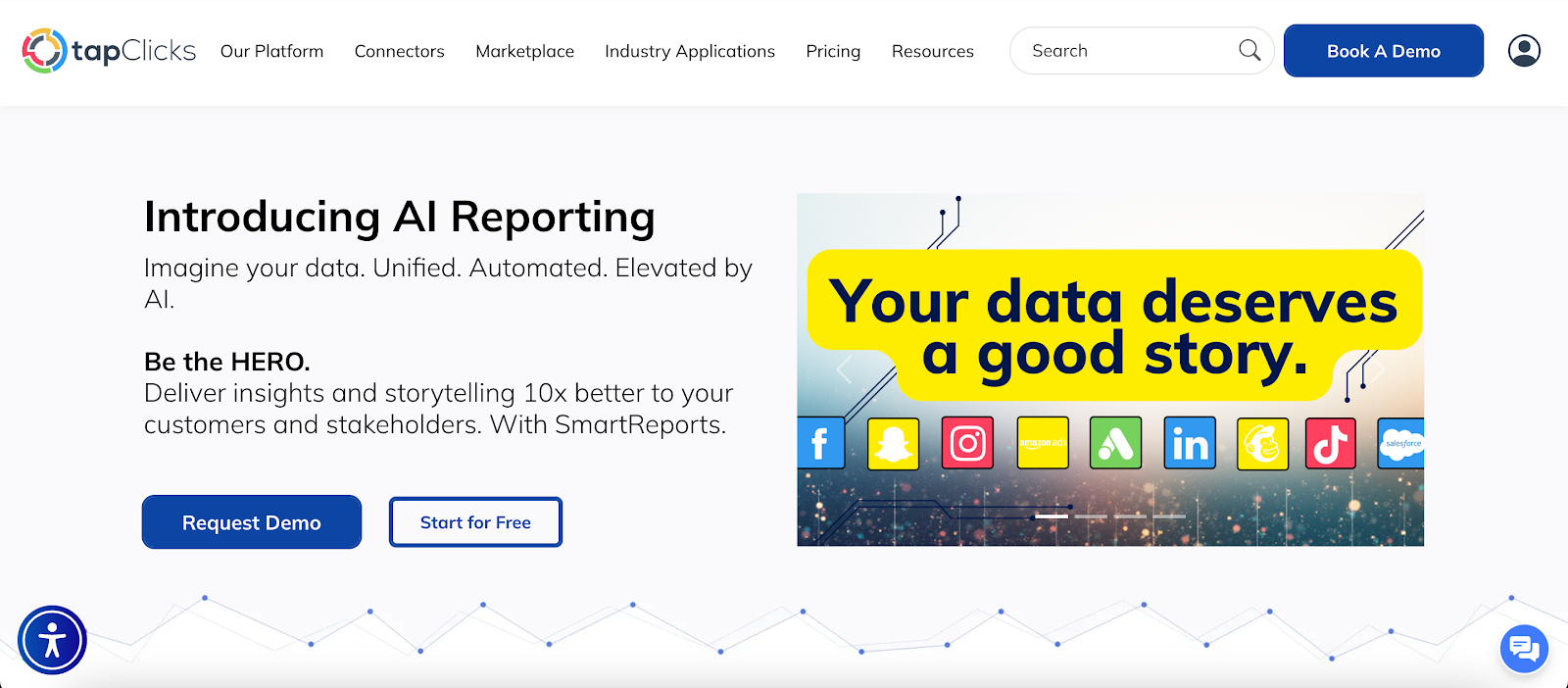
If you create SEO reports by pulling data from multiple SEO tools, you can use TapClicks to automate that process.
You no longer need to paste numbers into Google Sheets or slides. You also don’t need to recheck charts before sending detailed reports.
Create SEO Reports in Report Studio
You can build SEO reports inside TapClicks Report Studio. It works like a presentation editor.
You add pages, charts, tables, and text in a visual workspace. The difference is that every chart connects to live SEO data.
You can start in three ways:
-
“Design Templates” gives you a prebuilt layout where you connect your own data.
-
“Freehand” lets you create a report layout from scratch.
-
“Report Templates” includes both the layout and the data.
Once the layout is finished, you save it. You don’t have to rebuild it next month since the structure stays the same.
Keep SEO Data Updated Automatically
TapClicks also keeps your data organized. It connects directly to Google Analytics 4 and Google Search Console.
All connected sources appear in one place, so you can spot missing data or connection issues before a report goes out.
SEO metrics and traffic trends live inside one SEO reporting dashboard. You don’t need to switch between multiple SEO tools to check numbers.
Publish, Schedule, and Share Reports
Once the report looks right, you decide how to share it. You can publish it so it becomes a reusable template for future reports, or export it right away.
If someone wants a file, export the report as a PDF for email or as a PPT for presentations. If you don’t want to send it manually each time, set it to send on a recurring schedule.
White-label SEO reports let you apply your own branding, so everything looks consistent when clients open them.
You can also share access to live dashboards, which lets stakeholders review the report anytime without downloading anything.
Book a demo with TapClicks to see how recurring SEO reports work without rebuilding them each month!
FAQs About SEO Reporting
What is SEO reporting?
SEO reporting tracks and shares how a website performs in search engines. It combines metrics like organic traffic, keyword rankings, and conversions with analysis that explains what changed and why.
Many teams rely on SEO reporting software to deliver this data through automated reports.
What does an SEO report look like?
An SEO report typically includes an executive summary, traffic trends, keyword rankings, and technical findings.
Depending on the audience, it may also include a detailed analysis of content or backlinks. Many agency reporting tools deliver these reports as PDFs or live dashboards.
What does SEO mean?
SEO stands for search engine optimization. It refers to the practice of improving a website so it appears more often in unpaid search results.
SEO includes work on content, technical setup, and authority signals like backlinks.