8 Answer Engine Optimization Best Practices for 2026
Search doesn’t reward long explanations anymore. AI Overviews, voice assistants, and chat tools scan pages, extract one answer, and skip the rest.
If your content delays the answer, it won’t get cited.
People now discover brands through AI summaries. Ranking first means little when AI responds before a click happens.
Content has to state answers early, use a tight structure, and present facts machines can reuse.
This guide covers answer engine optimization (AEO) best practices you can apply to appear in featured answers and keep visibility in AI-driven search engines.
TL;DR
-
Build a question inventory using queries from top search results.
-
Audit content to find ranking pages without a direct answer.
-
Lead sections with direct answers that stand on their own.
-
Match featured snippet formats shown for each query.
-
Use schema like FAQPage, HowTo, Article, and Speakable.
-
Write spoken-friendly answers for voice search.
-
Earn authority through credible brand mentions off-site.
-
Keep content accurate by updating details and adding citations.
-
TapClicks helps connect AEO data with content and campaign performance so you can analyze AI visibility using reliable data.
1. Build a Question Inventory for AEO
AI engines generate answers by matching user queries to short, authoritative responses. If your content doesn’t reflect how people phrase questions, it won’t appear in AI search results.
Pull questions from sales calls, demos, support tickets, and onboarding notes. These sources show how prospects describe problems and what they expect an answer to address.
Next, check how those questions show up in Google AI Overviews and People Also Ask. These results reveal which questions Google already treats as answer-worthy and how it phrases them.
Capture the wording exactly. Minor phrasing differences affect whether AI models reuse your content.
Then review existing content. Many blog posts rank in search engine results pages (SERPs), but miss AI-generated answers because they never state a direct response.
Organize questions by intent, from early research through comparison and purchase. This keeps each answer focused and improves AI search visibility.
2. Audit and Update Existing Content for AEO
Start with the pages you already have. Many pages written for traditional search engines earn impressions but never appear in AI-generated answers.
The issue usually comes down to how the page presents information.
Open Google Search Console and review pages with impressions but low engagement. These pages already signal relevance, but AI systems can’t extract a usable answer from them.
Scan each page for problems that block AI answers. Examples include:
-
The page discusses a topic, but never states a direct response
-
The answer appears far below the introduction
-
The content uses bulky explanations instead of concise answers
Rewrite key sections so the answer appears first. Keep it short and factual. Then add context after the answer for readers who want more detail.
Check whether structured data fits the page. Schema markup helps AI-powered answer engines identify questions, responses, and context.
Updating existing content often improves AI visibility faster than publishing new pages.
3. Lead With Direct Answers That AI Can Extract
Once you know which questions matter and which pages need updates, focus on how each answer appears on the page.
AI platforms reuse sentences, not context. That’s why large language model optimization depends on wording that can stand on its own.
Each priority question should lead with a short paragraph that delivers a complete, authoritative answer. If someone reads only that paragraph, the answer should still make sense.
Place the answer immediately after the question header. Don’t preface it with background or transitions. State the point and move on.
Use precise language. Broad phrasing forces large language models to reinterpret your meaning, which reduces answer reuse.
Add supporting detail below the answer. Examples and clarifications help readers without interfering with extraction.
This structure increases the chance your content appears in AI responses across multiple platforms.
4. Structure Content for Featured Snippets
Featured snippets and People Also Ask boxes influence AI-generated responses. Major AI platforms such as Google’s AI Overviews reuse these formats, so your content should follow the patterns that answer engines recognize.
Check the existing result for your target query. Google shows the format it prefers, so follow that format exactly.
Unlike traditional SEO, creative structure doesn’t help here. Answer engines favor content they can recognize and reuse without adjustment.
Use headers that match the wording of the query. This helps answer engines connect the question to the answer using natural language processing (NLP).
Place the answer near the top of the page so AI systems don’t need to scan for it.
Keep each answer self-contained. AI tools pull single responses for AI-generated summaries and voice search. If the answer depends on context from another section, it won’t get used.
5. Use Schema Markup to Clarify Meaning for Answer Engines
Add schema as part of your technical SEO work. Focus on pages that already answer specific questions or explain a process. This keeps the markup tied to real content readers see.
Use schema types that support answer extraction:
-
FAQPage schema for clear question-and-answer sections
-
HowTo schema for step-by-step instructions
-
Article schema to show authorship and publication details
-
Speakable schema for short answers used in voice search
Schema reflects how AI engines work. Large language models rely on page signals during retrieval, especially in retrieval-augmented generation (RAG) systems.
Keep markup accurate and up to date. When content changes, update the schema to match.
Consistent signals help answer engines reuse your content across multiple AI platforms and improve AI citation frequency.
6. Optimize for Voice Search and Spoken Answers
Voice search works differently from typed search. Assistants like Google Assistant and Siri read one answer out loud, and that’s the only response the user receives.
Write answers that match user intent. People ask voice queries in full sentences. Your content should respond with a definitive answer.
For example, say, “Google Business Profile controls how a business appears in Google Search and Maps,” rather than a fragment pulled from a longer paragraph.
Use specific names and subjects. Voice assistants don’t infer meaning from nearby text. Write “Google Search Console shows impressions and clicks” instead of “it shows performance.”
Keep answers current. Voice systems prefer up-to-date information for pricing, setup steps, and product details. Old answers rarely get selected.
Voice optimization reflects current search behavior. When your content sounds natural when spoken, voice assistants choose it more often.
7. Strengthen Authority Signals Beyond Your Website
Answer engines don’t rely solely on your site. They look for brand mentions across sources they already trust.
When those mentions appear in the right places, your brand visibility in AI-generated answers increases.
Focus on sources that feed training data for generative AI. Industry publications, review sites, and professional platforms influence what AI systems cite far more than self-published content.
One quoted insight in a respected outlet can outweigh multiple posts on your own blog.
Prioritize efforts that create repeat and credible mentions:
-
Contribute bylined articles to industry publications with editorial review
-
Share expert analysis on LinkedIn tied to clear subject matter expertise
-
Encourage reviews on platforms your buyers consult
This work complements search engine optimization (SEO) but follows different signals. Instead of rankings and links, answer engines track how often your brand appears across sources during query fan out.
Treat digital PR as part of your content strategy. When your brand shows up where AI systems already look, it shows up more often in AI mode results.
8. Maintain Accuracy and Trustworthiness
Answer engines replace content as soon as it falls out of date.
According to InteractGEN, AI Overviews now appear in 42.5% of search results. Many brands see 25–70% drops in organic traffic as AI-generated summaries replace clicks.
When an answer relies on old or unsupported information, AI systems move on.
Start by auditing existing content that already gets impressions or citations. Update details that change often, such as pricing, product features, benchmarks, and platform behavior.
Support every claim with a credible source. Link to original research, primary data, or first-party findings.
Avoid statements you can’t verify. AI systems favor content they can trace back to reliable inputs.
Check for consistency across pages. If two pages answer the same question differently, AI tools won’t trust either one.
Connect AEO Data to Content and Campaign Results Using TapClicks
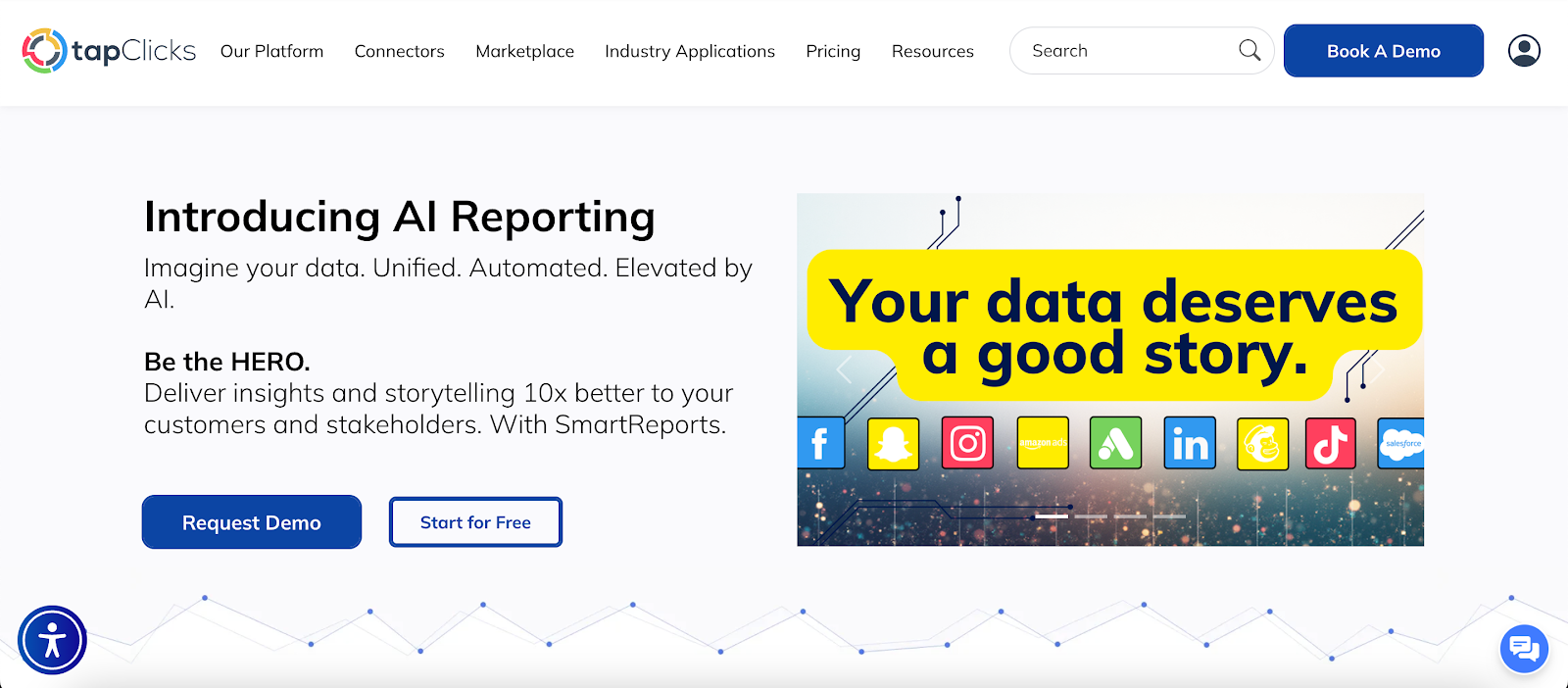
Most answer engine optimization tools show where your brand appears in AI-driven search.
TapClicks helps explain why those changes happen by connecting AEO data with content, campaign, and channel performance.
Instead of reviewing AI visibility in isolation, you can analyze it alongside traffic and engagement.
Analyze AEO Signals Across Channels
TapClicks connects to more than 10,000 data sources, including Google Search Console, Google Analytics, social platforms, ad networks, and CRM tools.
When you ingest data from SEO and AEO platforms, TapClicks organizes it in TapData so metrics stay consistent and comparable.
From one dashboard, you can analyze:
-
Imported AI overview or answer visibility data alongside traffic and engagement
-
How content updates correlate with AEO tool signals
-
Which pages and campaigns drive shifts in the AI-driven search landscape
Understand What Influences AI Visibility
TapReports and TapAnalytics let you create dashboards that visualize snippet data and AI-related metrics sourced from SEO and AEO platforms.
You can review these signals next to content changes and campaign activity to assess which updates align with changes in AI-driven search performance.
TapInsights adds benchmarks and summaries that surface patterns across channels without manual analysis.
Keep Data Consistent and Reporting Automated
TapClicks normalizes metrics across platforms through the Transformation Hub and resolves mismatches between sources such as Google Ads and Meta Ads.
AI Operator Agents create custom calculations, including citation frequency or weighted visibility scores, based on imported fields.
SmartEmail delivers scheduled summaries, and recurring reports run automatically.
With reporting automated, marketers can focus on updating pages, refining answers, and organizing content that supports AI-driven discovery.
FAQs About Answer Engine Optimization Best Practices
How is AEO different from traditional SEO?
Traditional SEO tracks rankings, clicks, and other SEO metrics tied to search results. AEO measures whether AI systems reuse your content in answers, summaries, or voice responses.
How long does it take to see results from AEO?
Results depend on the content you update and its existing visibility. Pages that already earn impressions often show changes sooner after you add direct answers.
Early signs usually appear within a few weeks. These include higher impressions on question-based queries or brand mentions in AI-generated answers.
Do AI Overviews reduce website traffic?
AI Overviews can reduce referral traffic for some searches since users see answers directly in results, but search visibility still matters.
When your content appears in AI answers, your brand reaches users at the moment they ask a question, which often influences site visits.