Adverity vs. Supermetrics: Which Marketing Tool Is Better?
You’ve probably pulled data from a few platforms, stitched it together, and still paused before hitting “send.” That hesitation is exactly why comparisons like Adverity vs. Supermetrics keep coming up.
Both platforms promise to simplify reporting and improve visibility into performance, and they deliver on that promise at first.
Then reporting grows, and workflows take more effort. This guide compares Adverity and Supermetrics and shows where those issues start to show up.
Ready for a simpler way to unify data and automate reporting? Book a demo with TapClicks.
TL;DR
-
Adverity and Supermetrics handle marketing data differently. Adverity manages and structures data, while Supermetrics pulls and sends data to reporting tools.
-
Adverity connects to more data sources and supports warehouse-based workflows and AI analysis.
-
Supermetrics offers a simpler setup and helps teams move data into dashboards and reporting platforms.
-
Both platforms can require more manual checks as reporting expands, especially with connector issues, data inconsistencies, and pricing limits.
-
TapClicks combines data ingestion, transformation, reporting, and AI insights in one platform, so reports use standardized data and include ready-to-share outputs.
What Is Adverity?
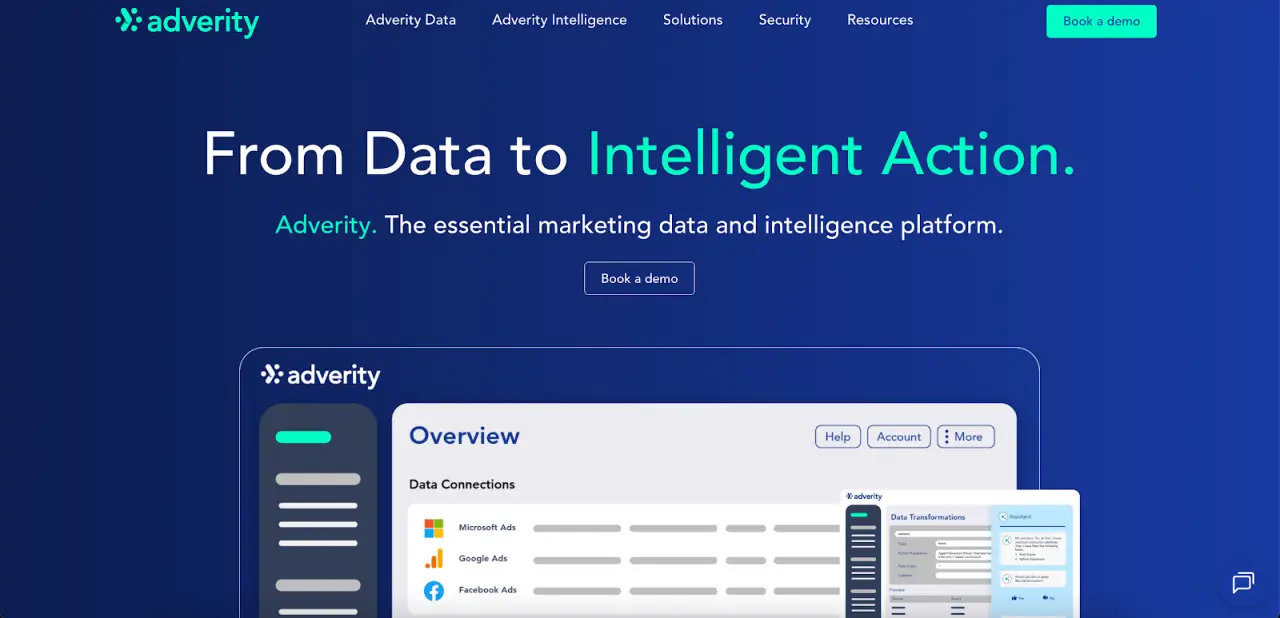
Image source: adverity.com
Adverity helps agencies and enterprise data teams manage marketing data from many sources, including ad platforms, analytics tools, proprietary systems, and data warehouses.
It’s often used when reporting workflows need governance, scheduled data updates, and more control over how raw data becomes usable insight.
Users can prepare datasets with templates, smart naming conventions, and an AI-powered Transformation Copilot. From there, they can create dashboards, notebooks, slides, and shared reports for data analysis and stakeholder updates.
Key Features
-
More than 600 pre-built connectors for marketing platforms and custom sources
-
Application programming interface (API) and webhook connections for proprietary data sources
-
Scheduled data updates for automated data integration
-
Data transformation options, including templates and smart naming conventions
-
Data warehouse connections for managing raw data and prepared datasets
-
Role-based permissions, audit trails, and data governance tools
-
Data monitors that check for duplicates, inconsistencies, and incoming data issues
-
Dashboards, notebooks, slides, shared views, and comments
-
AI-powered questions and benchmarking for marketing performance analysis
Adverity is often used by marketing service providers and data teams that manage multiple clients or complex reporting needs.
Its broader feature set can also mean a steeper learning curve, especially when teams need advanced analytics, custom fields, or warehouse-connected workflows.
What Is Supermetrics?
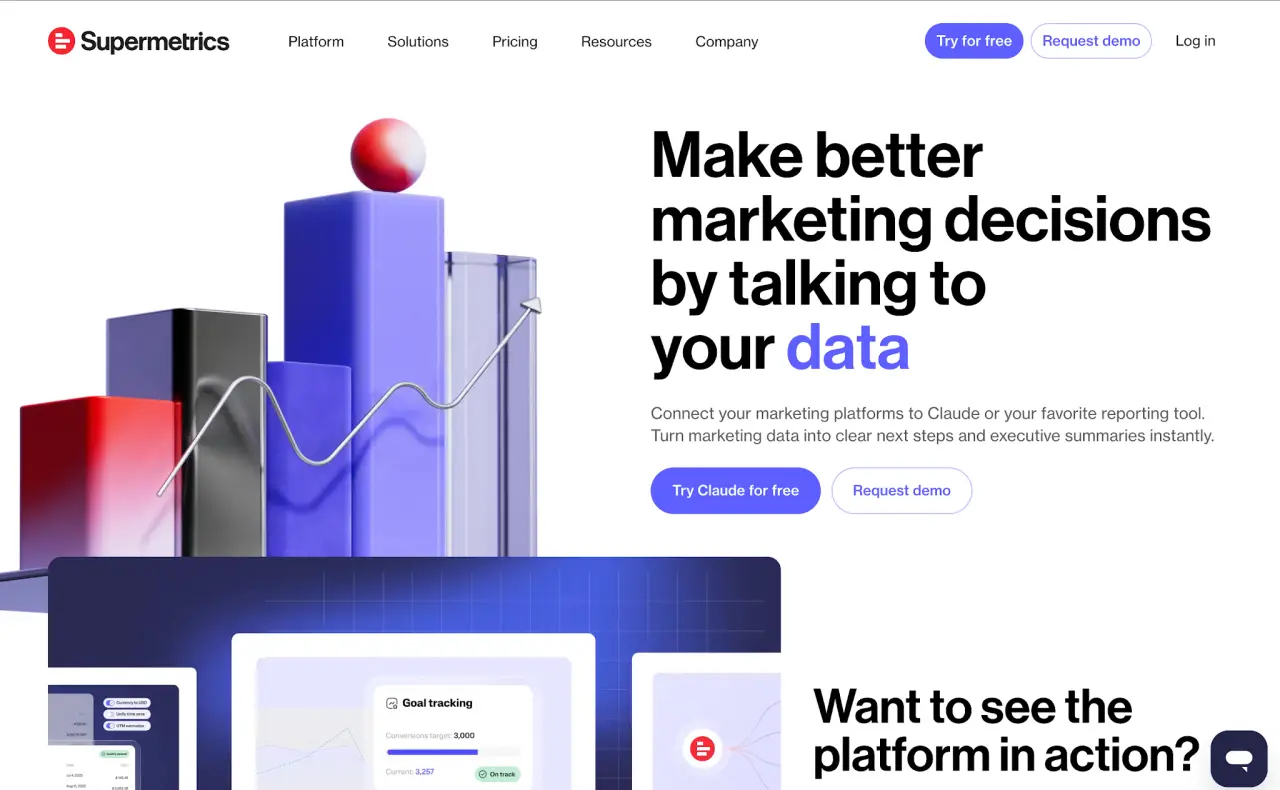
Image source: supermetrics.com
Supermetrics is a marketing intelligence platform that helps marketers extract, transform, and send campaign data into reporting tools.
It connects with platforms like Google Analytics, Google Ads, Facebook Ads, Shopify, and HubSpot, along with file imports and API sources.
Users can select metrics and dimensions, apply no-code data transformation, and schedule delivery. Data can then be sent to dashboards, business intelligence (BI) tools, or data warehouses.
Key Features
-
Pre-built data connectors for major marketing and advertising platforms
-
Custom imports through CSV, Excel files, APIs, and offline sources
-
No-code data transformation with naming rules, calculated fields, and data blending
-
Data export to dashboards, BI tools, and data warehouses
-
Data storage, replay, and backfill for historical reporting
-
Quality monitoring and alerts for tracking issues, missing tags, and anomalies
-
Custom metrics and dimensions for tailored reporting needs
-
Data API access for programmatic reporting workflows
Supermetrics is often used by marketing teams that need consistent data delivery into reporting environments without repeating manual exports each cycle.
Adverity vs. Supermetrics: Feature Comparison
Both platforms offer data connection, transformation, and reporting, but key differences show up when managing larger workloads and more complex reporting needs.
Data Connectors and Integrations
Supermetrics offers flexibility with data source connectors. You can connect tools like Google Analytics or Facebook Ads, upload CSV or Excel files, or use APIs, then send that data to your chosen reporting tools.
Adverity leans into connector coverage. It includes more than 600 data source connectors, along with custom connection options for proprietary systems.
Supermetrics and Adverity reduce manual exports. You’ll still run into fragmented data when different platforms use different naming conventions or track metrics differently.
Data Transformation and Standardization
Supermetrics lets you adjust datasets before they reach your reports. Data analysts can rename fields, create calculated fields, and combine data from multiple sources without writing code.
Adverity adds more structure to that process. It uses templates, smart naming conventions, and monitoring to keep datasets consistent when several users work within the same analytics platform.
Both platforms improve how raw data gets prepared. As workflows expand, maintaining consistency often calls for more technical expertise or ongoing oversight.
Reporting and Dashboarding
Supermetrics sends data into external reporting tools. Teams often create reports in Google Data Studio, Microsoft Excel, or other business intelligence tools based on their preferred setup.
Adverity keeps reporting within the platform. Users can create dashboards, notebooks, and slide-based outputs, then share them without switching between different platforms.
This marks a clear difference. Supermetrics connects data to a reporting stack, while Adverity includes more of the reporting layer within the platform.
AI and Insight Generation
Supermetrics integrates with AI tools, allowing users to explore marketing performance and generate summaries. It also offers a data API for teams that create custom reporting workflows.
Adverity includes built-in AI features for querying data, exploring trends, and comparing performance against industry benchmarks.
Both aim to provide actionable insights. The outcome depends on how consistent and well-prepared the data is before analysis.
Challenges Users Run Into With Adverity and Supermetrics
As marketing efforts expand, both platforms require more hands-on management.
Supermetrics users often hit limits with data source connectors, such as missing integrations or short lookback windows. When a connector fails, troubleshooting takes time, and data discrepancies mean reports need another check before sharing.
Adverity connects many data sources from various marketing platforms, but the setup can become complex.
Users mention a learning curve with advanced capabilities, especially when managing large numbers of pipelines or custom reporting setups. Automated runs can take longer or stop mid-process, which delays report updates.
Pricing also raises concerns. Supermetrics uses tiered pricing plans billed annually, starting with limits like one user and capped accounts per data source. As usage expands, teams move to higher tiers to unlock more connectors and faster refresh rates.
Adverity doesn’t publish clear pricing information, which makes early cost comparison difficult.
Why TapClicks Is the Top Alternative to Adverity and Supermetrics
Most marketers don’t lack data. They spend time preparing it before they can explain what’s happening.
Here’s what makes TapClicks a better option:
TapData Creates a Governed Marketing Data Warehouse
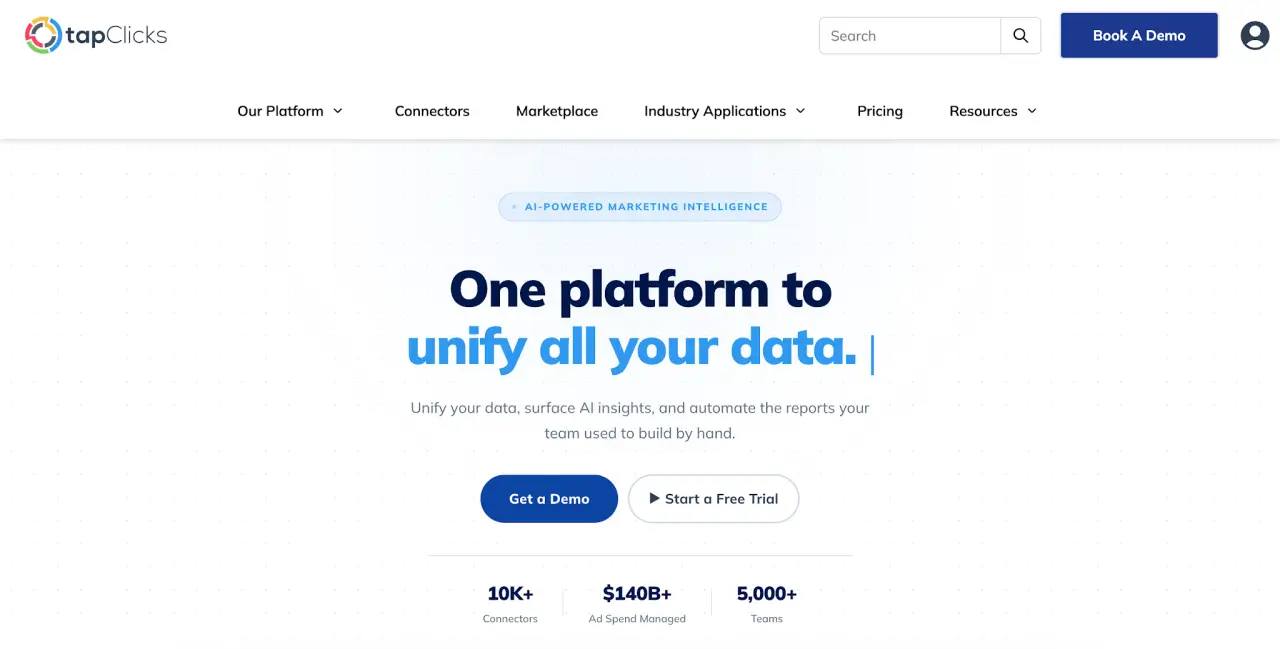
TapData unifies multiple data sources from various marketing platforms into a governed data layer. It works as a fully integrated data platform, so teams don’t manage separate pipelines for every channel.
TapData includes 250+ native connectors, plus SmartConnector for custom or proprietary systems. That connector range helps teams add more data sources without custom API work.
Automated syncs refresh data on a schedule, and historical backfill gives teams campaign history for trend analysis.
Enterprise hierarchy, role-based access, client-level isolation, and audit trails help manage brands, regions, locations, and campaigns.
No-Code AI Transformation Agents Simplify Data Preparation
TapClicks transforms raw data without structured query language (SQL) or advanced technical skills. The Transformation Hub centralizes naming rules, cleanup, margin tracking, segmentation, and pacing.
AI Data Transformation Agent creates custom metrics from plain-language prompts.
Auto Assign maps incoming data directly to the correct client fields, while Advanced Calculations and Custom Channels prepare datasets for reporting and dashboards.
SmartReports Automates Reporting at Scale
SmartReports replaces repeated report creation with templates and scheduled delivery. Report Studio creates reusable layouts, and Report Automation sends updates on a set cadence.
SmartEmail delivers AI-written summaries in the email body. Custom Branding keeps reports consistent, and the TapReports Mobile App gives teams mobile access to reports.
SmartStory and SmartSlides Turn Data Into Executive-Ready Narratives
SmartSlides generates presentation-ready decks from live data. Each slide presents performance data visually with key performance indicator (KPI) charts, written summaries, and recommendations.
Teams can export decks to PowerPoint or PDF. AI Context uses client goals, brand guidelines, and strategy documents to guide the narrative.
SmartSuite Surfaces Insights Before Clients Ask
SmartSuite uses AI Insights Agents to analyze performance, flag risks, and highlight recommendations. Industry benchmarks add context to campaign metrics.
Ask Your Dashboard answers questions from the data shown in the dashboard, including active filters like client and date range.
Build-Your-Own Agent and AI Operator Agents extend custom analysis and data transformation tasks.
Create Reports You Don’t Have to Double-Check With TapClicks
Adverity and Supermetrics cover similar features. Both connect marketing data, prepare it, and send it to a data destination like dashboards or Google Sheets.
Still, pressure builds once reporting expands. Marketing teams deal with multiple platforms, more data sources, and stricter reporting needs.
Data checks, connector issues, and limits around Supermetrics storage or access tiers start to slow down reporting cycles.
TapClicks replaces that patchwork with a single system. TapData unifies data from extensive connectors into a governed layer, so reports use consistent fields instead of mixed definitions.
No-code transformation and automation cut out heavy technical resources during setup and daily reporting.
SmartReports, SmartStory, and SmartSuite turn structured data into updates, presentations, and insights without repeating the same report work each cycle. Stakeholders read outputs that already include context and explanation.
FAQs About Adverity vs Supermetrics
What is the main difference between Adverity and Supermetrics?
Adverity focuses on managing and structuring large sets of marketing data, often with warehouse connections and governance. Supermetrics focuses on pulling data from marketing platforms and sending it to reporting tools.
Which platform offers more flexibility for data sources and integrations?
Adverity connects to more data sources, including custom systems, through its connector library and API options. Supermetrics covers many common marketing platforms and supports file imports, but certain connectors or limits can come up.
Is there a better alternative to Adverity and Supermetrics?
Yes, TapClicks is a better alternative to Adverity and Supermetrics. It combines data ingestion, transformation, reporting, and analysis in one platform.