7 Best Adverity Alternatives to Consider in 2026
You’ve got a report due, five tabs open, and numbers that still don’t line up. The dashboard looks ready, but when someone asks what’s driving performance, you’re stuck connecting the dots.
That’s why many teams start looking for Adverity alternatives. Adverity organizes data, but turning that data into marketing insight can still take time and effort.
In this guide, we’ll explore the top Adverity competitors and help you find a platform that makes reporting and decision-making a lot easier.
TL;DR
Here are the seven best Adverity alternatives in 2026:
-
Supermetrics
-
Funnel
-
Coupler.io
-
Salesforce Marketing Cloud Intelligence
-
Whatagraph
-
Windsor.ai
What Is Adverity?
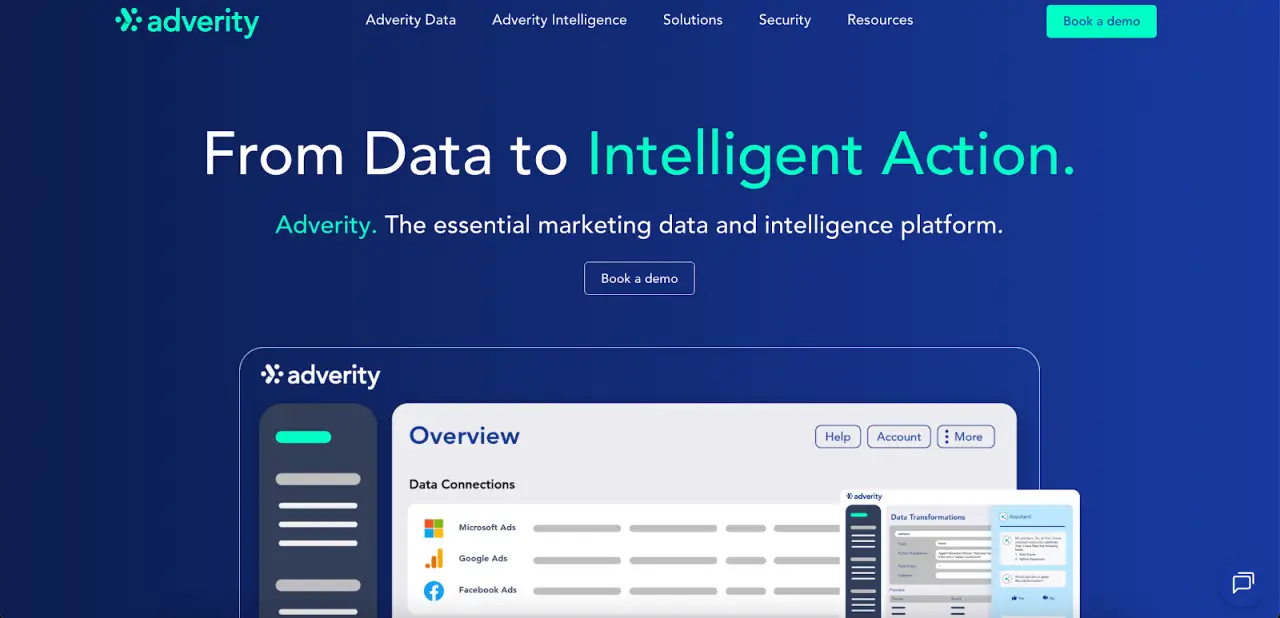
Image source: adverity.com
Adverity is a marketing intelligence platform for agencies and enterprise teams that need to manage large amounts of marketing data. It connects to over 600 data sources, including paid media, analytics, commerce, customer relationship management (CRM), and custom systems.
The platform helps teams prepare that data for reporting and analysis. It can clean raw data, standardize naming, remove mismatches, monitor data quality, and apply governance controls such as role-based permissions and audit trails.
Adverity also adds AI features for insight generation. Users can ask questions in plain language, create notebooks, and generate dashboards, slides, or reports to share with clients, teams, or leadership.
Common use cases include marketing data integration, data warehouse connectivity, cross-channel reporting, and enterprise data operations.
Why Marketing Agencies Search for Adverity Alternatives
Marketing teams start looking for Adverity alternatives when the platform takes more effort to manage than they expected.
Users say advanced features require training, and building detailed visuals takes time because of the number of settings involved.
Setting it up also requires technical knowledge, especially for integrations and custom reporting. When teams need help to finish reports or connect new data sources, progress stalls and deadlines get tighter.
Data pipelines create another challenge. Users report that creating a large number of pipelines takes time, and high data volume can reduce how often data is refreshed.
Application programming interface (API) documentation also comes up as a concern. When examples are limited, configuring custom connections becomes harder.
Automated reporting doesn’t always run on time. Marketing agencies that rely on fresh metrics for daily reporting, so even occasional delays can disrupt the entire workflow.
Top 7 Marketing Tools to Try Instead of Adverity
Here are the top seven marketing tools teams compare when exploring Adverity alternatives.
1. TapClicks
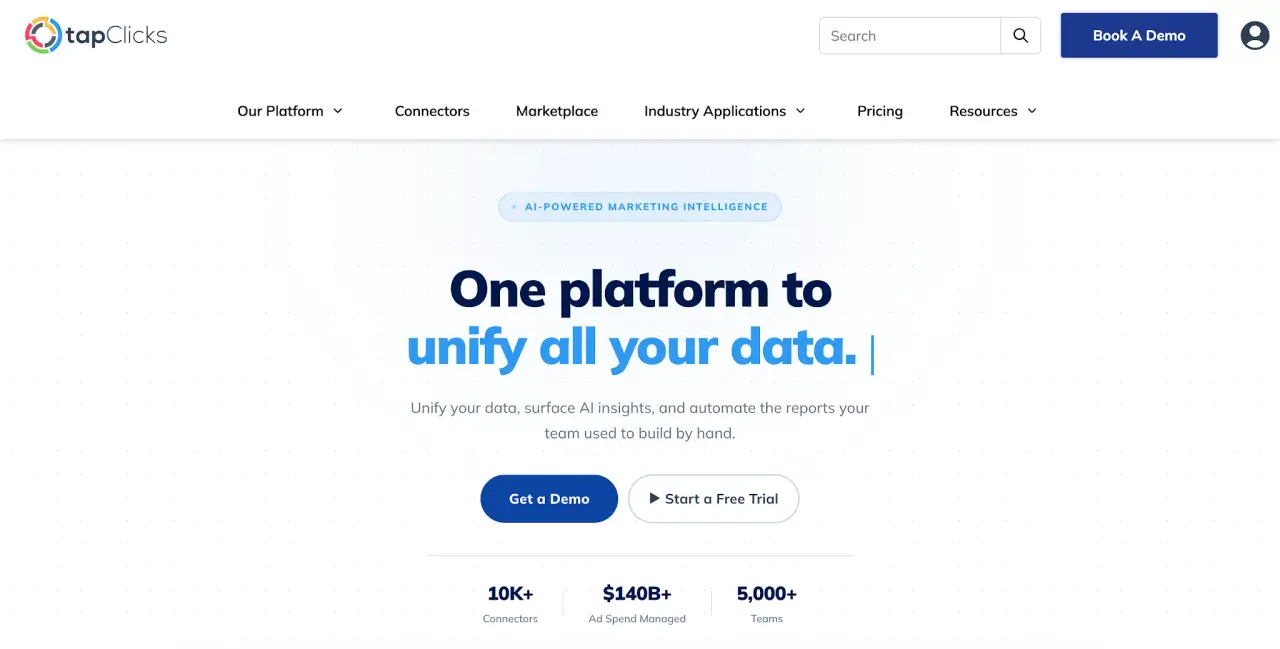
TapClicks is a marketing data platform for agencies, brands, and media teams that need more than cleaned-up numbers.
It brings data collection, data transformation, reporting, dashboards, and AI insights into one workflow, so you can turn raw performance data into client-ready reports.
Key features include:
-
250+ native data connectors plus SmartConnector for custom or niche sources
-
TapData for data governance, normalization, blending, transformation, and delivery
-
SmartReports, SmartSlides, and SmartEmail for AI-powered reporting
-
SmartAnalytics for interactive dashboards and performance monitoring
-
SmartSuite with 18 AI Insights Agents and custom AI agents
-
Data delivery to Tableau, Power BI, Snowflake, BigQuery, Looker Studio, Redshift, and Amazon S3
TapData Prepares Your Data Before AI Uses It
AI can’t explain performance if campaign names, metrics, and fields don’t match. TapData connects marketing data sources, standardizes naming, and blends data into unified channels, so reports reflect one consistent view.
It also protects data accuracy. Role-based access, client data isolation, audit trails, and hierarchy controls help agencies and brands manage accounts, regions, locations, and campaigns without exposing sensitive data.
Reports Come With the Story Already Written
TapClicks doesn’t leave teams with charts they still have to explain.
SmartReports schedules branded reports, and SmartSlides turns campaign data into polished presentations. SmartEmail sends AI-written summaries straight to stakeholders.
Each report highlights wins, risks, recommendations, and benchmark context, so clients and leaders understand performance without switching between dashboards.
AI Agents Add Analysis Capacity Without Adding Headcount
SmartSuite uses AI agents to review campaign and performance data for trends, pacing issues, and opportunities. You can also create custom AI agents for specific clients or workflows without writing code.
That makes it easier to handle more accounts without stretching your data analysts or relying on dedicated data engineering resources.
2. Supermetrics
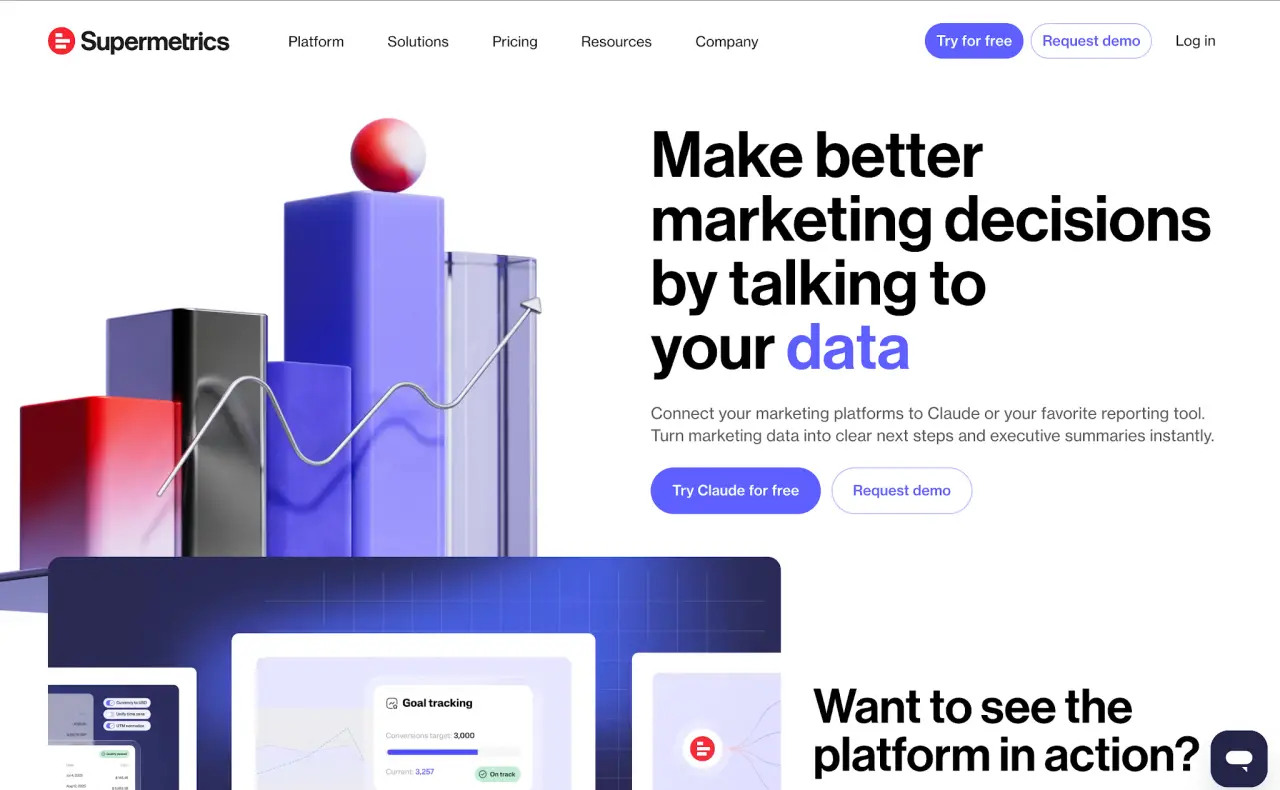
Image source: supermetrics.com
Supermetrics is data integration software that helps you pull data from different marketing platforms into your reporting tools.
It focuses on data extraction and delivery, so you can move marketing data into Google Sheets, dashboards, or cloud data warehouses for analysis.
Key features include:
-
Connectors for Google Analytics, Meta Ads, HubSpot, Shopify, and more
-
Data transformation and data blending without code
-
Delivery to Google Sheets, Looker Studio, Power BI, Excel, and cloud data warehouses
-
Custom imports for offline data using CSV and Excel files
-
Automated data collection with scheduled updates
Pros
Supermetrics is easy to start with. You can pull data into Google Sheets or Looker Studio in minutes, even without a data engineering team or advanced technical expertise.
It also integrates with common analytics tools. Many marketers use it to centralize marketing data collection and keep dashboards updated without repeating the same setup every cycle.
Cons
Pricing can feel restrictive. Many marketing data connectors and features sit behind higher-tier plans, so costs can increase as you add more data sources.
It handles data extraction and delivery, but not full reporting. You’ll need separate reporting tools or a marketing analytics platform to create client-ready reports and interpret results.
Connector limitations can block access to certain platforms. Data discrepancies can appear, which means you may need to review your numbers before sharing reports.
3. Funnel
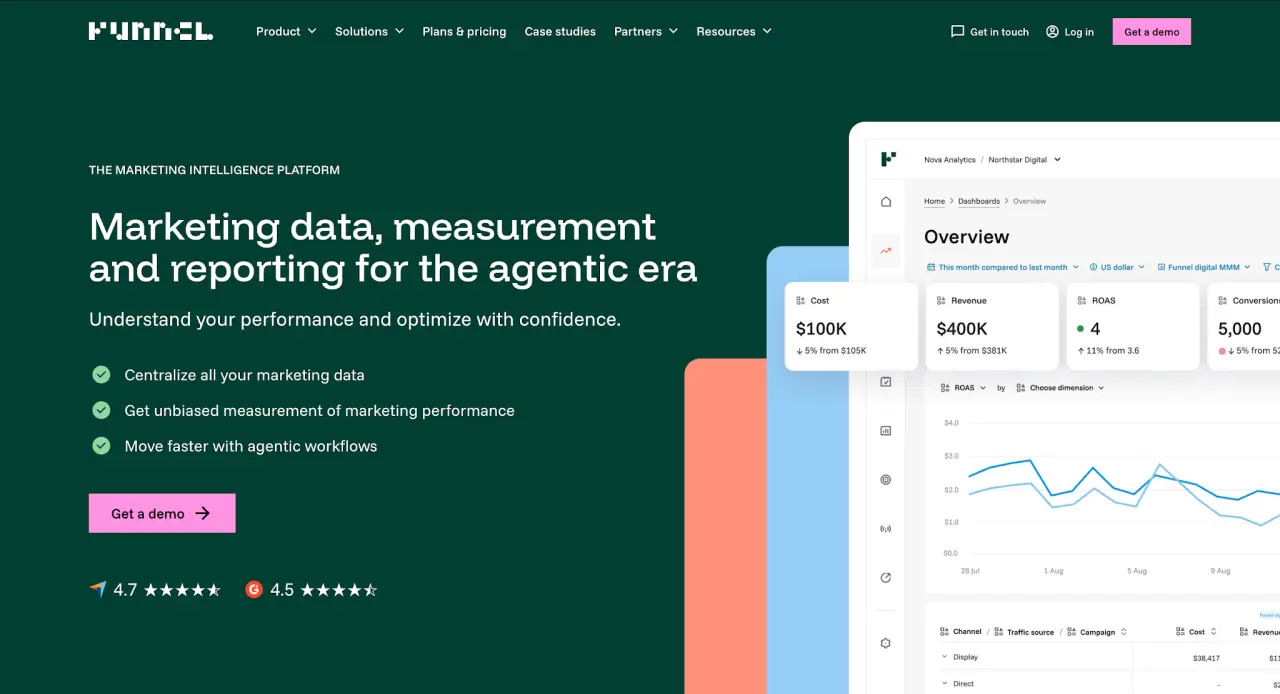
Image source: funnel.io
Funnel is a marketing data integration platform for companies that need structured, analysis-ready data. Its data hub collects and stores marketing data, then prepares it for reporting, measurement, and data analysis.
Key features include:
-
A centralized data hub for marketing data from Google Ads and many other sources
-
Built-in data transformation with field mapping and naming standardization
-
Marketing mix modeling (MMM), multi-touch attribution (MTA), and incrementality testing
-
Automated data extraction with pipelines, backfills, and API handling
-
Delivery to Google Sheets, Excel, business intelligence (BI) tools, and cloud data warehouses
Pros
Funnel standardizes metrics such as clicks, cost, and conversions. That gives data teams a cleaner dataset before it reaches reports or a larger data stack.
It also includes measurement tools for channel impact. MMM, MTA, and incrementality testing help enterprise marketing teams review performance with added context, including seasonality and offline activity.
Cons
Prices can increase as usage expands, especially when adding integrations or sending data to more destinations.
Funnel includes dashboards and templates, but many companies still use external analytics platforms or BI tools for stakeholder reporting.
4. Coupler.io
Image source: coupler.io
Coupler.io is a no-code data integration tool for data analysts and business users in marketing, finance, sales, and leadership.
It integrates with 400+ sources, including Google Ads, Facebook Ads, Google Analytics 4, HubSpot, and Google Sheets. You can then send that data to warehouses, spreadsheets, dashboards, API, and BI tools.
Key features include:
-
400+ data sources for marketing, sales, finance, and reporting
-
Data blending using append, join, and aggregate methods
-
Custom formulas and filters for creating reports
-
Built-in storage so you can access your data anytime
-
Dashboard templates for Looker Studio, Power BI, Tableau, and similar tools
-
An AI agent for asking questions and getting answers from your dataset
Pros
Coupler.io lets non-technical users automate reporting without relying on a data engineering team. You can connect data sources, set refresh schedules, and send data to your chosen destination from one interface.
Cons
Coupler.io still requires basic data handling. When you combine multiple sources, you need to align columns, formats, and field names so the data matches your report.
Pre-built dashboards may not match your setup right away. You may need to replace data sources, remove preset elements, or adjust the layout before the report reflects your data.
5. Salesforce Marketing Cloud Intelligence
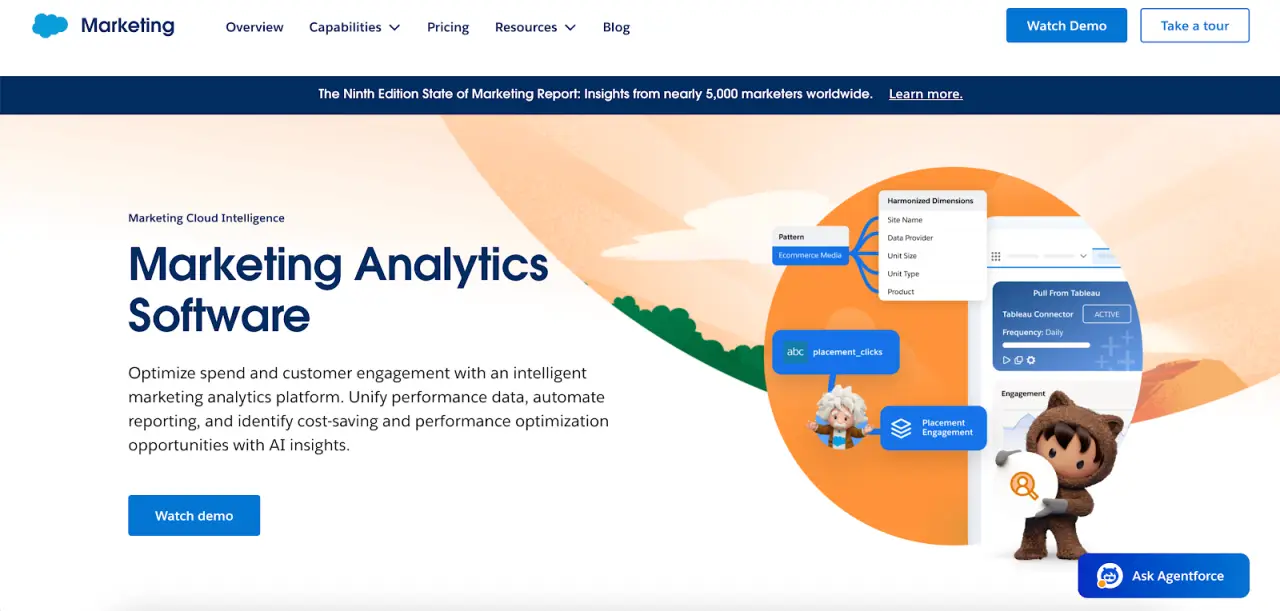
Image source: salesforce.com
Salesforce Marketing Cloud Intelligence is a marketing analytics platform that connects campaign performance with customer and CRM data.
It combines engagement metrics, ad performance, and revenue data so you can see how marketing activity influences results.
Key features include:
-
170+ connectors for advertising platforms, CRM systems, and databases
-
A universal connector for importing data from files or systems without native integrations
-
A built-in data model that organizes and standardizes marketing data
-
AI insights through Einstein to highlight performance patterns
-
Data exports to destinations like Tableau, Snowflake, and Google BigQuery
Pros
You can link campaign data with customer records in one system. This helps you track how marketing efforts connect to engagement and conversions without switching between multiple marketing tools.
The platform also enables cross-channel reporting. You can review email, mobile, and advertising performance together, then adjust campaigns while they're still running using AI-generated insights.
Cons
The platform has a steep learning curve. Setup, segmentation, and data modeling often require technical expertise, especially when working with SQL workflows.
It can also feel complex to manage. Permissions, integrations, and advanced configurations often require dedicated technical resources or outside support.
6. Whatagraph
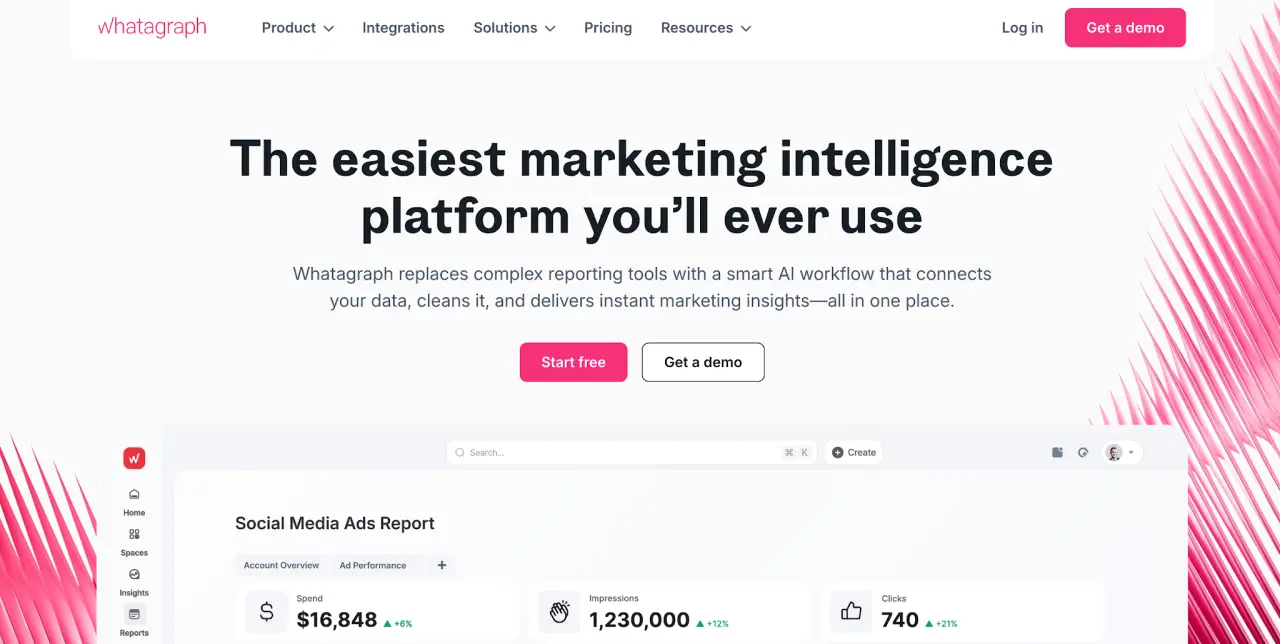
Image source: whatagraph.com
Whatagraph is a marketing reporting platform for agencies and marketing teams that need client-ready dashboards and reports.
It connects data from platforms like Google Ads, Shopify, HubSpot, and Mailchimp, then turns campaign metrics into branded reports.
Key features include:
-
60+ integrations, plus BigQuery connection and on-request sources
-
No-code data transformation for naming, calculated metrics, and data blending
-
AI-generated reports, written summaries, and chat-based insights
-
White-label dashboards with custom branding
-
Goals, alerts, version history, and role-based access control (RBAC)
Pros
Whatagraph gives marketers control over how reports look. You can add client logos, adjust colors, edit widgets, and organize campaign metrics for readers who don’t spend their day in analytics tools.
It also uses AI to write summaries and generate reports. You can ask questions in plain language and review insights inside the platform without asking a data analyst to prepare the first draft.
Cons
Whatagraph doesn’t replace a full data pipeline tool. If you need advanced control over data flows, custom destinations, or warehouse-heavy workflows, you may need another platform.
Users also mention delays when an external API updates. During those periods, dashboards may show missing or incorrect data until Whatagraph updates the connector.
7. Windsor.ai
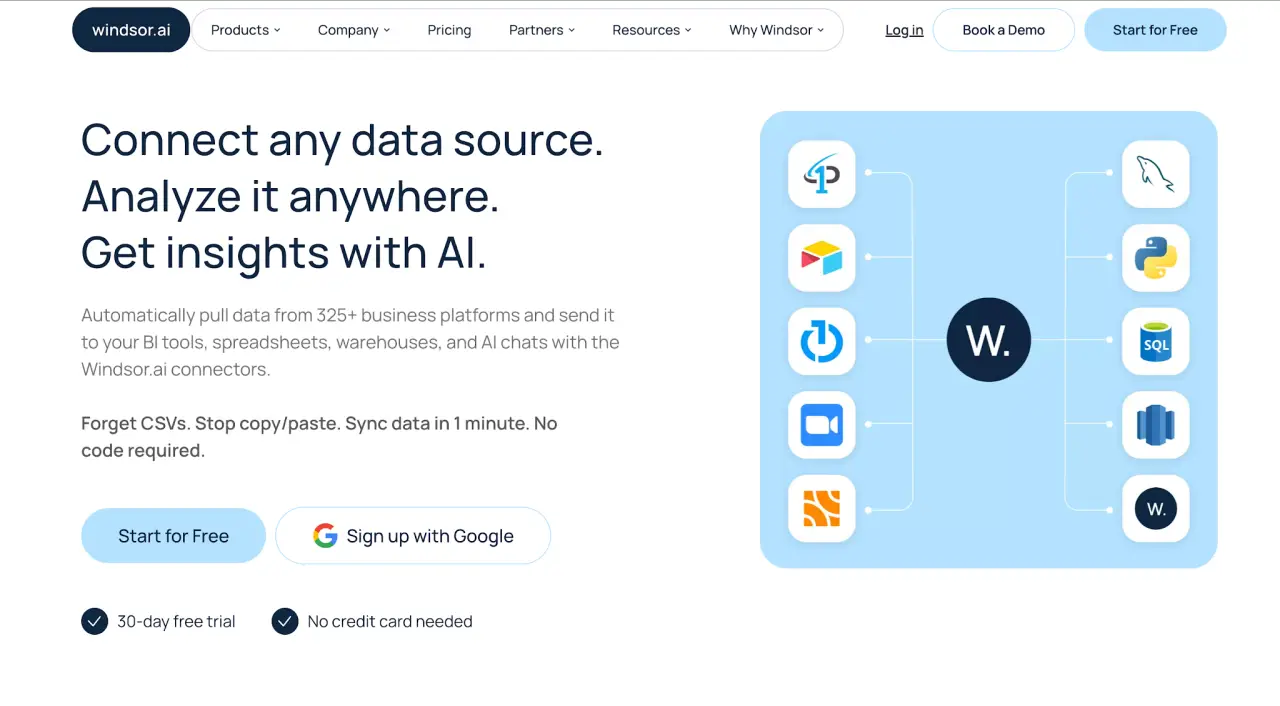
Image source: windsor.ai
Windsor.ai is a data integration platform for marketing, sales, and business reporting. It connects data from platforms like Google Analytics 4, Facebook Ads, and Shopify, then sends it to marketing data warehouses.
Key features include:
-
325+ data sources for marketing and business data
-
Extract, transform, load (ETL) and extract, load, transform (ELT) pipelines with scheduled syncs
-
Delivery to data destinations like Power BI, Tableau, Google BigQuery, and Google Sheets
-
Natural language insights through AI tools like ChatGPT and Claude
-
Pre-built dashboard templates and data blending
Pros
Windsor.ai helps users manage data transfers without exporting files or writing scripts. It also gives agencies access to unlimited users and data blending on every plan, based on the source material.
Its AI layer lets you ask questions about campaign performance, revenue trends, or sales pipeline data and get answers directly. That makes it easier to review data without writing queries.
Cons
Users report issues with certain connectors. When an API changes or fails, data updates can stop until Windsor.ai fixes the connector.
Setup can take time for custom data connectors, field mapping, and advanced transformations. The interface may also require time to learn in certain areas.
Switch to TapClicks and Simplify Your Reporting Process
Choosing an Adverity alternative usually means something in your reporting process isn’t working. Reports take too long to prepare, data from different platforms doesn’t match, or insights arrive too late to use.
Many marketing tools cover data collection, delivery, or dashboards. However, you still have to connect sources and destinations, check your numbers, and explain performance before sharing results.
That process becomes harder to manage as accounts and campaigns grow.
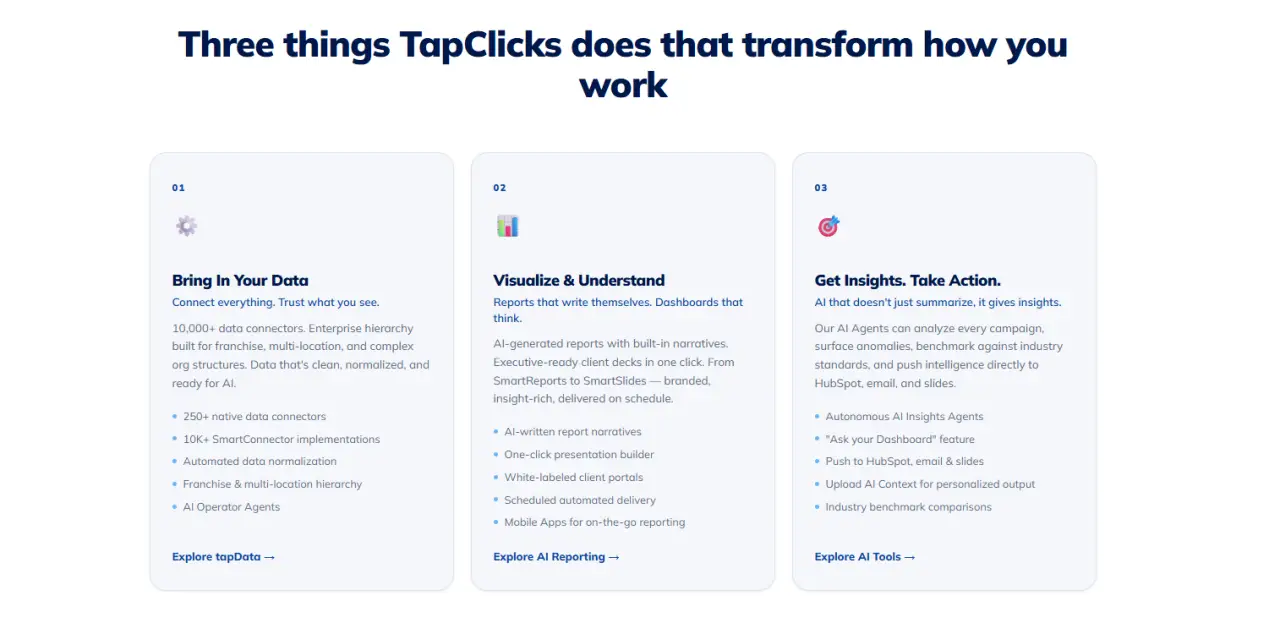
TapClicks handles the full workflow from data collection to reporting and insights. It connects your marketing data sources, organizes all your data into a consistent structure, and delivers reports that already include context and recommendations.
If you’re looking for a new marketing data platform with centralized data management, TapClicks lets you manage reporting, dashboards, and insights without relying on multiple tools.
FAQs About Adverity Alternatives
What should you look for in an Adverity alternative?
Start with how the platform fits into your reporting workflow. Can it connect your data sources, keep your numbers consistent, and generate reports right away?
Also consider how much setup it needs and whether your team can manage it without relying heavily on technical help.
Who are the competitors of Adverity?
You’ll usually see TapClicks, Supermetrics, Funnel, Coupler.io, Salesforce Marketing Cloud Intelligence, Whatagraph, and Windsor.ai in the same conversation.
Each one focuses on a different part of marketing data, from integration to reporting to analysis.
Which Adverity alternative is easier to use?
TapClicks is easier to use when you want to manage data integration, reporting, and insights in one platform. You can connect your data sources once, then generate reports and review insights without complications.