10 Data Integration Benefits You Can’t Afford to Ignore
Every click, conversion, and customer action tells part of a story. The value shows up once those pieces connect. That’s where data integration benefits come into focus.
Marketing data integration unifies disparate data sources into a single, trusted source that teams can use.
In this article, we’ll walk through the most important benefits of data integration, why they matter for marketing teams, and what unified data unlocks for reporting, analytics, and growth.
TL;DR
-
Data integration benefits include accurate reporting, faster insights, and fewer manual fixes.
-
Unified data removes silos between marketing, sales, and operations.
-
Consistent data improves forecasting, attribution, and customer analysis.
-
Integrated analytics help teams adjust campaigns sooner and reduce wasted spend.
-
TapClicks brings integration, transformation, reporting, and exports into one platform.
What Is Data Integration?
Data integration means bringing data from different systems into one unified view that teams can use for analysis and decision-making.
It connects information from tools like customer relationship management (CRM) platforms, marketing software, and internal databases, so reporting and analysis rely on consistent data.
The data integration process pulls data from each source, standardizes data formats, and prepares it for use in a data warehouse. This improves data accuracy, reduces duplicate records, and eliminates manual data entry.
In marketing data integration, campaign data, customer data, and performance metrics come together in one place.
With unified data, teams can rely on business intelligence and advanced analytics to understand results and respond to customer needs faster.
10 Data Integration Benefits You Can Expect
Let’s look at the main data integration benefits and what they provide. These benefits explain why marketing data integration has become a priority for analytics and reporting.
1. Eliminate Data Silos That Separate Teams and Platforms
Data silos form when teams store information in different systems that don’t connect.
Marketing reviews campaign data in one tool. Sales rely on customer records in another and operations track performance somewhere else.
A data integration solution connects these systems so everyone can work from a single, unified dataset.
When data from multiple sources is combined, duplicate records are dropped, and data remains consistent. Reports no longer require pulling numbers from several tools just to answer one question.
With shared data in place, decision-making becomes easier. Stakeholders can compare results, spot patterns, and adjust marketing efforts using reliable information they trust.
2. Improve Data Accuracy and Consistency
Accuracy issues often start when systems record the same action using separate rules. An ad platform may count a conversion at the click, while a customer relationship management system records it after a form submission.
When those definitions don’t match, reports stop lining up.
Data integration fixes this by applying one set of rules to key metrics. Conversion events follow a single definition.
Revenue uses the same calculation wherever it appears. Duplicate or incomplete records get flagged before they affect reporting.
With marketing data integration in place, campaign results and customer actions match in every report. Reviews stay focused on performance instead of sorting out conflicting numbers.
3. Increase Sales Performance and Customer Lifetime Value
Sales teams close more deals when they have context at the start of every conversation.
When marketing data integration connects campaign activity, lead history, and customer interactions, reps start with context. They know what sparked interest, which messages resonated, and when engagement happened.
The results show up in the numbers. According to Merge, 59% of organizations link integrations to higher sales close rates.
The same research found that customers who use product integrations are 58% less likely to churn. Connected data helps win deals and keep them.
Customer lifetime value (CLV) also improves after the sale. When marketing and sales data stay connected, account teams can see usage patterns, feature adoption, and changes in engagement.
That insight helps teams respond earlier, adjust outreach, and keep customers engaged.
4. Gain a 360-Degree View of Customers
A 360-degree customer view comes from linking marketing activity, sales history, and support interactions to the same customer record.
Marketing data integration connects these data sources so each interaction adds context instead of standing alone.
This connection shows how a customer first engaged with a campaign, how the sales conversation progressed, and what happened after purchase.
Sales teams reference prior touchpoints before reaching out. Support teams see recent activity before responding. Marketing teams tie outcomes back to specific campaigns and channels.
With customer data connected this way, outreach becomes more relevant and better timed.
Messages reflect what the customer has already done, which leads to more consistent communication throughout the customer lifecycle.
5. Increase Operational Efficiency and Reduce Manual Work
Manual work usually starts after data moves between systems and doesn’t stay in sync. Someone exports campaign results, uploads them into another tool, then fixes missing fields or mismatched values.
That cycle repeats every reporting period and pulls attention away from analysis.
Data integration reduces this effort by keeping data flows consistent as information updates. When performance changes in one system, those updates carry through without re-entry.
Marketing campaigns reflect new results automatically. Customer records stay accurate without manual fixes.
With marketing data integration in place, fewer mistakes show up in reports. Teams review results sooner and spend more time using data instead of maintaining it.
6. Support Advanced Analytics and Predictive Insights
Advanced analytics depends on high-quality data. When information comes from fragmented systems, models miss inputs, and trend analysis loses accuracy.
Data integration solves this by combining data into a unified system that analytics tools can rely on.
Marketing data integration connects campaign performance, engagement history, and customer actions through the same integration process. That connection reduces data duplication and keeps metrics in sync.
Analysts can work with relevant data stored in a marketing data lake instead of stitching together partial records from legacy systems.
With reliable data in place, predictive marketing analytics becomes more useful. Teams spot market trends, forecast outcomes, and turn insights into decisions that influence business operations.
Leveraging integrated data shifts analytics from reporting on the past to planning for what comes next.
7. Strengthen Compliance and Data Governance
Compliance reviews often fail when teams can’t explain where a number came from or who last changed it. Data moves through several systems, and without a clear record, audits turn into long email threads and manual checks.
Data integration improves data governance by keeping a consistent record of how information enters systems, changes, and gets reported.
Access controls limit who can update customer records or campaign data. Automated checks flag missing consent fields or unexpected value changes before reports go out.
Marketing data integration plays a key role here. Customer information, consent status, and campaign metrics follow the same rules from source to report.
Teams can trace records back to their origin, answer audit questions faster, and reduce the risk of reporting errors due to compliance requirements.
8. Handle Growing Data Volumes Easily
As data volumes increase, reporting becomes harder to maintain when every new tool introduces its own fields and formats.
Each addition adds more prep work and increases the risk of errors, especially when data management relies on manual adjustments.
A well-defined data integration strategy keeps this manageable. New data sources feed into the same target system using existing rules for data transformation and data replication.
Automated data quality checks catch missing values or format issues early, which helps maintain data consistency as inputs change.
With marketing data integration in place, new platforms and campaigns don’t slow reporting down. Relevant data lands in a central repository ready for analysis, even as activity increases.
Teams can review results and make decisions without reworking reports every time something new gets added.
9. Gain a Competitive Advantage With Faster Insights
A competitive advantage comes from acting early, not just collecting more data. When information stays fragmented, changes often show up after campaigns end or budgets are already spent.
Marketing data integration shifts that timeline. Continuous data from active campaigns, customer interactions, and performance signals flows together while activity is still in motion.
Underperforming channels surface sooner, and messaging that starts to resonate becomes clear earlier.
Those signals support timely adjustments while outcomes can still change. As results feed back into planning, business processes adapt faster than those relying on delayed reports.
10. Reduce Costs Through Smarter Data Management
Return on investment (ROI) depends on seeing performance early. When reporting arrives late or lacks detail, budgets get locked in before performance is understood, which leads to wasted spend.
Industry data shows how strong the payoff can be. According to Integrate.io, every dollar spent on analytics backed by proper data integration returns an average of $13.01.
In high-performing industries, that return reaches $45 per dollar invested. The gains come from better data access, cleaner inputs, and analytics that influence decisions earlier.
Marketing data integration contributes directly to these results. Campaign spend shifts toward channels that show traction sooner. Low-performing efforts get adjusted before costs pile up.
Over time, data integration platforms help organizations use their existing data more effectively and turn analytics into a consistent source of financial return.
TapClicks Is the Best Platform to Unlock Data Integration Benefits
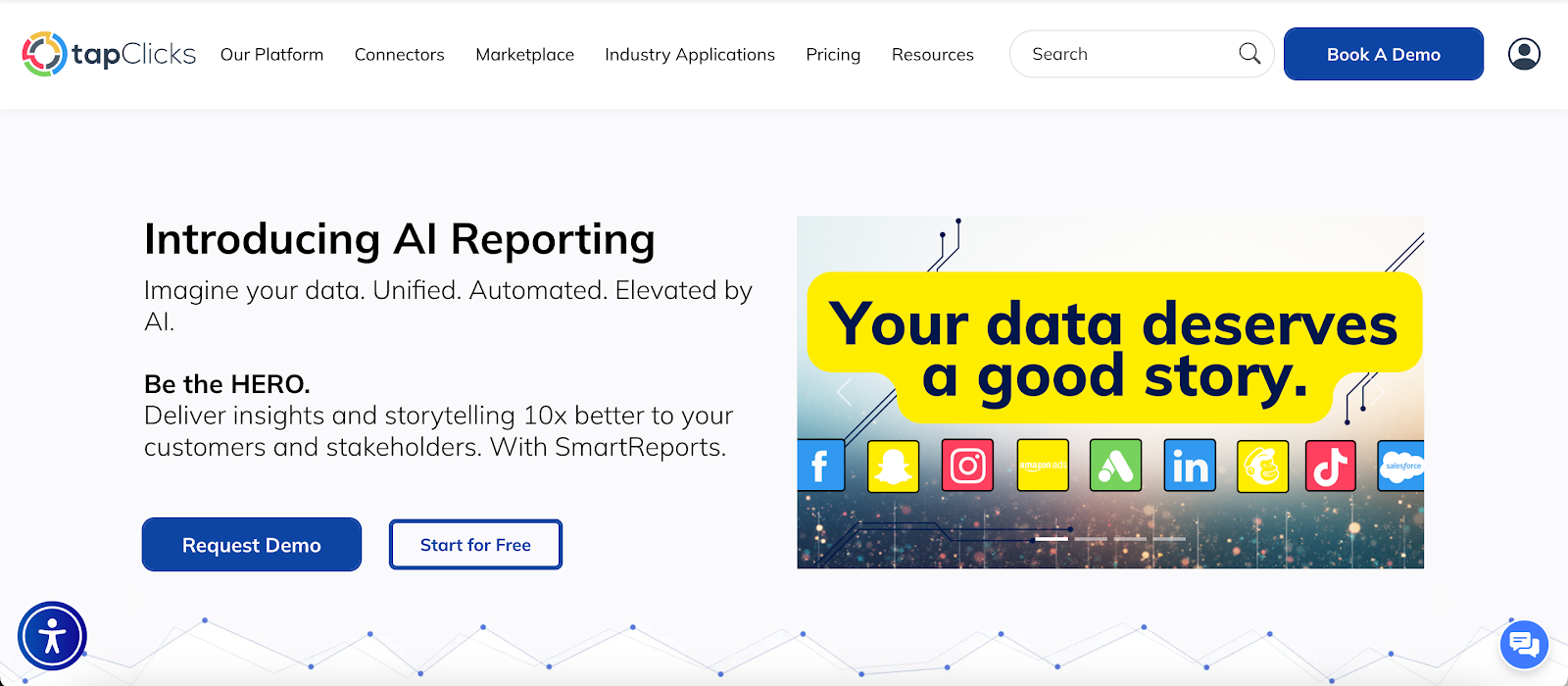
Successful data integration depends on what happens after data is collected. If information enters a system but needs constant cleanup, its value drops quickly.
TapClicks focuses on the full data lifecycle, from intake through reporting, so marketing data stays usable as programs, channels, and requirements change.
Data integration tools, transformation logic, and reporting live in one platform. Information flows in from many systems, follows consistent rules, and remains usable without repeated rework.
Unified Data Access With TapClicks SmartConnectors
TapClicks SmartConnectors support multiple data integration methods, giving marketers flexibility without long setup cycles.
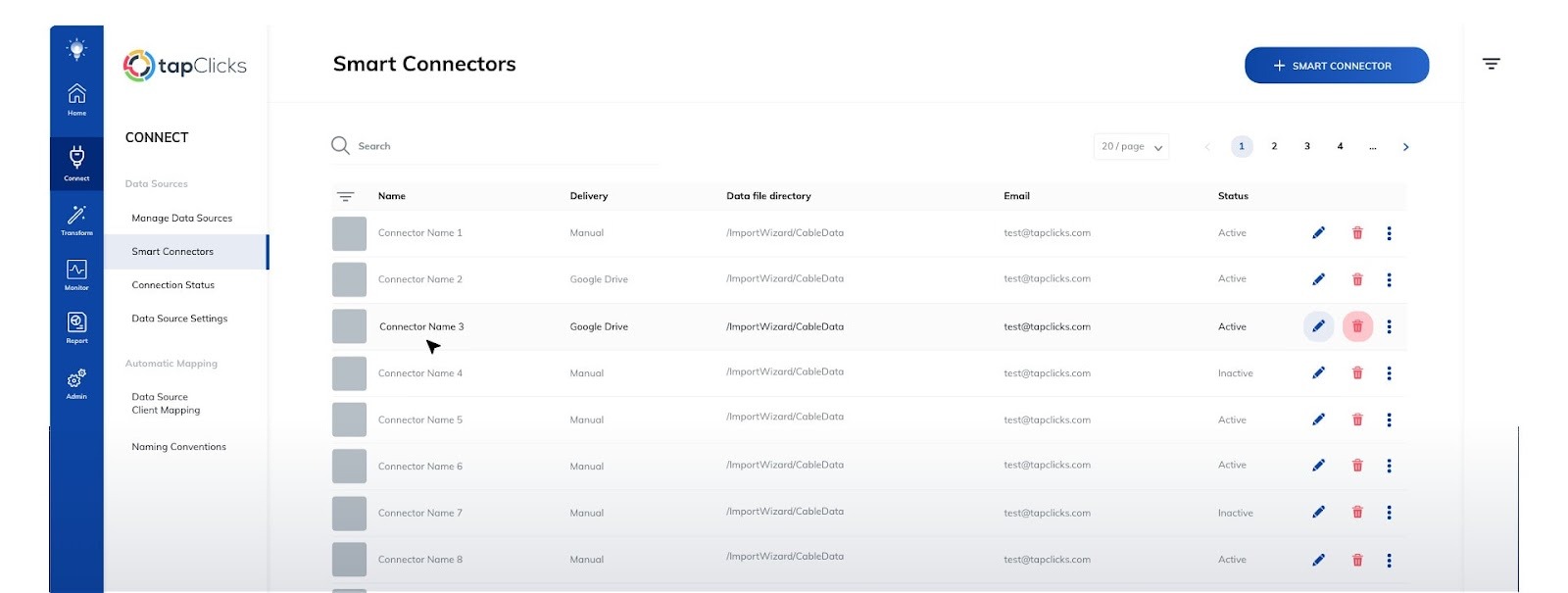
There are three primary ways data enters the platform:
-
Instant-On connectors: Store historical data, supporting trend analysis and deeper reporting.
-
Live On-Demand connectors: Retrieve fresh data when timing matters, such as during active campaign reviews.
-
SmartConnectors: Pull data from virtually any source, including offline files and third-party systems, without long development timelines.
This setup supports data virtualization in practice. Analysts can work with consolidated data for reporting, exports, and audits without duplicating data into separate systems.
Data access stays reliable while eliminating data silos without forcing every source into the same rigid structure.
Transform, Normalize, and Manage Your Data With Precision
Incoming marketing data rarely follows consistent rules. Naming varies, and metrics conflict. TapClicks handles these issues before data reaches dashboards.
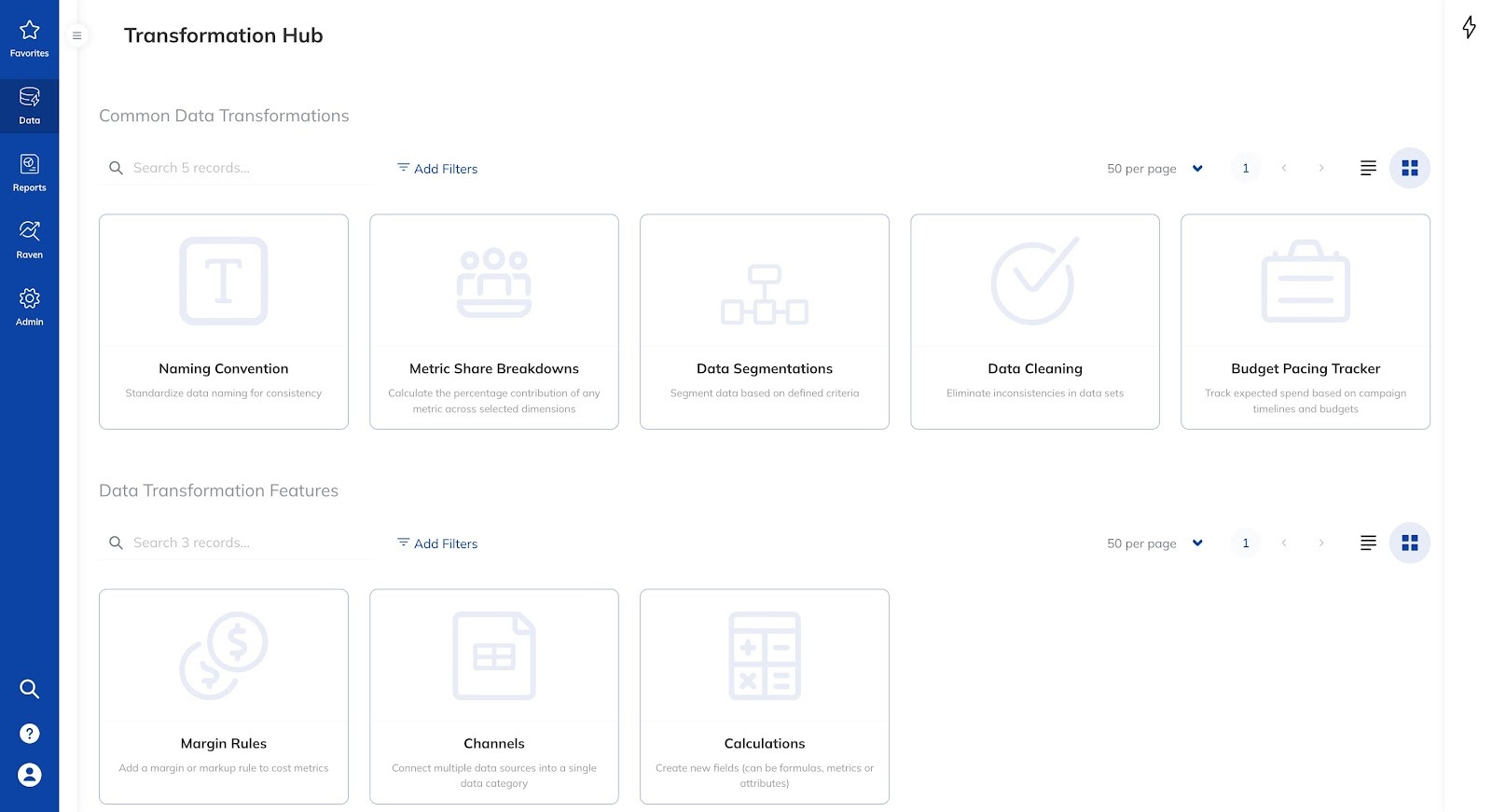
Two core tools manage this process:
-
Transformation Hub: Applies repeatable rules for cleanup, normalization, segmentation, and pacing as data arrives.
-
Advanced Calculations: Support custom formulas, conditional logic, and text modifications such as replacements and formatting.
Together, these tools support improving data quality and long-term data quality management without exporting data elsewhere or repeating fixes.
Auto-Assign and Scale Management handle client and account mapping as data volume increases.
Incoming records route to the correct destination automatically, which reduces errors and keeps reporting logic consistent.
Turn Integrated Data Into Actionable Insights
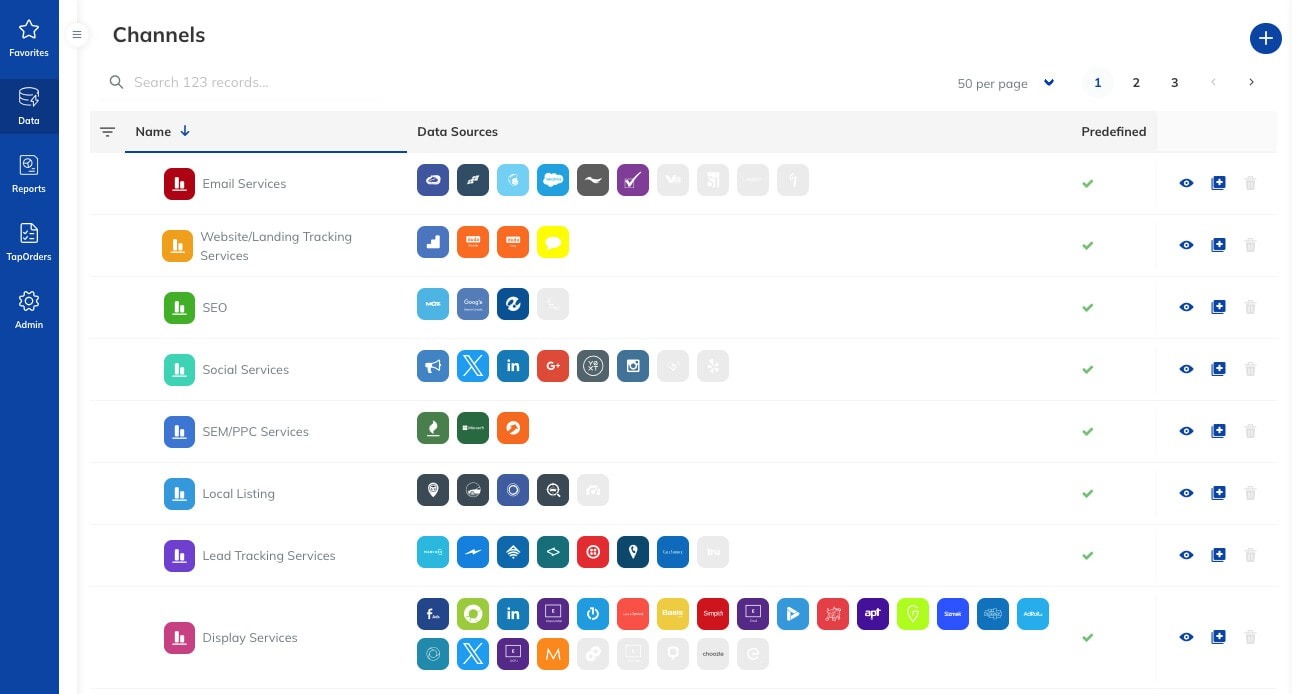
TapClicks Channels organizes integrated data into reporting views that reflect how marketing performance gets evaluated.
-
Pre-defined channels: Provide ready-made views for common services such as display, email, lead tracking, social media, website, landing pages, and search engine optimization (SEO).
-
Custom channels: Merge multiple sources into customized dashboards that match internal reporting requirements.
Reporting, analytics, and exports all reference the same prepared data. That consistency keeps reviews focused on outcomes instead of reconciling numbers.
When consolidated data supports decision-making, insights arrive sooner.
Explore Data Integration Inside TapClicks
TapClicks shows its value when data moves from source to report without repeated fixes.
A demo walks through SmartConnectors, transformation tools, Channels, and exports using real marketing scenarios.
You’ll see how integrated data supports cleaner reporting, earlier insights, and better results using the data you already collect.
Book a TapClicks demo to see how marketing data integration works in practice!
FAQs About Data Integration Benefits
What are the benefits of data integration?
Data integration brings information from multiple systems into one place so reporting and analysis rely on the same data.
This supports efficient data management, reduces manual effort, and often leads to cost savings by eliminating duplicate work. It also helps organizations optimize operations by reacting to performance changes sooner.
What are the goals of data integration?
The goal of data integration is to make data usable for reporting and decision-making without constant cleanup.
A solid data integration setup helps teams keep up with emerging trends, work from consistent information, and use data earlier.
What are the benefits of data integrity?
Data integrity ensures information stays accurate, complete, and traceable from source to report.
Effective integrity practices also help protect sensitive data, support compliance requirements, and reduce the risk of incorrect decisions.