Adverity vs Datorama: Features, Pricing, and Review
A report lands in your inbox. The numbers are there, but the takeaway isn’t clear. Someone still has to interpret performance, write the summary, and explain what changed.
Adverity vs Datorama comes up often when marketers look for a tool that connects data and reporting. Both aim to organize performance data and deliver insights.
This guide compares Adverity and Datorama, focusing on features, user experience, and reporting, so you can assess which tool best fits your workflow.
TL;DR
-
Adverity prepares marketing data, while Datorama analyzes campaign and customer data within Salesforce.
-
Adverity connects to more sources and focuses on data preparation before reporting.
-
Datorama links campaign performance with customer profiles using Data 360 and Einstein AI.
-
Both tools still require manual work to interpret results and complete reports.
-
TapClicks helps with report creation and delivery, so marketing teams can share updates faster.
What Is Adverity?
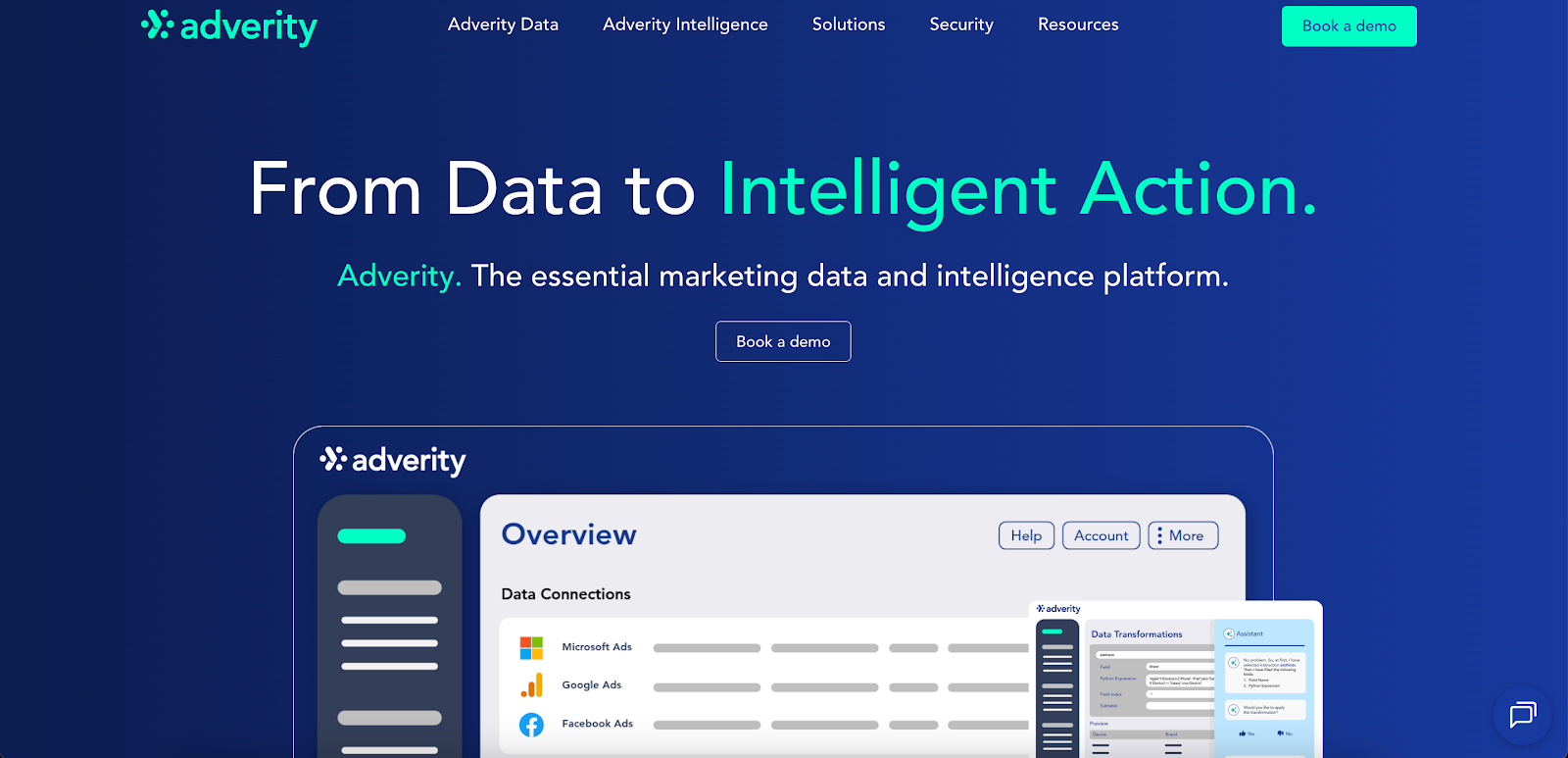
Image source: adverity.com
Adverity gathers marketing data from multiple sources and prepares it for reporting or storage. Agencies and enterprises use it when reports depend on inputs from different platforms.
It handles ingestion, transformation, governance, and AI-assisted querying, so marketing teams work with structured data before building dashboards or reports.
Here are the core features of Adverity:
-
Connects to 600+ data sources and destinations, including advertising platforms and analytics tools
-
Supports custom connections through application programming interfaces (APIs) and webhooks for niche or proprietary data
-
Uses extract, transform, load (ETL) tools to organize and standardize raw data
-
Applies Smart Naming Conventions and templates for consistent reporting
-
Monitors data quality with automated checks, alerts, and audit logs
-
Uses conversational AI to query marketing data in plain language
-
Sends data to business intelligence (BI) tools, visualization platforms, or warehouse systems
-
Includes scheduling and orchestration to keep fresh data flowing into reports and downstream systems
Where Adverity Is Commonly Used
Adverity is often used by marketing teams that manage reporting for many clients, regions, or campaigns. Each account may rely on different platforms, requiring data to be processed before reporting begins.
It’s also used in setups that rely on a data warehouse and tools like Power BI. Adverity prepares the business data, so data analysts can focus on reviewing marketing performance.
Challenges Users Run Into With Adverity
Setup can take time, especially for users without experience in data pipelines. Connecting sources, mapping fields, and configuring transformations often require technical knowledge.
Users mention limited guidance during onboarding. Tasks like setting up access or authorizations are also difficult to navigate at first.
The API also comes up in user feedback. Documentation may lack detailed examples, and managing large numbers of pipelines can take time.
What Is Datorama?
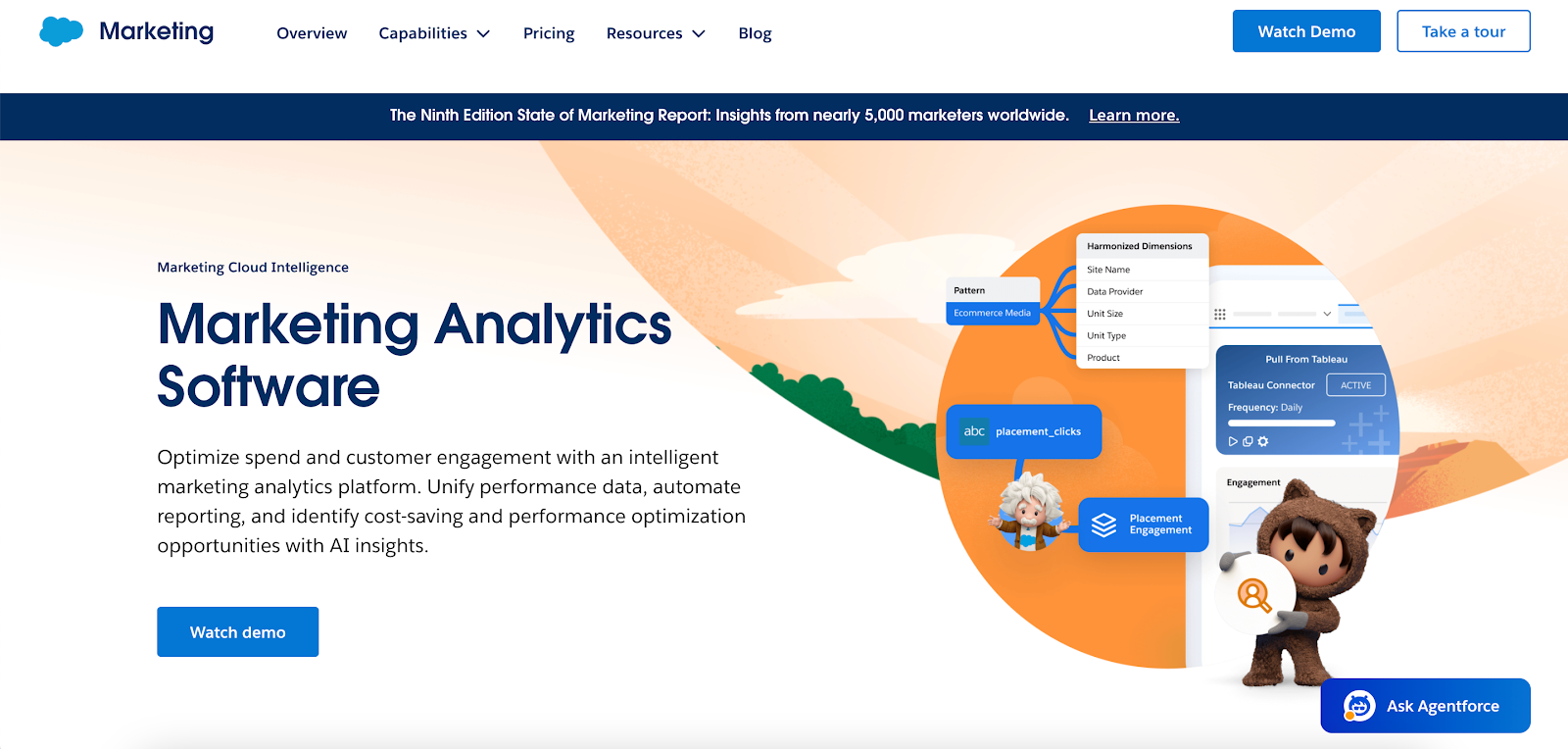
Image source: salesforce.com
Datorama, now called Marketing Cloud Intelligence, is part of the Salesforce ecosystem. It connects marketing, sales, and customer data so digital marketers can review campaign results and customer behavior in one system.
Key capabilities include:
-
Connects to 170+ data sources, including advertising platforms, customer relationship management (CRM) systems, and cloud storage tools
-
Integrates with Salesforce products like Marketing Cloud, Sales Cloud, and Service Cloud
-
Uses Data 360 to link customer records from different systems into a unified profile
-
Applies Einstein AI to analyze data and highlight trends or performance shifts
-
Supports campaign analytics, media plans, and performance tracking
-
Offers dashboards and data visualization tools for reporting
-
Uses data mapping and classification to organize incoming data into a consistent model
-
Supports exporting data to tools like Tableau, Snowflake, or Google BigQuery
Where Datorama Is Commonly Used
Datorama is used by organizations that already rely on Salesforce for campaign execution and customer data.
Marketing campaigns, email journeys, and CRM records feed into the same system, which helps connect performance with customer behavior.
It’s also used in environments that track activity from multiple channels, such as email, paid media, and web analytics. This gives marketing teams a view of how campaigns perform across different touchpoints.
Challenges Users Run Into With Datorama
Datorama often requires SQL for segmentation, data modeling, and troubleshooting. Users without technical experience may need help when working with queries or adjusting data models.
It also relies heavily on Salesforce products. Marketing agencies using other tools may need additional integrations to bring in external data.
Data mapping can become difficult as more data sources are added. When fields don’t match, users need to review mappings and fix inconsistencies before reporting.
Adverity and Datorama Feature Comparison
Both Adverity and Datorama work with marketing data, but differences appear during report setup and review.
Data Integration and Connectors
Adverity connects to a wide range of platforms, including Google Ads, Google Analytics, and custom sources. It’s often used when data comes from multiple sources that don’t follow the same format.
Datorama connects to over 170 sources and relies heavily on Salesforce integrations. Campaign data, CRM records, and engagement metrics feed into the same system.
Both require ongoing setup. Data connectors need maintenance, and data streams need monitoring to keep reports accurate.
Data Transformation and Modeling
Adverity prepares raw inputs before reporting. Users can transform data, rename fields, and group data points so reports use consistent formats.
Datorama maps incoming data into its own model. That setup takes planning, especially when working with different campaign structures.
Both involve technical work. Data preparation and mapping increase with the addition of more sources.
Data Visualization and Reporting
Adverity includes dashboards and notebooks for reviewing data and generating reports.
Datorama provides customizable dashboards and integrates with tools like Tableau. It’s commonly used as a reporting tool within Salesforce.
In both cases, users still create custom reports manually. The platforms visualize data, but formatting and explanation still require manual input.
AI and Insights
Adverity uses conversational AI so users can access data and explore performance through queries. It also flags unusual patterns in campaign data.
Datorama uses Einstein AI to analyze data and suggest ways to optimize campaigns. It ranks insights based on performance drivers.
Both highlight patterns, but users still decide how to interpret and present the results to the stakeholders.
Ease of Use
Adverity setup involves configuring connections, transformations, and pipelines. Many organizations rely on a dedicated team to manage these processes.
Datorama depends on SQL for tasks like segmentation and troubleshooting. This can slow down users without technical experience.
Both platforms take time to learn. Teams still need to manage data, review outputs, and maintain reporting workflows.
Adverity and Datorama Pricing Comparison
Datorama's base tier starts at $10,000 per org per month, billed annually. Marketing Cloud Intelligence+ starts at $11,000 per org per month, with added AI features and reporting capabilities.
Salesforce also offers three pricing plans through its Success Plans. The Standard plan is included. Premier costs 30% of net license fees, while Signature requires a custom agreement.
The base subscription may not cover everything. Add-ons such as Data 360, Tableau licenses, apps, and usage credits can increase total cost. This often applies to large enterprises using it as an analytics platform for campaign and customer data.
Adverity doesn’t publish pricing.
That makes early comparisons harder. Datorama pricing can be estimated upfront, while Adverity requires contacting the sales team for pricing information.
Why Reporting Still Feels Incomplete After Adverity and Datorama
Adverity and Datorama handle a big part of the data process. Adverity connects hundreds of sources and prepares datasets for reporting. Datorama pulls campaign and customer data into its model and adds Einstein analysis.
The report still isn’t finished at that point. Someone has to look at the numbers, decide what stands out, and write the explanation that gives the report meaning.
Analytic dashboards show performance, but they don’t explain why the results changed or what deserves attention first. That part still lands on the person preparing the report.
That’s why many teams still open slides or Google Sheets to finish the job. The data is ready, but the story still needs to be connected.
TapClicks steps in at this stage. It connects data, generates reports, and adds AI-written summaries so teams don’t have to write every update manually.
Tired of piecing together reports manually? Book a demo with TapClicks today!
TapClicks: A Better Alternative to Adverity and Datorama
TapClicks focuses on the part that usually comes after data prep. It connects marketing data, prepares it, and outputs reports designed for review and sharing.
How TapClicks Manages Data and Reporting
TapData connects inputs from ad platforms, CRMs, and files. It standardizes naming, blends datasets, and routes them into reports or external tools like Tableau, Power BI, Snowflake, or BigQuery.
It also supports automated data integration, so data doesn’t need repeated exports or manual updates. Historical backfill and scheduled delivery keep reports populated without rebuilding pipelines.
Reporting runs through Report Studio and SmartReports. Teams can generate dashboards, PDFs, and slide decks using templates, then send them on a schedule or share them when needed.
How TapClicks Adds Context to Reports
TapClicks doesn’t stop at charts. AI Insights Agents review campaign data and write summaries that highlight changes in spend, traffic, or conversions.
SmartSlides turns those summaries into presentation-ready decks. SmartEmail sends updates directly to stakeholders, and dashboards update with real-time data, so reports reflect the latest results.
Complete Report Writing and Delivery With TapClicks
Reports don’t end at easy-to-understand dashboards. Once the numbers are visible, someone still has to write the summary, format the report, and send it out.
That work repeats for every update. Weekly reports, client reviews, and campaign results all require the same explanation each time.
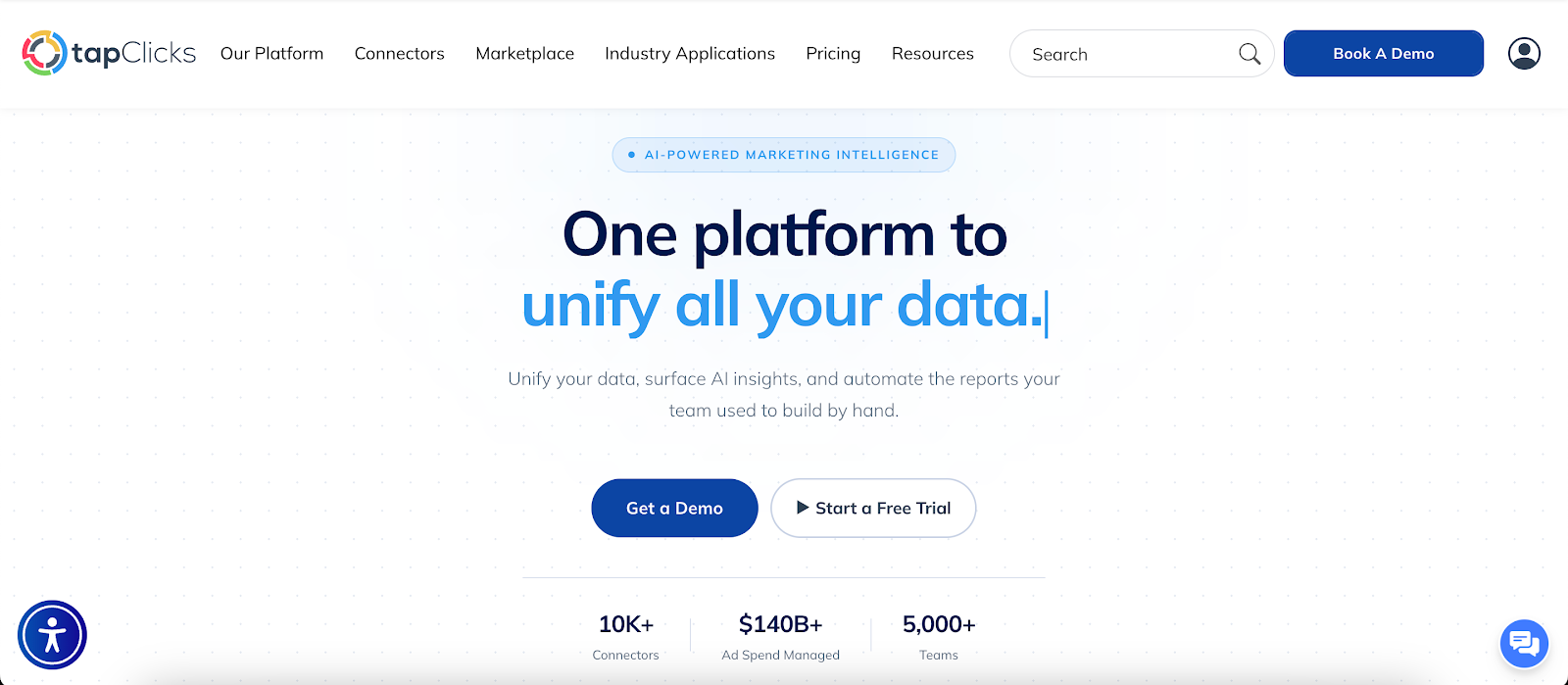
TapClicks focuses on that part. It works as a marketing analytics tool that generates reports with written summaries already included, so teams can move directly to review and sharing.
It also connects with tools used in a business intelligence platform, so reports can pull data without another round of exports. The output is ready to share and can provide actionable insights without additional edits.
Book a demo with TapClicks to review how it handles reporting compared to Adverity and Datorama!
FAQs About Adverity vs Datorama
What is the difference between Adverity and Datorama?
Adverity focuses on preparing marketing data from a wide array of sources before reporting. Datorama connects campaign and customer data within Salesforce and adds AI analysis on top.
Which is better for marketing reporting?
Adverity and Datorama support marketing reporting, but neither completes it end-to-end. Datorama claims stronger links between campaign data and customer insights, while Adverity focuses more on data preparation.
Is there an alternative to Adverity and Datorama?
Yes. TapClicks is an alternative that focuses on report output, not just data preparation. It automates data management and supports report creation and delivery.