What Is Marketing Analytics? The Key to Growth in 2026
Marketing is unpredictable. One campaign draws steady interest while another fades, and it’s not always clear why.
Each channel shows a different signal about what people pay attention to, skip, or buy, and it’s easy to lose the thread. Marketing analytics helps you make sense of those signals.
Different marketing analytics techniques show how people browse, click, and purchase, and which efforts lead to those actions.
This article explains what marketing analytics is and how teams use it to turn raw numbers into insights they can rely on for better decisions.
TL;DR
-
Marketing analytics is the practice of collecting and studying data from your marketing activities.
-
It helps you review past results, monitor current activity, and estimate future performance through descriptive, diagnostic, predictive, and prescriptive analytics.
-
Techniques such as segmentation, cohort analysis, attribution, and A/B testing help you compare channels and decide where to place your time and budget.
-
A marketing analytics platform keeps search, social, email, paid, and offline data in one system, so you’re not switching between tools.
-
TapClicks centralizes your data, adds AI-driven insights, and simplifies reporting, so you can work from one system.
What Marketing Analytics Helps You Understand
Marketing analytics helps you trace how real people respond once they meet your work.
Instead of guessing at interest or intent, you follow what users do across various marketing channels and measure how those actions connect to qualified leads or revenue.
You can study historical data, key metrics, and user behavior to understand whether your target audience matches the outcomes you hope to see.
Certain patterns start to emerge. You notice where your target audience spends time and which tactics encourage them to move closer to a purchase.
Core Components of Marketing Analytics
Marketing analytics breaks into three parts. Each one answers a different question and helps you measure marketing performance with more precision.
Reporting on the Past
Reporting reviews results from earlier efforts. It shows how people moved through the sales funnel and which messages drew qualified leads.
You can also connect customer data to the revenue that followed those actions. This helps you see which choices contributed to successful marketing campaigns and which ones held them back.
Analyzing the Present
Present-tense analysis tracks what happens while your campaigns run. You watch website traffic, customer behavior, and key performance indicators (KPIs) across your channels.
Certain segments reach key milestones at a quicker rate, such as page views, sign-ups, or add-to-cart actions. These shifts give you room to refine your marketing efforts before the campaign closes.
Predicting the Future
Forecasting looks at patterns in historical data with predictive marketing analytics. You see which segments show steady interest and which tactics lose effectiveness.
These signals guide decisions about future campaigns and budget placement. You focus on the work that shows a direct connection to revenue and business growth.
Three Levels of Marketing Analytics
Marketing analytics usually falls into three levels: strategic, operational, and tactical.
Strategic Marketing Analytics
Strategic analytics looks at long-range direction. It reviews marketing data, consumer behavior, and first-party data to identify audiences that deliver long-term value.
You might compare customer lifetime value across groups or study how early interactions differ between high-value and low-value segments.
For example, an e-commerce team may find that customers who arrive through a product comparison page spend more over 12 months. Customers who land on a homepage banner may spend less.
That insight pushes the team to invest in comparison content that attracts buyers who stay longer.
Operational Marketing Analytics
Operational analytics focuses on what happens while your campaigns run. It examines customer interactions across pages, forms, and offers to pinpoint where people continue and where they stop.
A B2B team might see strong website traffic on a webinar page but notice that half of the visitors abandon the registration form.
After reducing the form to name, email, and company, registration rates climb. Operational analytics highlights the exact point where people hesitate, so you can fix the issue while the campaign is active.
Tactical Marketing Analytics
Tactical analytics looks at specific choices inside a campaign. It uses data analysis to compare subject lines, thumbnails, headlines, or offer placements.
A retailer running a seasonal sale may test two ad variations. One uses a lifestyle photo, and the other uses a simple product shot.
Tactical analytics shows that the lifestyle photo earns higher click rates and more add-to-cart actions.
Marketing professionals use results like this to refine future creative decisions and increase consistency across their materials.
How Marketing Analytics Works
Marketing analytics follows a simple process — you gather information, organize it, study it, and make decisions based on what the data shows.
Here’s how the marketing analytics process works.
-
Collect the inputs: Marketing analytics starts with collecting data from your main channels. You gather customer and marketing information such as website traffic, page paths, and responses to individual messages. These inputs form the base for later analysis.
-
Organize the information: Unify the data in one system or report. This step removes duplicates and fixes mismatched fields. It also improves data quality, so the numbers stay consistent.
-
Analyze the patterns: Examine the information with marketing analytics tools or advanced analytics. Identify links between actions and outcomes, such as clicks, form fills, or purchases. This produces actionable insights about what strengthens or weakens campaign performance.
-
Apply what you learn: Revise the work based on the findings. You refine a message, adjust a channel mix, or modify an offer. These choices improve return on investment (ROI) and create a more accurate plan for future campaigns.
Each step builds on the one before it. Together, they help you understand how people respond to your marketing initiatives.
Common Techniques in Marketing Analytics
Marketing analytics relies on several techniques that help you understand how people respond across your channels.
The main techniques include the following.
-
Segmentation: Groups people by traits such as purchase history or customer preferences. It helps you see which groups respond to a message and which ones need a different approach.
-
Cohort analysis: Tracks groups that arrive through the same source or complete the same action. You can follow how their behavior changes across the customer journey and compare long-term value across channels.
-
Trend analysis: Examines how activity changes during a defined period. You might monitor social media engagement during a launch or look at traffic shifts after you revise a page.
-
A and B testing: Compares two versions of one element, such as a subject line, image, or offer, to see which version earns more engagement.
-
Attribution analysis: Identifies the touchpoints that influence a conversion. You can compare search ads, blog posts, and social media analytics to see which source contributes the most.
-
Predictive modeling: Uses data analytics to estimate future behavior and highlight segments that are more likely to return or buy again.
How Marketing Analytics Helps You Understand Customer Behavior
Marketing analytics helps you study how people interact with your brand. You see which topics draw interest, which pages hold attention, and which offers prompt a closer look.
A web analytics tool helps you track where a visit begins and where it ends, so you can see what stands out to the audience you want to reach.
Marketing teams also gain insight by analyzing data across channels. A group that ignores a paid ad may respond well to social media marketing.
Another group may skip short posts and engage more with email marketing campaigns. These differences help you understand how different audiences collect information and what they expect from your marketing materials.
Customer feedback adds another layer. People may request details about one feature, yet their on-site behavior may show a stronger interest in a different section of the page.
Real-time analytics helps you see this gap between stated interest and actual behavior. These details often reveal what matters most to people within your business's target market.
What Is a Marketing Analytics Platform?
A marketing analytics platform is software that centralizes data from your digital marketing channels. It consolidates inputs from search, social, email, paid ads, and offline sources into one environment.
Instead of switching between Google Analytics and your customer relationship management (CRM) system, you review all activity in one dashboard.
The platform also standardizes the data. It aligns fields, removes duplicates, and corrects mismatches so you can run reliable marketing analysis.
When the data is consistent, you can compare performance across channels and make data-driven decisions that support your branding strategies.
TapClicks builds on these functions with broader data coverage and tools that help you review performance across your channels in a single system.
Use TapClicks To Strengthen Your Marketing Analysis
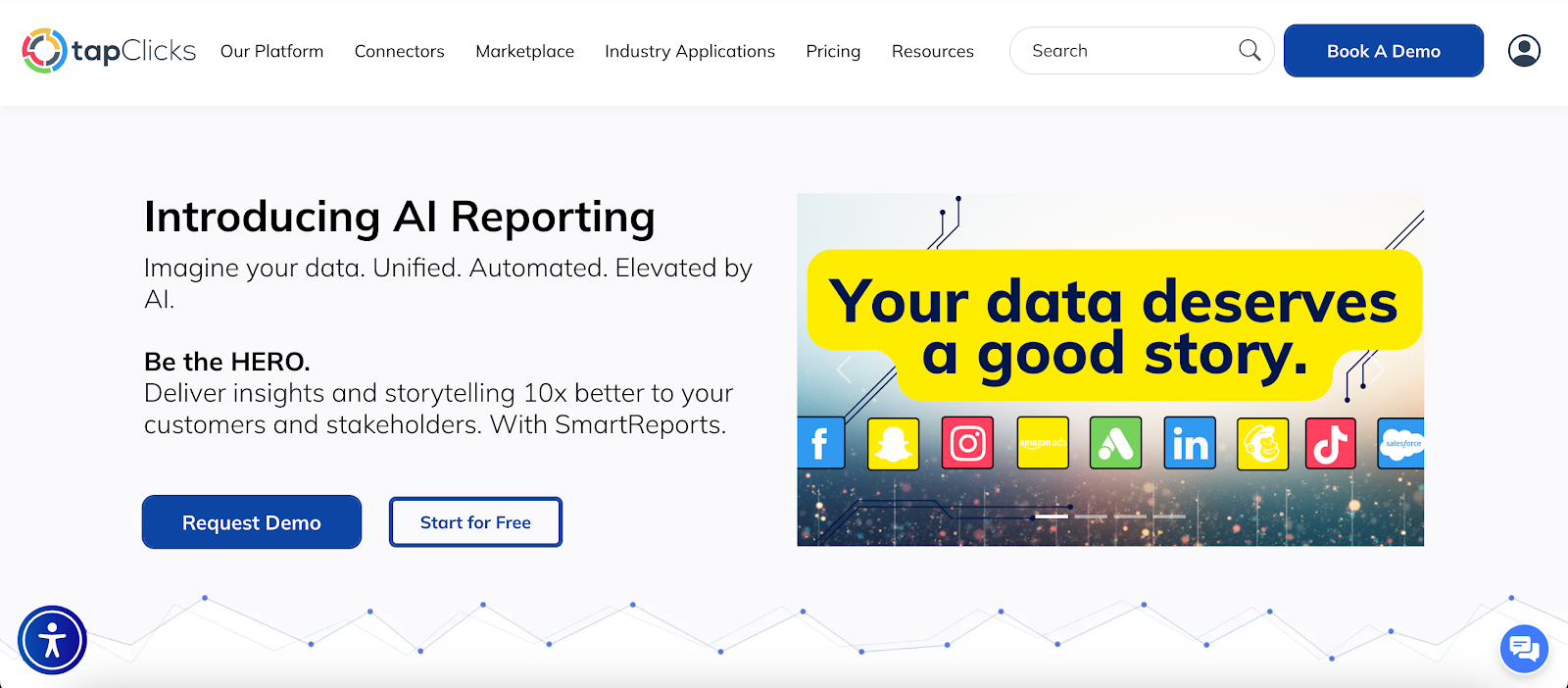
TapClicks builds on your unified data with tools that examine activity across your channels and present the results in one dashboard.
The platform highlights changes in audience behavior, spend, and conversions. You review these details without sorting through several exports or dashboards.
Produce Insight You Can Use Immediately
AI Insights Agents analyze your connected data and point to shifts in engagement, pacing, and conversions. TapClicks presents the results as data-driven insights instead of long tables.
The Data Transformation Agent creates custom metrics through short prompts. This helps you compare results across paid channels, email performance data, and social activity during a campaign.
Convert Data Into Material You Can Share
SmartSlides turns performance metrics into presentation decks. SmartEmail sends short summaries based on current results.
These tools help account managers, channel owners, and executives review the same information without separate systems.
Report Studio and Quick Reports create recurring updates for internal teams or clients.
Interactive analytics dashboards refresh when new data enters the system, which gives you an updated view across paid channels.
Manage Campaigns With More Precision
Smart Campaigns groups related efforts into one record. You can review spend, engagement, and pacing for programs that span several platforms.
TapGoals tracks progress toward daily and monthly targets and identifies differences that affect results.
These tools help you deliver strategies that stay aligned with your objectives and lead to more successful marketing campaigns.
FAQs About Marketing Analytics
What are the four types of marketing analytics?
The four types of marketing analytics are descriptive, diagnostic, predictive, and prescriptive analytics.
Descriptive analytics reviews past marketing activities, while diagnostic analytics explains why certain results appeared.
Predictive analytics estimates future behavior, and prescriptive analytics recommends actions that improve outcomes.
What do marketing analysts do?
Marketing analysts examine data from campaigns and customer interactions. They study patterns in visits, clicks, and conversions and translate those findings into decisions for their teams.
Analysts also create reports, compare channels, and build metrics that show which marketing activities produce measurable results.
What is the best marketing analytics software?
The best marketing analytics tools organize information from paid channels, search, social, email, and offline sources in one system. TapClicks fits this model with broad data coverage and robust data collection.
Marketing teams may also add social media analytics tools when they need a closer look at audience behavior on specific networks.
Why is marketing analytics important?
Marketing analytics helps you understand how people respond to your work. You see which messages lead to visits, sign-ups, or purchases.
It also helps you compare channels with reliable data. With that information, you can decide where to place your time and budget for more consistent results.