Analytics-as-a-Service: What It Is and How It Works
Companies collect enormous amounts of data, yet teams still wait for reports and question the numbers they receive. As data volumes increase, these delays become harder to ignore.
Analytics-as-a-service (AaaS) changes that experience. Instead of running analytics software in-house, you can access analytics through the cloud on a subscription basis.
This article explains what analytics-as-a-service is, how the model works, and how you can leverage it to increase revenue.
TL;DR
-
Analytics-as-a-service delivers analytics through the cloud, not internal systems.
-
Providers handle data processing, reporting, and forecasting.
-
SaaS companies use it to ship analytics faster and reduce internal workload.
-
AI and machine learning support forecasting and anomaly detection.
-
TapClicks delivers AaaS-style outcomes for marketing analytics and reporting.
Analytics-as-a-Service Explained
Analytics-as-a-service is a cloud-based way to use data analytics without building or maintaining analytics systems yourself.
A third-party service provider handles the technology behind the scenes, so you can focus on using the results.
With AaaS, data from your systems flows into an analytics platform that handles processing and analysis in the background. You get dashboards, reports, and forecasts through a browser or inside your application.
Many services also include advanced analysis, such as predictive models, without requiring extensive technical setup.
How the AaaS Model Works
Analytics-as-a-service delivers analytics through the cloud rather than through systems you manage yourself.
An AaaS provider connects directly to your data sources and automatically pulls in data. You don’t need to set up pipelines, manage servers, or maintain a data environment.
Once the data enters the platform, analytics services take over. Metrics are calculated. Patterns are identified. Forecasts update as new data arrives.
Business intelligence (BI) tools, predictive analytics, and machine learning all run on the same foundation, which keeps numbers consistent and reliable.
Insights reach users through dashboards, reports, or embedded analytics inside a software-as-a-service (SaaS) platform.
The provider handles data quality, data security, and system performance, while you review insights and apply them to strategic decision-making.
Benefits of Analytics-as-a-Service for SaaS Companies
AaaS helps SaaS companies offer analytics without taking on the cost of building it internally.
The model removes many of the obstacles that slow down data initiatives and turns analytics into something customers actually use.
Faster Access to Analytics Features
With AaaS solutions, reporting, dashboards, and forecasting come ready to use. SaaS companies avoid long development cycles and skip building data infrastructure from scratch.
Analytics becomes available as soon as data collection and integration are in place.
Advanced Analytics Without a Large In-House Team
Analytics-as-a-service includes capabilities such as data analysis, data mining, and predictive models powered by artificial intelligence.
According to Reanin, more than 58% of users report meaningful gains from intelligent insights and interactive data visualization, which highlights the value of built-in AI and machine learning.
These features arrive without hiring data scientists or maintaining complex systems.
Embedded Analytics That Customers Rely On
AaaS makes it easier to deliver embedded analytics inside a software product. Users can explore real-time data, review performance, and gain insight without leaving the application.
IMARC Group estimates the embedded analytics market will reach $182.72 billion by 2033, driven by self-service analytics and growing demand for AI-powered reporting.
Reduced Operational Burden
The service delivery model shifts data storage, cloud infrastructure, and ongoing maintenance to the provider.
SaaS companies avoid the time-consuming work of managing analytics platforms while still offering powerful analytics to users.
New Revenue Opportunities
Many SaaS companies package advanced dashboards, forecasting, or usage insights into higher-tier plans. Others offer analytics as an add-on.
This turns analytics into a revenue stream rather than a background cost and helps products stand out in competitive markets.
Analytics-as-a-Service vs In-House Data Teams
Choosing between analytics-as-a-service and an in-house analytics team comes down to how much responsibility you want to manage internally.
Both options help you analyze data, but they place very different demands on time, staffing, and maintenance.
In-House Data Teams
An in-house analytics team manages everything internally. Data pipelines, reporting tools, and analytics requests all depend on internal availability.
As data volumes grow, turnaround times slow. Adding new metrics or sources often means manual work and specialized skills.
This setup fits organizations that need tight control over data handling, custom workflows, or compliance requirements.
Analytics-as-a-Service Provider
Analytics-as-a-service shifts that responsibility to a provider. Companies access analytics through cloud-based platforms that update automatically.
Dashboards and reports remain available on demand, even as data volume increases.
The provider manages the platform and maintenance, which lets internal staff focus on using the results rather than managing analytics systems.
Which Option Works Better?
Here are some key differences to consider:
-
Ownership: Internal teams manage analytics end to end; providers manage the platform
-
Speed: AaaS delivers answers faster than most internal setups
-
Resources: Internal analytics requires ongoing hiring; AaaS reduces staffing pressure
-
Data volume: Cloud platforms handle higher volumes without constant adjustments
Organizations with strict data-handling rules, custom analytics logic, or compliance needs may choose an in-house setup.
Most businesses turn to analytics-as-a-service to get results without taking on the operational burden of managing analytics internally.
How Analytics-as-a-Service Handles Massive Data
Analytics-as-a-service becomes valuable when data volume exceeds what internal systems can handle.
Many companies collect massive amounts of data from products, customers, and operations. Processing that data internally often leads to slow queries, fragile pipelines, and constant maintenance.
AaaS platforms rely on cloud services that manage large datasets with minimal hands-on work.
Data extraction runs automatically. Multiple sources connect through built-in integration capabilities, and the data lands in a managed environment similar to a data lake.
This setup supports real-time analytics without requiring teams to engineer everything themselves.
Machine learning builds on this foundation. ML algorithms detect patterns, generate forecasts, and flag unusual changes as new data arrives. Analytics stays up to date instead of relying on static BI tools.
Smaller companies gain access to advanced capabilities once reserved for large teams, while larger organizations keep pace as data volume increases.
How TapClicks Powers Analytics, Reporting, and Data Unification
TapClicks isn’t positioned as a traditional AaaS platform, but it delivers many of the same outcomes through a cloud-based marketing analytics solution.
It gives organizations access to analytics, reporting, and data insights without building or maintaining their own systems.
The platform brings marketing data from hundreds of sources into one place and keeps it ready for analysis. Dashboards update automatically. Custom views reflect how performance is reviewed, not how data is collected.
This helps teams go from raw numbers to actionable insights without spending time on setup or cleanup.
TapClicks also automates reporting and analysis. AI-driven features explain performance changes and highlight areas that need attention.
Scheduled reports, branded visuals, and flexible exports make it easier to share insights and apply them to planning and optimization.
Create a Branded Analytics Experience With TapClicks
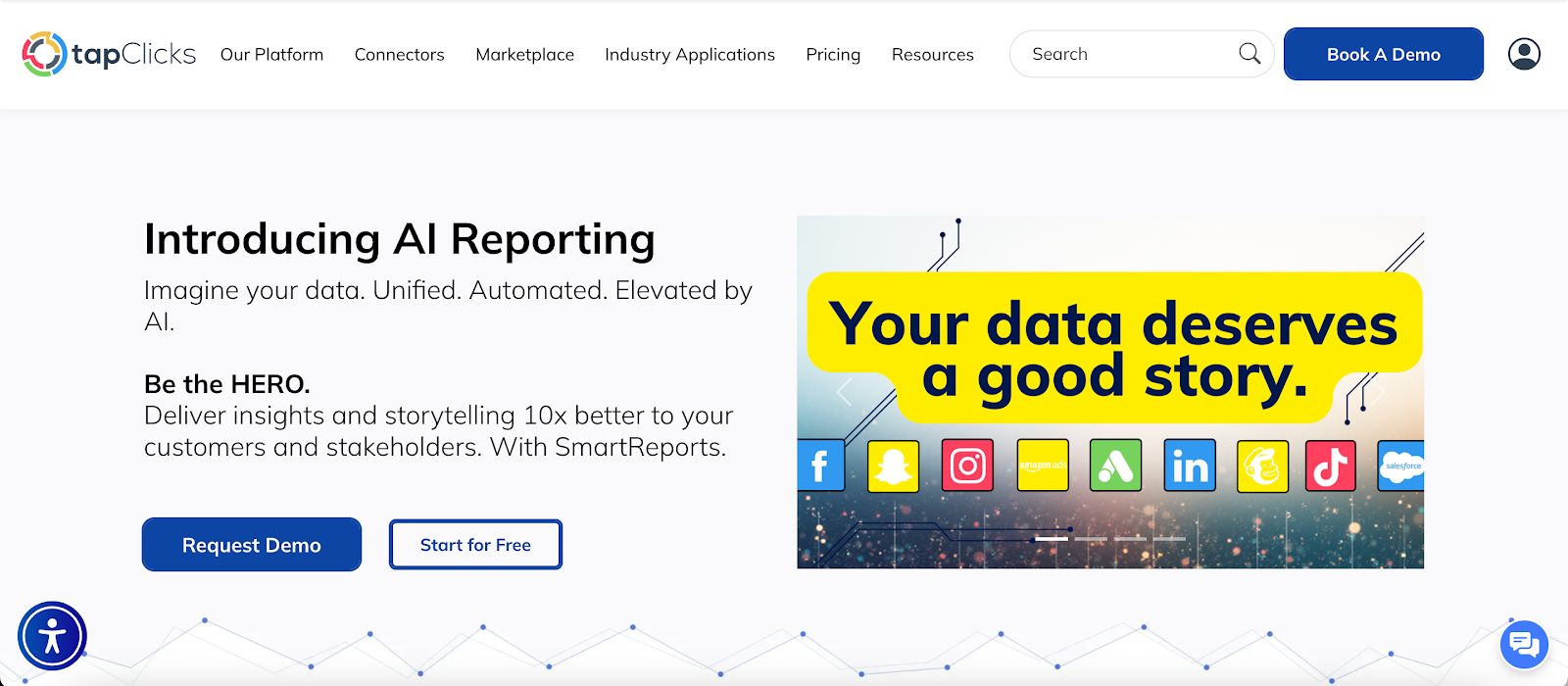
Analytics-as-a-service succeeds when analytics remain consistent and usable as data volume increases.
Many tools struggle once the sheer size of marketing data expands across channels and clients.
TapClicks addresses this by helping agencies and marketing teams package analytics as an ongoing service offering.
One Data Analytics Platform for Marketing
TapClicks manages data intake, preparation, and reporting within a single data analytics platform. Marketing data from many systems follows consistent rules from entry through delivery.
Dashboards and reports remain consistent from one account to the next, which keeps analytics dependable as usage expands.
Automated Analysis With Built-In Intelligence
TapClicks automates processes that slow reporting at scale. Dashboards refresh on a schedule, and reports are distributed automatically.
AI tools generate written explanations that identify performance changes and budget pacing inside reports. These capabilities help teams stay competitive as client demands and data volume increase.
Client-Ready Analytics Delivery
TapClicks helps deliver interactive analytics portals that function like proprietary software. Branded dashboards, scheduled presentations, and email summaries maintain data privacy.
For teams evaluating similar services, TapClicks stands out through its focus on marketing analytics that agencies can package, brand, and deliver consistently.
Book a TapClicks demo to see how automated, client-ready analytics works for your organization!
FAQs About Analytics-as-a-Service
What is an example of analytics-as-a-service?
An example of analytics-as-a-service is a cloud platform that connects to your data sources and delivers dashboards, reports, and forecasts through a subscription.
Instead of building analytics internally, companies use these data analytics solutions to review performance and trends through a browser or embedded interface.
What is the analytics-as-a-service model?
The analytics-as-a-service model delivers analytics through the cloud rather than internal systems. A provider manages the analytics platform and infrastructure, giving access to reporting and analysis without hiring specialized staff.
What is a DaaS example?
A data-as-a-service (DaaS) example is a company that supplies structured datasets through an application programming interface (API).
DaaS focuses on giving access to data, while AaaS analyzes that data using powerful analytical tools to generate insights.
What is SaaS in data analytics?
SaaS in data analytics refers to analytics software delivered through a web application. It follows the same kind of subscription model as other SaaS products, with the provider handling updates and availability.