Centralized Marketing Data: Unlock Full-Funnel Clarity
You can hand over a sleek deck and still find everyone arguing over which figures are correct. One team may pull conversions from an ad platform, while someone else updates a document before the meeting.
Consolidating records helps teams compare campaign performance and track return on investment (ROI) in a single dashboard.
This guide explains how centralized marketing data works, where the process breaks down, and how to spot which campaigns need a closer review.
TL;DR
-
Centralized marketing data gives companies one governed source for campaign, sales, audience, and revenue records.
-
It helps reduce manual exports, mismatched reports, duplicate metrics, and unclear ownership.
-
A useful setup includes source audits, shared naming rules, validation checks, and access controls.
-
Clean inputs help improve reporting, attribution, forecasting, and campaign budget reviews.
-
TapClicks helps prepare connected marketing records for dashboards, reports, and AI-driven insights.
What Is Centralized Marketing Data?
Centralized marketing data consolidates campaign, sales, audience, and revenue records into a single system. A company can use it to combine inputs from Google Ads, Google Analytics 4, Meta Ads, HubSpot, Salesforce, and offline files.
The goal is to give everyone the same view of marketing campaign performance.
Data centralization sets rules for names, metrics, dates, permissions, and quality checks. Those rules turn scattered inputs into a single source of truth.
It goes further than basic tool connections.
Data integration moves records from one tool to another. Data consolidation gathers them in one location. Centralization makes them consistent enough for analysis, planning, and budget decisions.
Why Marketing Data Becomes Fragmented
Marketers don’t start with data silos. They appear as teams add more ad platforms, analytics tools, email systems, and shared files.
Each source tracks performance in its own format. Google Ads, Meta Ads, Google Analytics, customer relationship management (CRM) software, and internal databases may define conversions, dates, and revenue differently.
CSV files make the problem worse. Someone exports a file for a quick update. Then others copy, rename, edit, and share the file before the next review. That process leaves plenty of room for human error.
Common causes include:
-
Inconsistent naming conventions by team, region, or channel
-
Attribution windows that don’t line up between platforms
-
Revenue records stored in sales systems or offline files
-
Manual exports used to fill gaps between marketing tools
According to IBM, 77% of surveyed professionals say data silos hurt real-time analytics and business decisions. That matches what many teams deal with each week: as the stack gets messier, the next report gets harder to trust.
The Difference Between Centralized and Decentralized Marketing Data
Decentralized marketing information is split by department or tool. Paid media checks ad platforms. Sales uses a CRM. Ecommerce keeps purchase history in its own database.
That setup can work during the early stages. However, once campaigns run through multiple channels, gaps start to show.
Customer records may conflict, and reports may show inconsistent records because each source follows different rules.
A centralized system, such as a data warehouse, pulls those records into one managed environment.
The table below shows how each setup affects daily work.
|
Area |
Decentralized Setup |
Centralized Setup |
|
Storage |
Keeps files in separate platforms |
Stores records in one marketing data hub |
|
Customer information |
Splits profiles by tool |
Combines profiles and purchase history |
|
Channel results |
Shows each channel by itself |
Compares multiple channels together |
|
Metrics |
Uses separate definitions |
Follows shared definitions |
|
Access |
Relies on tool-level permissions |
Sets permissions from one system |
|
Decisions |
Requires extra checking before action |
Shows the same figures to each team |
How Centralized Marketing Data Improves Daily Operations
The key benefits of centralized marketing data show up in daily work. Faster reporting usually comes first. Marketers can review activities from channels without gathering separate files before every update.
A shared setup also improves report quality. Clear naming rules and metric definitions make reports easier to check. Simple controls can catch duplicate records, missing fields, mismatched dates, and currency errors before they affect later reports.
Centralization supports improved ROI tracking, too. Marketing teams can connect spend, engagement, leads, pipeline, and revenue to see which campaigns create business value. That link also shows how each touchpoint moves a prospect through the customer journey.
It helps departments work from the same dataset. Sales can review lead quality. Finance can check revenue. Leadership can review marketing performance without asking for separate summaries.
Clean historical records also help with accurate forecasting by spotting pacing issues, unusual changes, and campaigns that may need a budget adjustment.
What Teams Need to Centralize Marketing Data
A centralized data system has five main parts. Each part helps move raw inputs from their source into a format you can use.
Data Sources
Data sources are the tools that hold your marketing and business records. Ad accounts show spend and clicks. Analytics platforms show what people do on your website. CRM tools show lead status, deal stage, and customer details.
Some inputs may also come from ecommerce stores, call tracking tools, email software, internal databases, CSV files, or offline sales. Each one adds context that a single tool can’t show on its own.
Data Pipelines and Connectors
A data pipeline tool moves source records into a central environment. Connectors make that transfer through application programming interfaces (APIs), direct integrations, scheduled syncs, or file uploads.
For marketers, the details matter. A well-built pipeline keeps campaign IDs, cost fields, dates, and source names intact. It should flag failed loads or missing fields before they affect a report.
Central Repository
The central repository stores the connected information. Teams use a data hub when they need campaign reporting, dashboards, and performance analysis in one system.
Other companies use a data warehouse when analysts need structured tables for deeper analysis. Cloud options such as BigQuery, Snowflake, or Redshift can handle larger volumes without physical servers.
Data lakes also exist, but they usually fit more technical storage needs.
Transformation and Normalization Layer
Raw data usually needs cleanup before analysis. A transformation layer handles that by matching fields from different sources, such as “customer ID” and “contact ID.”
It can also fix naming issues, create calculated metrics, group channels, and convert currency when needed. This creates comparable results without forcing analysts to repair every mismatch themselves.
Reporting and Activation Layer
Dashboards show current performance. Business intelligence (BI) tools help analysts compare results. Data visualization turns tables into charts that are easier to read.
Other outputs may include scheduled reports, client portals, attribution models, AI insights, or forecasting workflows. These outputs help teams review performance and decide what needs attention next.
How to Centralize Marketing Data in 4 Easy Steps
Use this centralized approach to consolidate scattered data into a single, unified source for analysis, presentation, and campaign planning.
Step #1: Audit Your Sources and Reporting Goals
Start with the sources that feed your reports. Include ad accounts, CRM exports, ecommerce systems, finance files, offline sales files, and CSV uploads.
Assign an owner to each one. That person should know where the records come from, how often they update, and what usually breaks.
For each source, note:
-
Source name
-
Owner
-
Data format
-
Key metrics
-
Refresh frequency
-
Destination
-
Known issues
-
Business use case
Connect each item to a reporting need. Paid media inputs can show which campaigns waste ad spend. Finance records can show which channels bring in revenue data. CRM records can show which audiences become qualified leads.
Step #2: Select the Right Central System
Choose the central system based on your needs. A marketing hub works best for campaign reporting, dashboards, and repeatable client updates.
A cloud data warehouse may suit a larger company with heavier analysis needs. It can handle structured tables at enterprise scale, but analysts or a data science team may need to manage it.
The most advanced option isn’t always the best match. A complex setup can slow down the work when users only need simple dashboards, clean exports, and clear ownership.
Step #3: Integrate, Normalize, and Validate the Data
Connect each source through APIs, connectors, managed pipelines, or file uploads. The process should keep dates, costs, source names, lead details, and performance data intact.
Then fix conflicting definitions. A conversion in one tool may mean a form fill. In another, it may mean a booked call or purchase. Reports need one clear definition.
Check the records before anything reaches a dashboard. Look for missing spend, duplicate leads, broken tracking links, and sudden drops. Anomaly detection can flag those problems earlier.
Add data governance rules for permissions, ownership, naming, and quality checks. That keeps the process from depending on one person’s memory.
Step #4: Activate Reporting, Analytics, and Optimization
Connect the validated records to dashboards, BI tools, and client reports. Dashboards show results from marketing platforms. BI tools help analysts compare trends. Client reports explain what changed.
Multi-touch attribution, forecasting, and AI insights also need clean inputs from the same workflow.
After that, teams can optimize marketing campaigns with fewer gaps. They can see where spending creates results, where performance dropped, and which changes need attention.
Common Mistakes to Avoid When Centralizing Marketing Data
The first mistake is collecting data from multiple sources before deciding how the company will use it. Teams may duplicate the same metric or bring in records that don’t answer a reporting need.
Another common issue is relying on dashboards too early. A chart can look polished and still use outdated fields or mismatched metric definitions. Review the source records before anyone uses the dashboard to make a decision.
Naming rules also need attention. When a campaign has one name in Google Ads and another in the CRM, reports may split results that belong together. Set clear labels for campaigns, channels, regions, and tracking fields before they appear in reports.
Validation prevents bad inputs from spreading. Check for missing spend, duplicate leads, stale entries, and sudden drops before those issues reach dashboards.
Permissions need limits. Not everyone needs customer details, revenue fields, or export rights. Role-based access lets each person see only the information needed for their work without exposing sensitive records.
Finally, plan for adoption. The new process needs simple documentation, training, and clear ownership. Without those basics, users may return to copied files, private trackers, or one-off reports.
Connect Marketing Data and Automate Reports With TapClicks
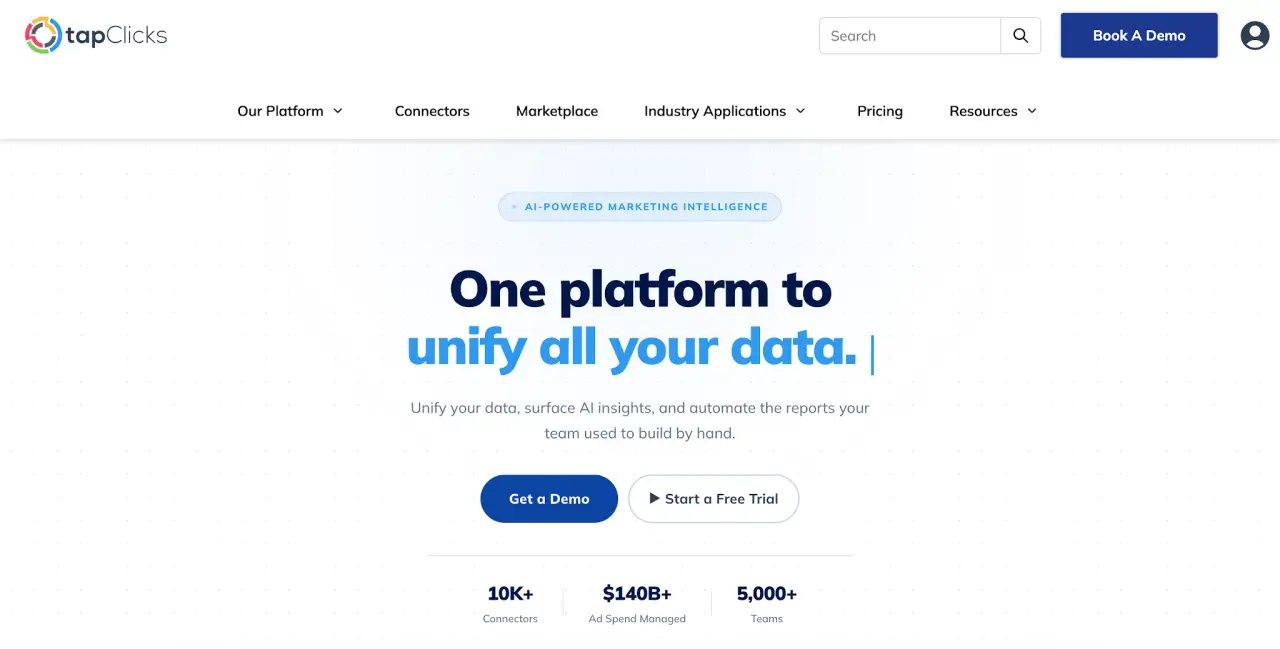
TapClicks connects advertising, analytics, CRM, offline, and business records from multiple platforms. This helps marketing teams replace manual exports and scattered files with a more organized reporting process.
TapData handles the core work. It connects sources, transforms records, applies governance rules, and sends prepared information to the tools that need it.
SmartConnector adds custom or niche sources outside the standard connector library. TapClicks also supports flat files, CSV files, XLS files, and offline inputs.
Once the records are connected, TapClicks helps marketers:
-
Standardize fields before analysis
-
Create calculated metrics for custom reporting
-
Blend sources for cross-channel views
-
Build dashboards, scheduled updates, and presentation-ready summaries
-
Use SmartSuite for AI-driven insights and performance recommendations
TapClicks also helps stakeholders use the same language. Reports, dashboards, and exports connect campaign activity to marketing strategies, so fewer groups have to interpret separate files.
FAQs About Centralized Marketing Data
What is an example of centralized data?
A common example is one dashboard that combines ad spend, website visits, CRM leads, and revenue. This gives users real-time access to performance without checking each platform separately.
What are the four types of customer data?
The four main types of customer information are identity, behavioral, transactional, and attitudinal data. They show who customers are, how they act, what they buy, and what they think or feel.
What is centralized marketing?
Centralized marketing organizes campaigns, records, workflows, and reporting under one coordinated system. It gives a business more control over context, brand consistency, and reliable data management.