Enterprise Rank Tracking: A Guide for Marketing Teams
A page may rank near the top for a valuable keyword one week and disappear from the first page the next. Competitor updates, search result changes, and new content constantly influence what users see.
Without consistent tracking, understanding those ranking movements becomes difficult.
Enterprise rank tracking monitors keyword positions in search results and records how those rankings change over time.
This guide explains what enterprise rank tracking means, how it works in search engine optimization (SEO), and how marketers use ranking data to guide search strategies.
TL;DR
-
Enterprise rank tracking monitors how thousands of keywords rank in search results and records position changes.
-
It tracks rankings by location, device, and competitor domains across large keyword portfolios.
-
Ranking data helps marketers detect algorithm shifts, identify keyword opportunities, and evaluate SEO performance.
-
Key metrics include keyword position, search visibility, CTR, average ranking trends, and the presence of SERP features.
-
TapClicks connects enterprise rank tracking with competitor analysis, site audits, and reporting in one marketing platform.
What Is Enterprise Rank Tracking?
Enterprise rank tracking monitors how webpages appear in Google results for large keyword portfolios.
Marketing organizations often follow thousands of tracked keywords linked to different products, services, regions, and languages. The goal is to understand keyword rank movement, search visibility, and competitor presence in organic search.
Enterprise rank tracking software gathers search engine results page (SERP) data for each keyword and records where a page appears in the results.
Many platforms also track SERP features such as featured snippets, local packs, and Google AI Overviews. These placements influence how often users notice a result, even when it doesn’t appear in the first position.
Historical data forms a core part of enterprise rank tracking. Rank trackers record ranking performance daily and store past positions so marketers can review ranking trends over time.
This record reveals patterns in keyword performance and highlights changes in the search landscape.
Book a demo with TapClicks to track rankings, analyze competitors, and monitor SERP features!
How Enterprise Rank Tracking Differs From Basic Rank Tracking
Basic rank trackers report where a webpage appears for a keyword. Enterprise rank tracking expands monitoring to multiple domains, international markets, and complex SEO environments.
Enterprise rank tracking tools typically include key features such as:
-
Keyword rank data for multiple websites, brands, and regional markets within one enterprise SEO platform
-
Local ranking visibility by country, city, or ZIP code level
-
Integration with Google Search Console, Google Analytics, and other SEO data sources
-
Application programming interface (API) access and business intelligence (BI) tool exports for deeper analysis of raw SEO data
-
Custom dashboards and automated SEO reporting for stakeholders
-
Competitor domain visibility through competitive analysis tools
These capabilities place ranking data within a broader SEO monitoring environment. Marketers review keyword performance alongside traffic trends, site audits, and other SEO data.
Why Marketing Teams Need Enterprise Rank Tracking Tools
Search performance rarely improves by accident. Enterprise rank tracking tools help marketers monitor search rankings and understand how optimization efforts influence visibility.
Identify Which SEO Efforts Drive Results
Content updates, internal linking changes, and technical improvements influence keyword rankings. Accurate rank tracking reveals how those updates affect important keywords.
For instance, a product page might appear in position #14 before a content refresh. After expanding the description, refining headings, and improving internal links, the page climbs to position #6.
Ranking data captures the movement, and analytics tools reveal whether the improvement brought additional visits or conversions.
Detect Ranking Drops or Algorithm Changes Quickly
Search rankings can change after algorithm updates, competitor content revisions, or technical issues. Enterprise rank tracking tools record daily tracking data, which reveals sudden ranking changes.
SERP tracking also helps marketers monitor new search features. According to Search Influence, 79% of users read Google’s AI Overviews when they appear, and 56% report higher trust in brands cited in those AI responses.
Monitoring these placements helps marketers evaluate how visibility changes in modern search results.
Discover New Keyword Opportunities
Rank tracking frequently reveals keywords that sit just outside the top results. These rankings often indicate that a page already holds relevance for the query.
Take a guide ranking in position #11 for “enterprise marketing analytics.” Expanding sections, updating examples, and refining metadata can move the page onto the first results page.
Keyword research combined with ranking data helps marketers identify which opportunities deserve attention first.
Demonstrate Value to Stakeholders
Enterprise marketing programs require consistent reporting for leadership and clients. Rank tracking tools compile ranking data into SEO reporting dashboards that highlight progress over time.
For example, a quarterly report may show more than 100 tracked keywords entering the top 10 search results after several content updates.
That improvement helps stakeholders understand how search visibility improves and why continued investment in optimization remains valuable.
Key Metrics to Monitor in Enterprise Rank Tracking
Rank monitoring becomes useful when marketers focus on the indicators that reveal performance changes.
Keyword Position
Keyword position refers to where a webpage appears in Google results for a specific search query. This metric indicates how prominently a page appears when users search for a topic.
A page that holds position #3 for an important keyword appears near the top of the results page, while a page in position #18 sits much lower in the listings.
Position changes often follow content revisions, internal linking updates, or changes in search intent.
Search Visibility
Search visibility reflects how often a website appears near the top portion of search results for its tracked keywords. Ranking platforms calculate this metric using ranking data and estimated click share.
Higher visibility suggests that more pages occupy prominent placements in search results. Marketers often review this metric when evaluating overall search presence rather than examining individual keywords.
Click-Through Rate
Click-through rate (CTR) measures how often users select a result after seeing it in search listings. CTR connects ranking performance with user behavior.
A page may rank near the top yet attract few clicks if the title or description fails to capture attention. Adjusting those elements often increases engagement without any change in ranking position.
Average Position Trends
Average position summarizes ranking performance across a group of tracked keywords. This metric reveals whether rankings trend upward or downward over time.
For instance, an average position that moves from #17 to #11 indicates broader improvement among multiple pages rather than progress tied to a single keyword.
SERP Feature Visibility
Search result pages include multiple formats that influence how users interact with listings. Visibility within these features affects how often a page receives attention.
Featured snippets display short answers above traditional results. Local packs highlight nearby businesses for location-based queries.
“People Also Ask” panels expand related questions, while Google AI Overviews summarize information at the top of the results page.
Monitoring these placements helps marketers understand how AI visibility data influences how users discover content in modern search results.
Common Issues in Enterprise Rank Tracking
Rank tracking systems produce continuous performance signals. Interpreting those signals can become complicated within large search programs.
Common issues include:
-
Unfocused keyword portfolios: Organizations sometimes track hundreds or thousands of target keywords without prioritization. Excess queries crowd dashboards with unnecessary data points and obscure meaningful ranking patterns.
-
Ranking movement without diagnostic evidence: Position changes rarely explain themselves. Analysts review competitor content, examine backlink profiles, or inspect technical conditions on the website to identify why a keyword moved.
-
Disorganized ranking datasets: Continuous ranking updates generate extensive datasets. Without tagging systems or logical keyword grouping, analysts struggle to connect ranking movement with specific campaigns or content updates.
Agencies that consolidate ranking data and organize keyword priorities interpret search changes to help improve their SEO strategy.
How Rank Tracking Software Solves Monitoring Issues
Manual searches rarely reveal consistent search rankings. Results vary by device, location, and search history, which makes manual monitoring unreliable for large keyword portfolios.
Rank tracking software resolves this problem through scheduled SERP tracking. The system queries search engines regularly and records where each page appears for selected queries.
Each check produces structured data points that reveal ranking movement.
Platforms also record appearances in featured snippets, local packs, and other search formats through SERP feature tracking. These placements influence how often users notice a page in Google results.
Large keyword sets require organization. Systems categorize rankings using advanced tagging, which groups keywords by campaign, topic, or product line.
This organization helps marketing teams review ranking changes without manually sorting raw data.
Many platforms also monitor tracked competitors within the same keyword set. Ranking comparisons reveal which domains dominate particular topics and where new optimization opportunities appear.
Turn Enterprise Rank Tracking Into Competitive Insight With TapClicks
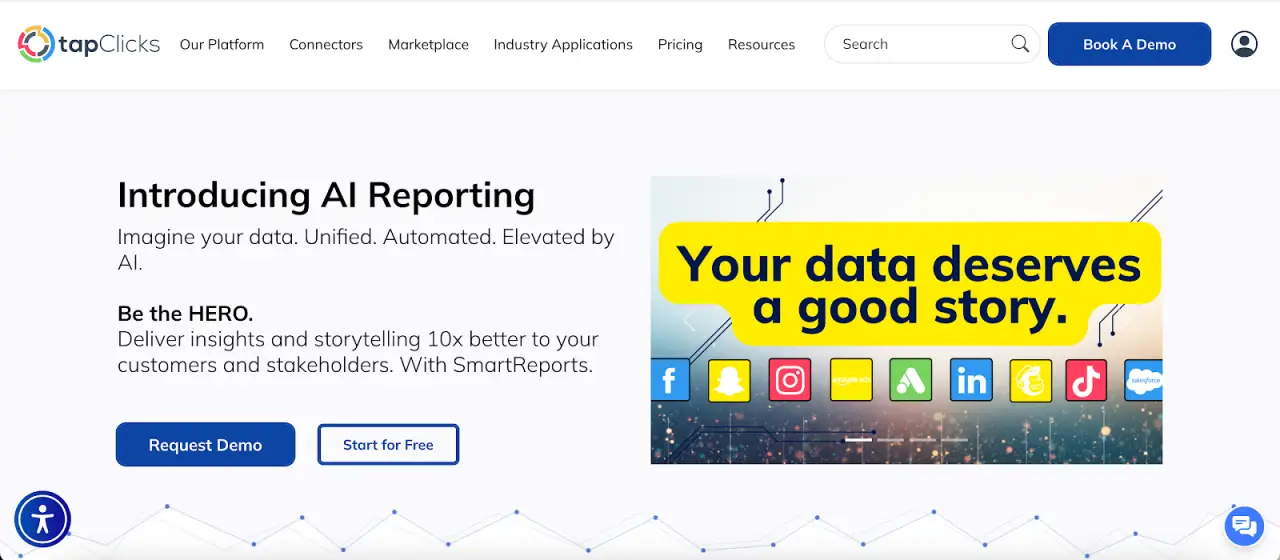
Enterprise SEO programs generate large volumes of ranking data. Keyword movement, competitor visibility, and technical issues often appear in separate platforms, which complicates analysis.
TapClicks combines ranking data, competitor visibility, and marketing performance metrics in one platform so marketers can review SEO performance without switching to other tools.
Unified Rank Tracking and Competitive Analysis
TapClicks records keyword rankings through the Raven SEO module and stores historical position data for ongoing analysis.
Marketing groups track rankings for large keyword portfolios without restrictive keyword limits.
The platform compares domains that target identical queries and reveals which pages capture higher placements in search results.
Ranking comparisons highlight opportunities for gap analysis and show where competitor pages attract more visibility.
Competitor tracking also shows how selected domains perform for the same keyword groups.
Enterprise teams examine these comparisons to understand which topics competitors dominate and where new optimization opportunities appear.
AI-Driven Insights and Search Visibility Analysis
TapClicks interprets ranking datasets through TapInsights, which generates AI summaries that explain ranking movement and competitor changes.
The platform also records appearances in SERP features such as featured snippets and local packs. These placements influence how users discover content in search results.
Reporting and Enterprise Collaboration
TapClicks organizes ranking data in dashboards that marketing groups and technical teams review together. Keyword movement, competitor visibility, and site audit findings appear within the same reporting environment.
Organizations that rely on spreadsheets or disconnected tools often struggle to coordinate reporting between departments.
TapClicks replaces fragmented workflows with one system where you can review ranking reports and collaborate on optimization efforts.
Site audits, ranking analysis, and reporting dashboards turn keyword monitoring into actionable insights for enterprise SEO programs.
FAQs About Enterprise Rank Tracking
How to track SEO ranking?
Track SEO ranking with a rank tracking tool that records where webpages appear in search results for specific keywords. These platforms check search engines regularly and store historical ranking data so marketers can review position changes.
Platforms like TapClicks combine ranking data with analytics metrics and advanced features that help evaluate overall SEO performance.
What are the three types of ranking?
The three common types of rankings are organic, local, and paid. Organic rankings appear in standard search results, while local rankings show businesses in map listings for location-based queries.
Paid rankings appear through advertisements that display above or beside organic results.
How do I check Google My Business ranking?
Check Google My Business ranking by searching your business category or target keywords in Google Maps or local search results. Rank tracking platforms can also monitor local keyword rankings by location, device, and language.